Department of Pediatrics, Division of Neonatology and Developmental Biology, David Geffen School of Medicine at UCLA, 10833 Le Conte Ave, Mailcode 175217, Los Angeles, CA, USA.
Respir Res. 2011 Oct 10;12(1):134. doi: 10.1186/1465-9921-12-134.
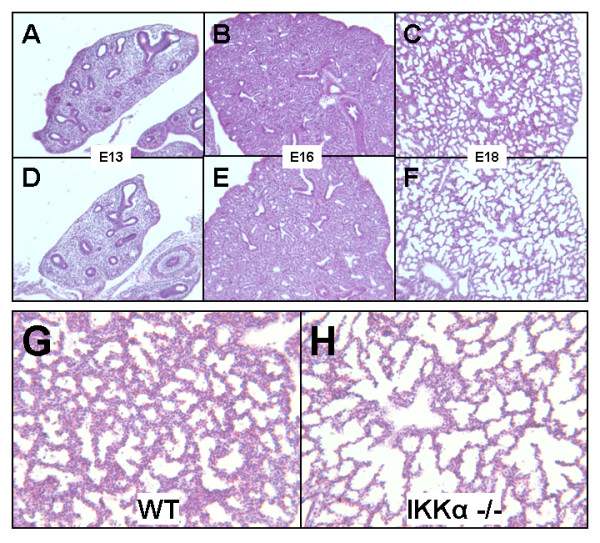
Alveolar septation marks the beginning of the transition from the saccular to alveolar stage of lung development. Inflammation can disrupt this process and permanently impair alveolar formation resulting in alveolar hypoplasia as seen in bronchopulmonary dysplasia in preterm newborns. NF-κB is a transcription factor central to multiple inflammatory and developmental pathways including dorsal-ventral patterning in fruit flies; limb, mammary and submandibular gland development in mice; and branching morphogenesis in chick lungs. We have previously shown that epithelial overexpression of NF-κB accelerates lung maturity using transgenic mice. The purpose of this study was to test our hypothesis that targeted deletion of NF-κB signaling in lung epithelium would impair alveolar formation.
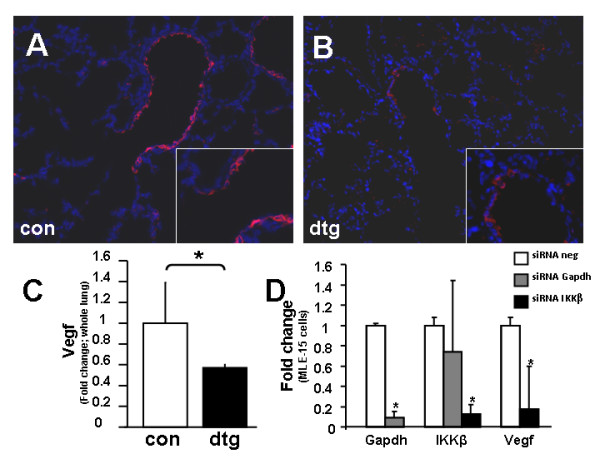
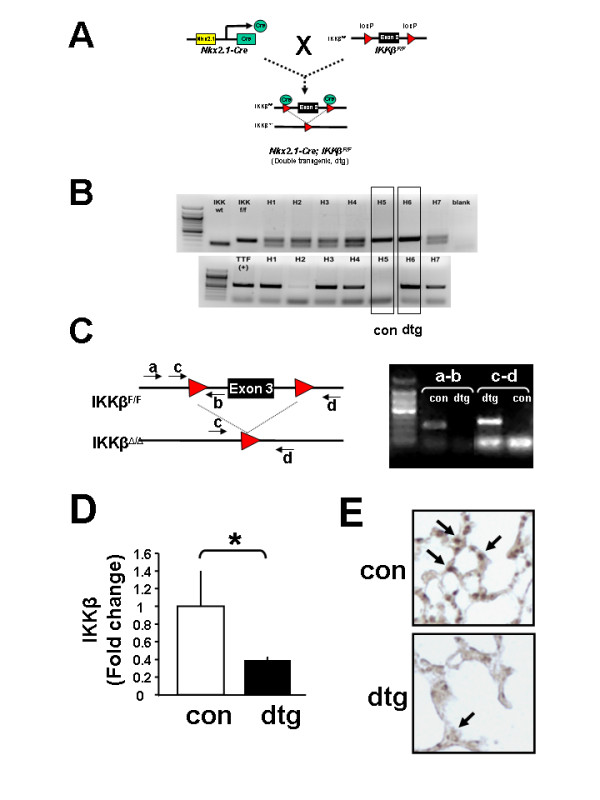
We generated double transgenic mice with lung epithelium-specific deletion of IKKβ, a known activating kinase upstream of NF-κB, using a cre-loxP transgenic recombination strategy. Lungs of resulting progeny were analyzed at embryonic and early postnatal stages to determine specific effects on lung histology, and mRNA and protein expression of relevant lung morphoreulatory genes. Lastly, results measuring expression of the angiogenic factor, VEGF, were confirmed in vitro using a siRNA-knockdown strategy in cultured mouse lung epithelial cells.
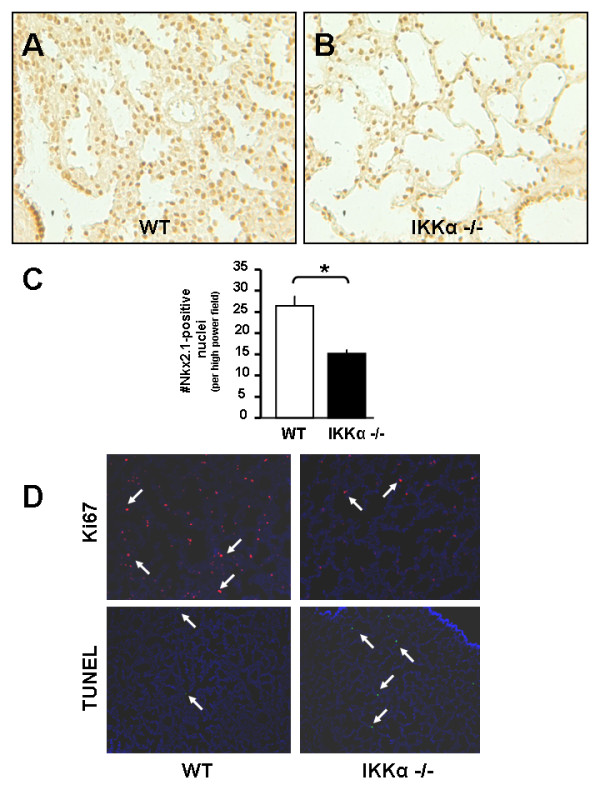
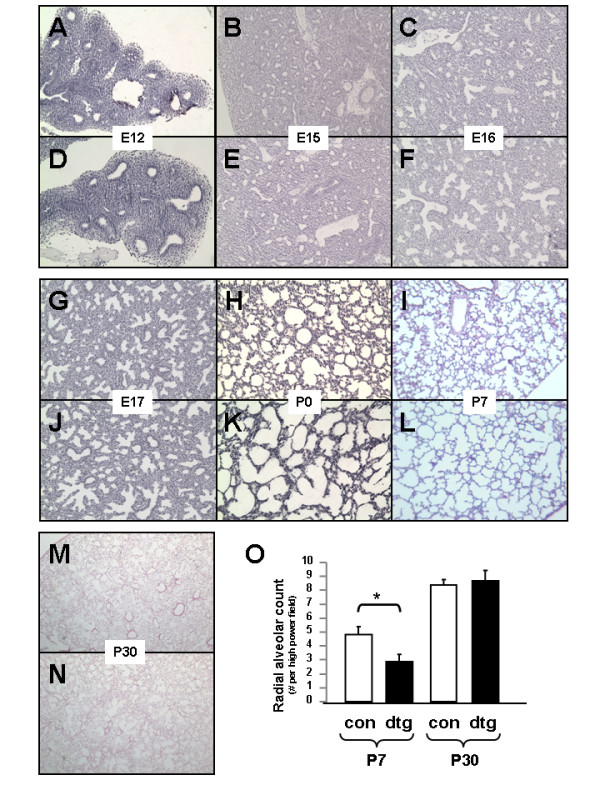
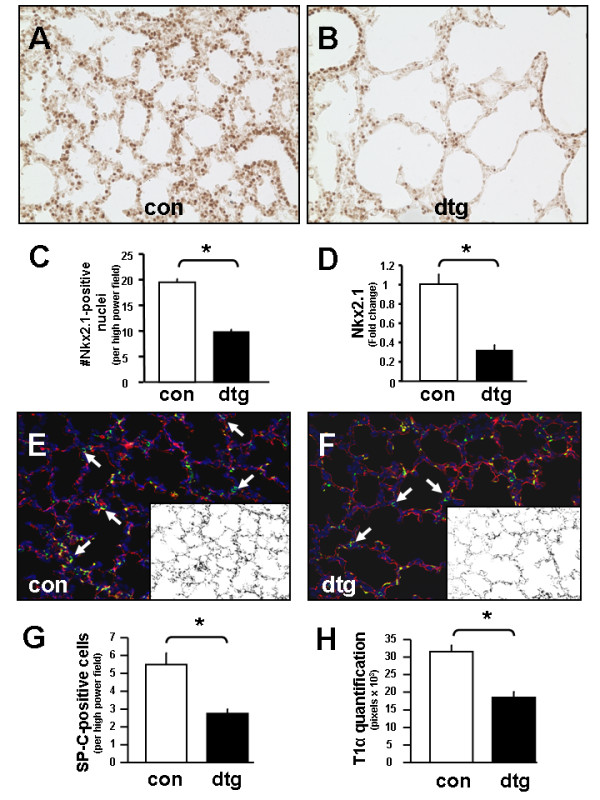
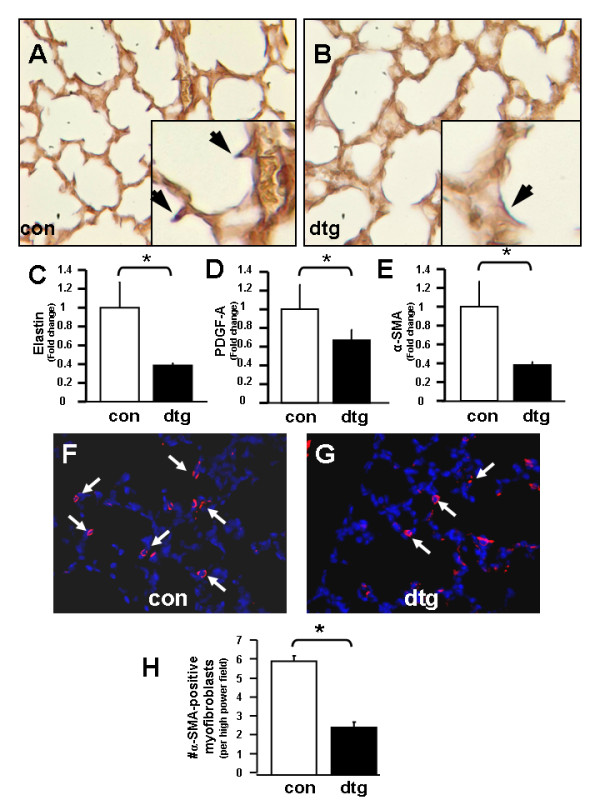
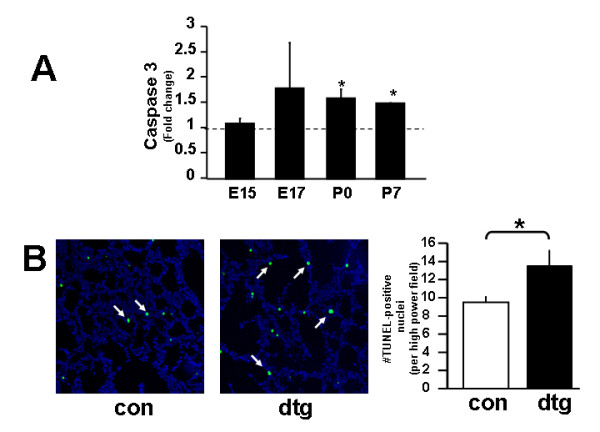
Our results showed that IKKβ deletion in the lung epithelium transiently decreased alveolar type I and type II cells and myofibroblasts and delayed alveolar formation. These effects were mediated through increased alveolar type II cell apoptosis and decreased epithelial VEGF expression.
These results suggest that epithelial NF-κB plays a critical role in early alveolar development possibly through regulation of VEGF.
肺泡分隔标志着肺从囊泡期向肺泡期发育的转变开始。炎症可破坏这一过程,并永久性损害肺泡形成,导致肺泡发育不全,如早产儿支气管肺发育不良所见。NF-κB 是一个转录因子,是多种炎症和发育途径的核心,包括果蝇的背腹模式形成;小鼠的肢、乳腺和颌下腺发育;以及鸡肺的分支形态发生。我们之前已经表明,上皮细胞中 NF-κB 的过度表达可使用转基因小鼠加速肺成熟。本研究的目的是检验我们的假设,即肺上皮细胞中 NF-κB 信号的靶向缺失会损害肺泡形成。
我们使用 cre-loxP 转基因重组策略,生成了肺上皮细胞特异性缺失 IKKβ(NF-κB 的已知激活激酶)的双转基因小鼠。对后代的肺进行分析,以确定对肺组织学、相关肺形态发生调节基因的 mRNA 和蛋白表达的特定影响。最后,使用 siRNA 敲低策略在培养的小鼠肺上皮细胞中证实了测量血管生成因子 VEGF 表达的结果。
我们的结果表明,肺上皮细胞中 IKKβ 的缺失会短暂地减少肺泡 I 型和 II 型细胞以及肌成纤维细胞,并延迟肺泡形成。这些影响是通过增加肺泡 II 型细胞凋亡和减少上皮 VEGF 表达来介导的。
这些结果表明,上皮 NF-κB 在早期肺泡发育中起着关键作用,可能通过调节 VEGF。