An Chung-Il, Dong Yao, Hagiwara Nobuko
Division of Cardiovascular Medicine, Department of Internal Medicine, University of California, Davis, One Shields Avenue, Davis, California 95616, USA.
BMC Dev Biol. 2011 Oct 10;11:59. doi: 10.1186/1471-213X-11-59.
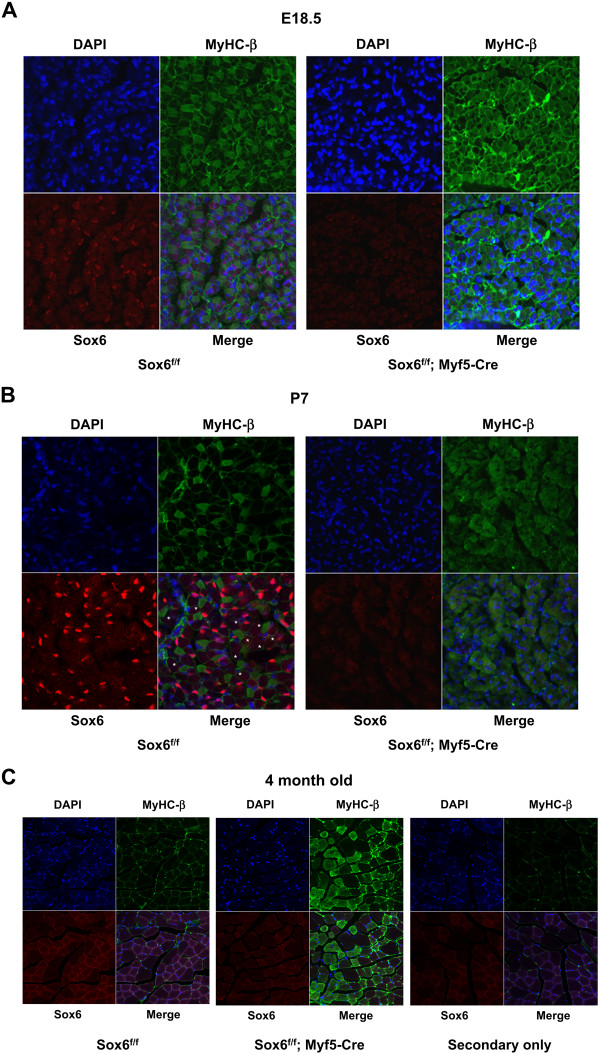
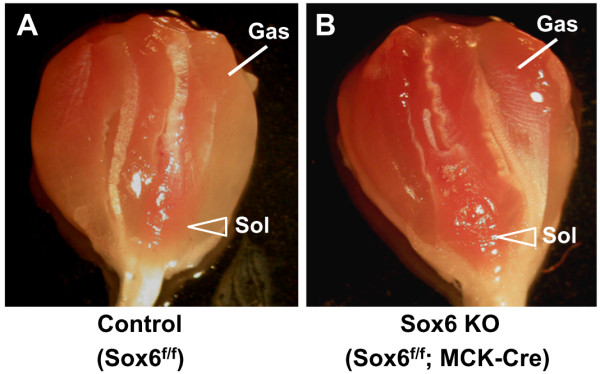
Sox6 is a multi-faceted transcription factor involved in the terminal differentiation of many different cell types in vertebrates. It has been suggested that in mice as well as in zebrafish Sox6 plays a role in the terminal differentiation of skeletal muscle by suppressing transcription of slow fiber specific genes. In order to understand how Sox6 coordinately regulates the transcription of multiple fiber type specific genes during muscle development, we have performed ChIP-seq analyses to identify Sox6 target genes in mouse fetal myotubes and generated muscle-specific Sox6 knockout (KO) mice to determine the Sox6 null muscle phenotype in adult mice.
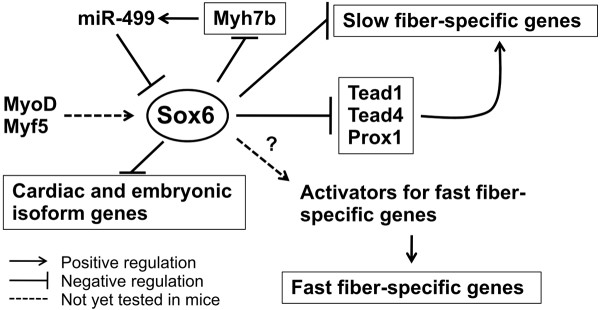
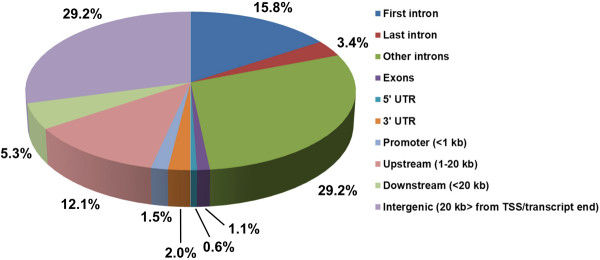
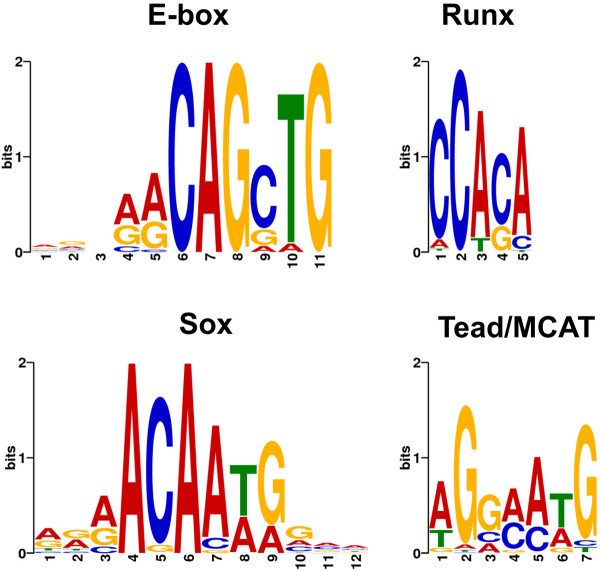
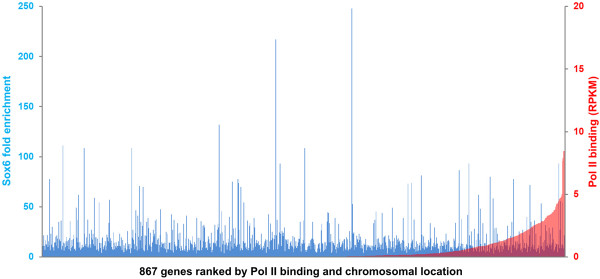
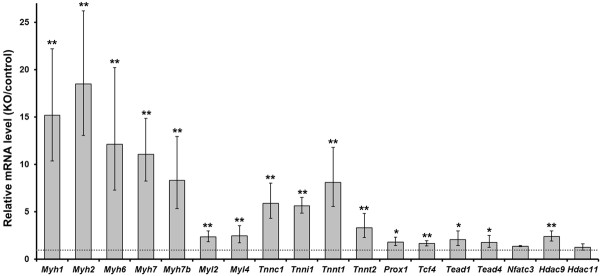
We have identified 1,066 Sox6 binding sites using mouse fetal myotubes. The Sox6 binding sites were found to be associated with slow fiber-specific, cardiac, and embryonic isoform genes that are expressed in the sarcomere as well as transcription factor genes known to play roles in muscle development. The concurrently performed RNA polymerase II (Pol II) ChIP-seq analysis revealed that 84% of the Sox6 peak-associated genes exhibited little to no binding of Pol II, suggesting that the majority of the Sox6 target genes are transcriptionally inactive. These results indicate that Sox6 directly regulates terminal differentiation of muscle by affecting the expression of sarcomere protein genes as well as indirectly through influencing the expression of transcription factors relevant to muscle development. Gene expression profiling of Sox6 KO skeletal and cardiac muscle revealed a significant increase in the expression of the genes associated with Sox6 binding. In the absence of the Sox6 gene, there was dramatic upregulation of slow fiber-specific, cardiac, and embryonic isoform gene expression in Sox6 KO skeletal muscle and fetal isoform gene expression in Sox6 KO cardiac muscle, thus confirming the role Sox6 plays as a transcriptional suppressor in muscle development.
Our present data indicate that during development, Sox6 functions as a transcriptional suppressor of fiber type-specific and developmental isoform genes to promote functional specification of muscle which is critical for optimum muscle performance and health.
Sox6是一种多面转录因子,参与脊椎动物多种不同细胞类型的终末分化。有研究表明,在小鼠和斑马鱼中,Sox6通过抑制慢肌纤维特异性基因的转录,在骨骼肌的终末分化中发挥作用。为了了解Sox6在肌肉发育过程中如何协调调控多种纤维类型特异性基因的转录,我们进行了染色质免疫沉淀测序(ChIP-seq)分析,以鉴定小鼠胎儿肌管中的Sox6靶基因,并构建了肌肉特异性Sox6基因敲除(KO)小鼠,以确定成年小鼠中Sox6基因缺失的肌肉表型。
我们利用小鼠胎儿肌管鉴定出1066个Sox6结合位点。发现这些Sox6结合位点与慢肌纤维特异性、心脏和胚胎异构体基因相关,这些基因在肌节中表达,以及已知在肌肉发育中起作用的转录因子基因。同时进行的RNA聚合酶II(Pol II)ChIP-seq分析表明,84%的与Sox6峰相关的基因几乎没有或没有Pol II结合,这表明大多数Sox6靶基因在转录上是无活性的。这些结果表明,Sox6通过影响肌节蛋白基因的表达直接调节肌肉的终末分化,并通过影响与肌肉发育相关的转录因子的表达间接调节。Sox6基因敲除的骨骼肌和心肌的基因表达谱显示,与Sox6结合相关的基因表达显著增加。在没有Sox6基因的情况下,Sox6基因敲除的骨骼肌中慢肌纤维特异性、心脏和胚胎异构体基因的表达以及Sox6基因敲除的心肌中胎儿异构体基因的表达显著上调,从而证实了Sox在肌肉发育中作为转录抑制因子的作用。
我们目前的数据表明,在发育过程中,Sox6作为纤维类型特异性和发育异构体基因的转录抑制因子,促进肌肉的功能特化,这对最佳肌肉性能和健康至关重要。