Faculty of Pharmaceutical Sciences, University of Sao Paulo, Sao Paulo, Brazil.
Int J Obes (Lond). 2012 Aug;36(8):1032-9. doi: 10.1038/ijo.2011.193. Epub 2011 Oct 11.
BACKGROUND/OBJECTIVES: Serum amyloid A (SAA) is an acute-phase protein that has been recently correlated with obesity and insulin resistance. Therefore, we first examined whether human recombinant SAA (rSAA) could affect the proliferation, differentiation and metabolism of 3T3-L1 preadipocytes.
Preadipocytes were treated with rSAA and analyzed for changes in viability and [³H-methyl]-thymidine incorporation as well as cell cycle perturbations using flow cytometry analysis. The mRNA expression profiles of adipogenic factors during the differentiation protocol were also analyzed using real-time PCR. After differentiation, 2-deoxy-[1,2-³H]-glucose uptake and glycerol release were evaluated.
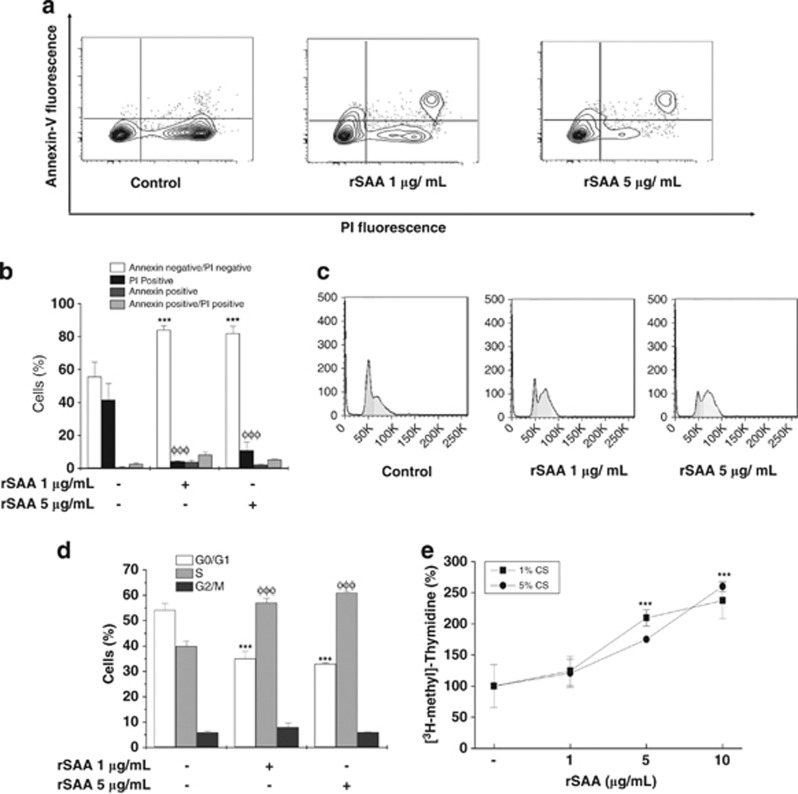
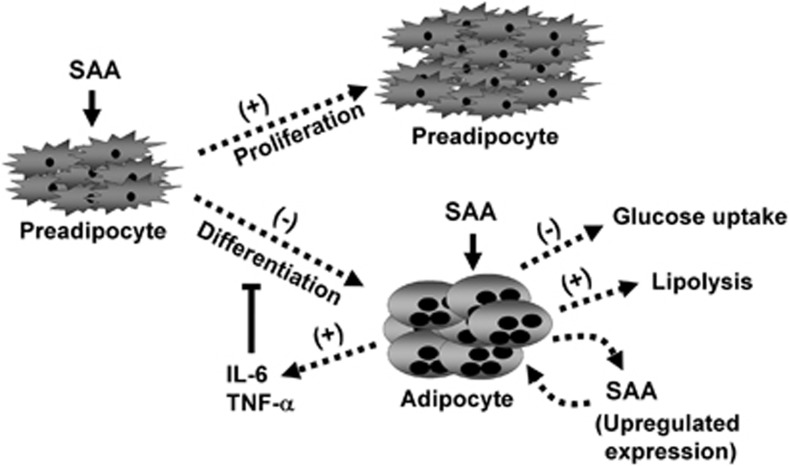
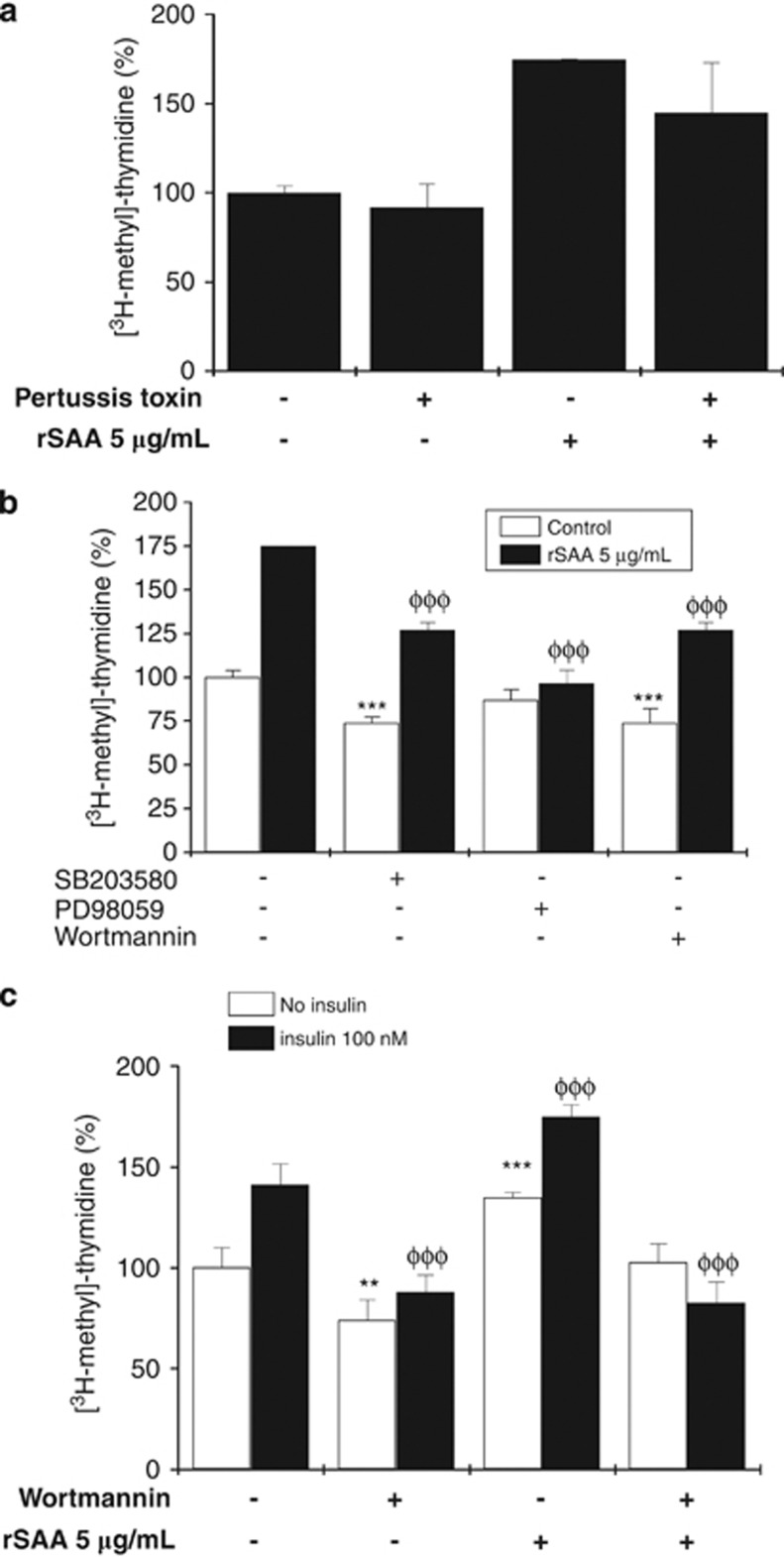
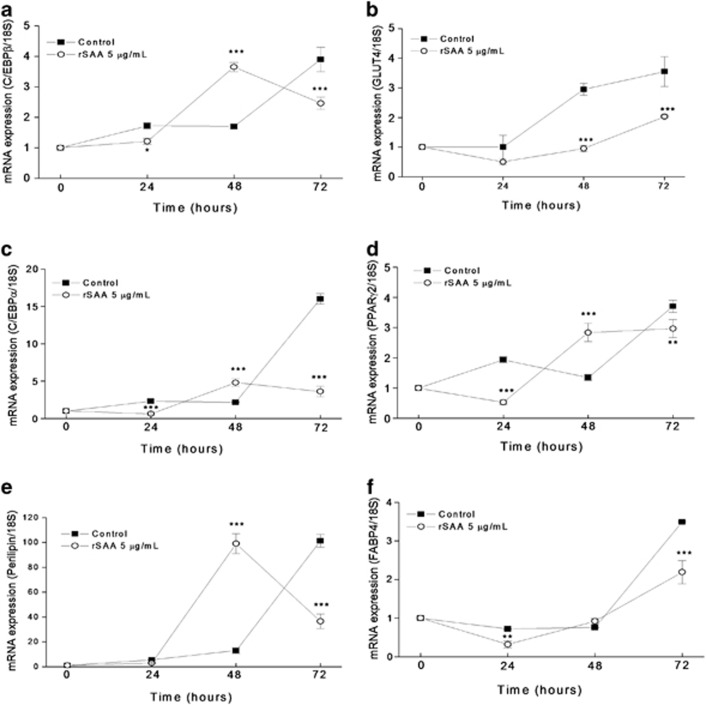
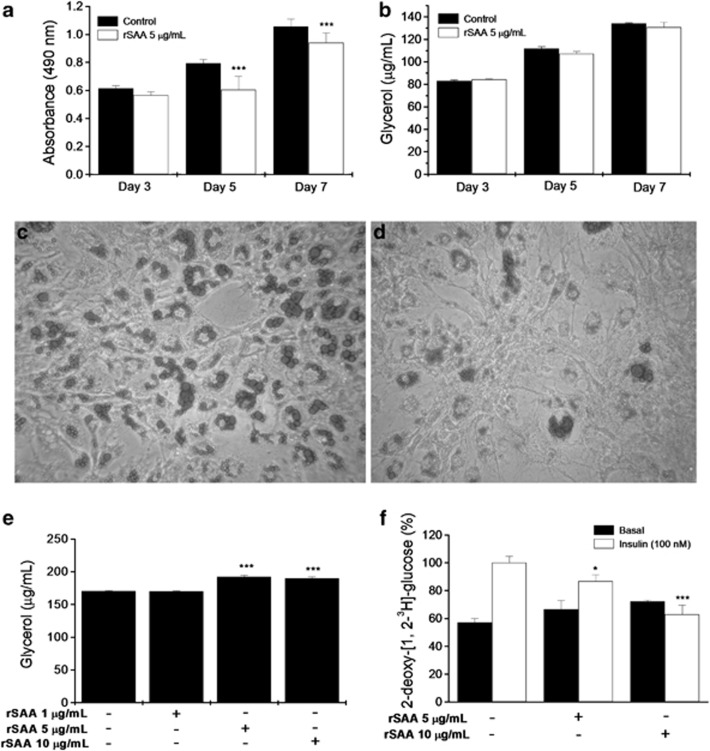
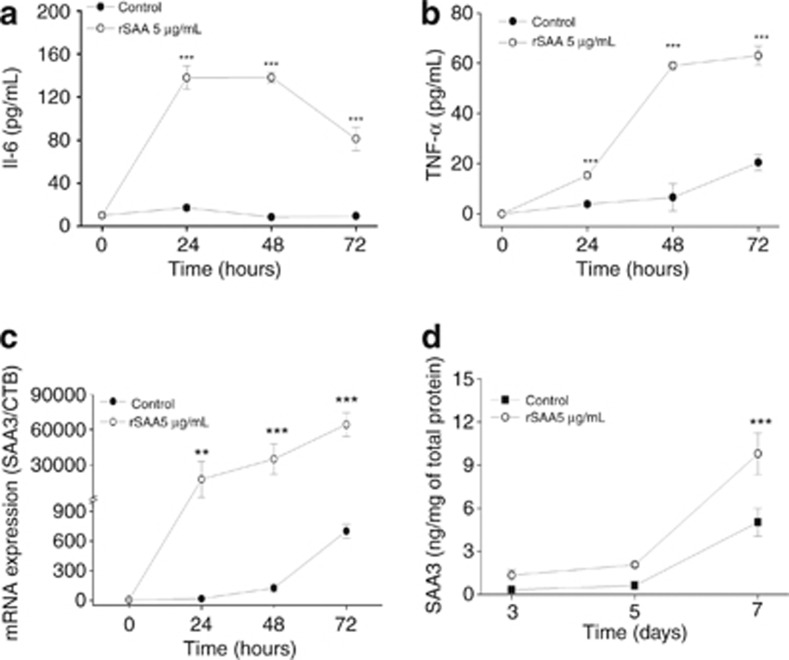
rSAA treatment caused a 2.6-fold increase in cell proliferation, which was consistent with the results from flow cytometry showing that rSAA treatment augmented the percentage of cells in the S phase (60.9±0.54%) compared with the control cells (39.8±2.2%, (***) P<0.001). The rSAA-induced cell proliferation was mediated by the ERK1/2 signaling pathway, which was assessed by pretreatment with the inhibitor PD98059. However, the exposure of 3T3-L1 cells to rSAA during the differentiation process resulted in attenuated adipogenesis and decreased expression of adipogenesis-related factors. During the first 72 h of differentiation, rSAA inhibited the differentiation process by altering the mRNA expression kinetics of adipogenic transcription factors and proteins, such as PPARγ2 (peroxisome proliferator-activated receptor γ 2), C/EBPβ (CCAAT/enhancer-binding protein β) and GLUT4. rSAA prevented the intracellular accumulation of lipids and, in fully differentiated cells, increased lipolysis and prevented 2-deoxy-[1,2-³H]-glucose uptake, which favors insulin resistance. Additionally, rSAA stimulated the secretion of proinflammatory cytokines interleukin 6 and tumor necrosis factor α, and upregulated SAA3 mRNA expression during adipogenesis.
We showed that rSAA enhanced proliferation and inhibited differentiation in 3T3-L1 preadipocytes and altered insulin sensitivity in differentiated cells. These results highlight the complex role of SAA in the adipogenic process and support a direct link between obesity and its co-morbidities such as type II diabetes.
背景/目的:血清淀粉样蛋白 A(SAA)是一种急性期蛋白,最近与肥胖和胰岛素抵抗相关。因此,我们首先研究了人重组 SAA(rSAA)是否会影响 3T3-L1 前脂肪细胞的增殖、分化和代谢。
用 rSAA 处理前脂肪细胞,并通过流式细胞术分析检测细胞活力和[³H-甲基]胸苷掺入的变化以及细胞周期的改变。还使用实时 PCR 分析了分化过程中脂肪生成因子的 mRNA 表达谱。分化后,评估 2-脱氧-[1,2-³H]-葡萄糖摄取和甘油释放。
rSAA 处理使细胞增殖增加 2.6 倍,这与流式细胞术的结果一致,表明 rSAA 处理使 S 期细胞的比例(60.9±0.54%)高于对照细胞(39.8±2.2%,(***)P<0.001)。rSAA 诱导的细胞增殖是通过 ERK1/2 信号通路介导的,这可以通过用抑制剂 PD98059 预处理来评估。然而,在分化过程中,3T3-L1 细胞暴露于 rSAA 会导致脂肪生成减弱,脂肪生成相关因子的表达减少。在分化的最初 72 小时内,rSAA 通过改变脂肪生成转录因子和蛋白质(如过氧化物酶体增殖物激活受体γ 2(PPARγ2)、CCAAT/增强子结合蛋白β(C/EBPβ)和 GLUT4)的 mRNA 表达动力学来抑制分化过程。rSAA 阻止了脂质在细胞内的积累,在完全分化的细胞中,增加了脂肪分解并阻止了 2-脱氧-[1,2-³H]-葡萄糖摄取,这有利于胰岛素抵抗。此外,rSAA 刺激了促炎细胞因子白细胞介素 6 和肿瘤坏死因子α的分泌,并在上皮细胞分化过程中上调 SAA3 mRNA 的表达。
我们表明 rSAA 增强了 3T3-L1 前脂肪细胞的增殖并抑制了分化,并改变了分化细胞的胰岛素敏感性。这些结果突出了 SAA 在脂肪生成过程中的复杂作用,并支持肥胖及其合并症(如 2 型糖尿病)之间的直接联系。