Jung Werner, Zvereva Vlada, Hajredini Bajram, Jäckle Sebastian
Department of Cardiology, Academic Teaching Hospital of the University of Freiburg, Schwarzwald-Baar Klinikum, Vöhrenbacher Street 23, 78050, Villingen-Schwenningen, Germany.
J Interv Card Electrophysiol. 2011 Dec;32(3):213-9. doi: 10.1007/s10840-011-9610-0. Epub 2011 Oct 13.
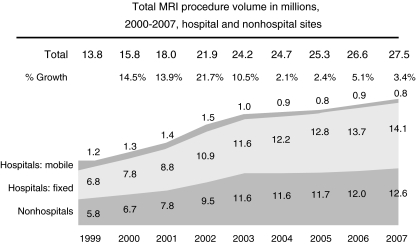
Due of its superior soft tissue imaging capabilities, magnetic resonance imaging (MRI) has become the imaging modality of choice in many clinical situations, as illustrated by the tremendous growth in the number of MRIs performed over the past 2 decades. In parallel, the number of patients who require pacemakers or implantable cardiac defibrillators is increasing as indications for these devices broaden and the population ages. Taken together, these phenomena present an important clinical issue, as MR scans are generally contraindicated-except in urgent situations-in patients who have implanted cardiovascular devices. Potentially deleterious interactions between the magnetic fields and radio frequency (RF) energy produced by MR equipment and implantable devices have been identified, including inhibition of pacing, asynchronous/high-rate pacing, lead tip heating, and loss of capture. New devices that incorporate technologies to improve MR safety in patients with pacemakers have recently received approval in Europe and are under evaluation in the United States. Initial data from these devices suggest that these devices are safe in the MRI environment.
由于其卓越的软组织成像能力,磁共振成像(MRI)已成为许多临床情况下的首选成像方式,过去20年中MRI检查数量的巨大增长就说明了这一点。与此同时,随着这些设备的适应症扩大以及人口老龄化,需要起搏器或植入式心脏除颤器的患者数量正在增加。综合来看,这些现象带来了一个重要的临床问题,因为除紧急情况外,植入心血管设备的患者通常禁忌进行磁共振扫描。已确定磁共振设备产生的磁场与射频(RF)能量和植入式设备之间存在潜在有害相互作用,包括起搏抑制、异步/高速起搏、导联尖端发热和夺获丧失。最近,采用改善起搏器患者磁共振安全性技术的新型设备已在欧洲获得批准,正在美国进行评估。这些设备的初步数据表明,这些设备在MRI环境中是安全的。