Unidade de Oncologia Experimental, Departamento de Microbiologia, Imunologia e Parasitologia, Universidade Federal de São Paulo (UNIFESP-EPM), São Paulo 04023-062, Brazil.
Department of Microbiology and Immunology, SUNY Upstate Medical University, Syracuse, NY 13210, USA.
Viruses. 2011 Jul;3(7):1041-1058. doi: 10.3390/v3071041. Epub 2011 Jul 5.
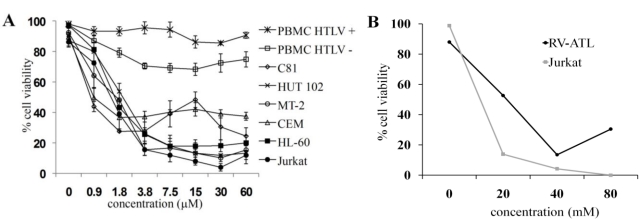
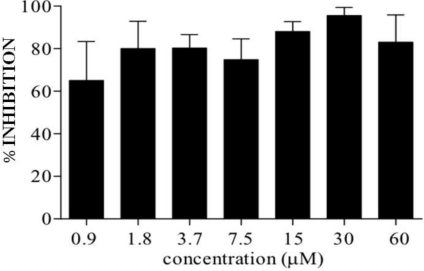
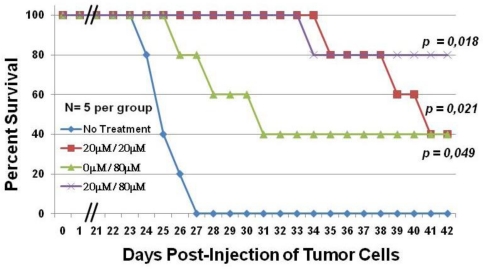
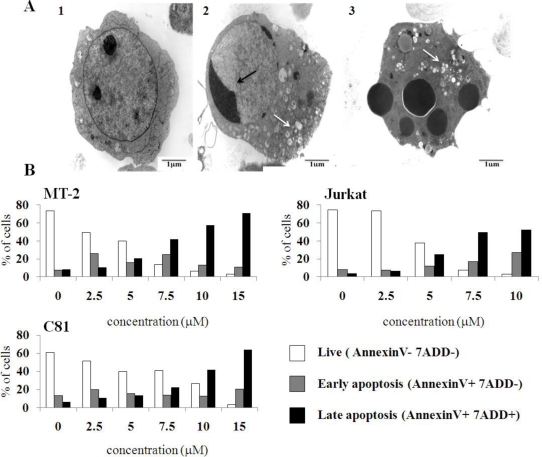
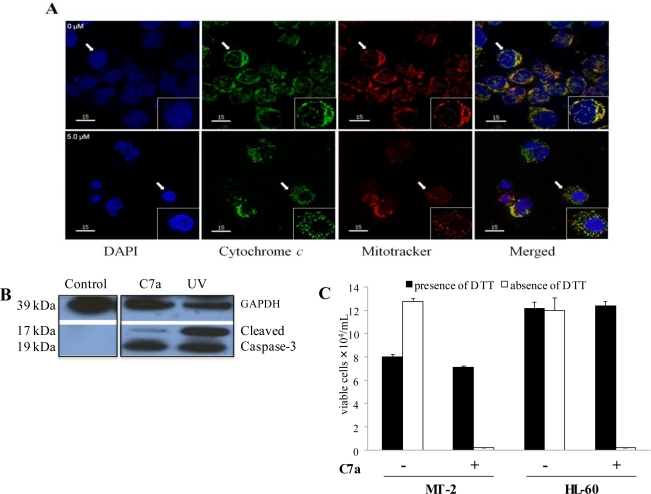
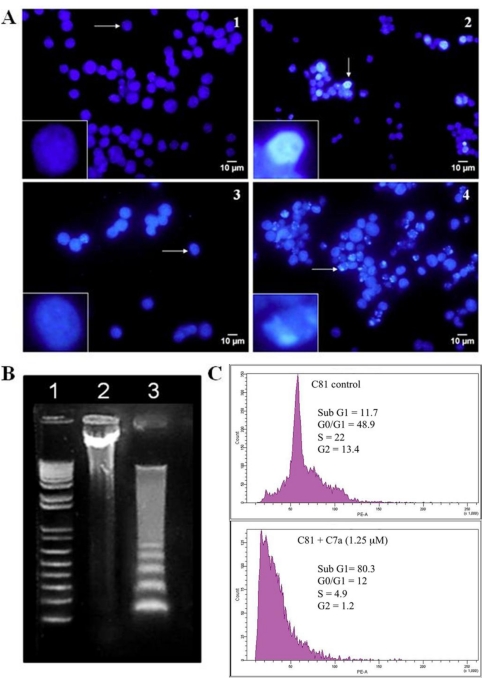
Adult T-cell leukemia/lymphoma (ATLL) is a highly aggressive disease that occurs in individuals infected with the human T lymphotropic virus type 1 (HTLV-1). Patients with aggressive ATLL have a poor prognosis because the leukemic cells are resistant to conventional chemotherapy. We have investigated the therapeutic efficacy of a biphosphinic cyclopalladated complex {Pd(2) S(-)C(2), N-dmpa (μ-dppe)Cl(2)}, termed C7a, in a patient-derived xenograft model of ATLL, and investigated the mechanism of C7a action in HTLV-1-positive and negative transformed T cell lines in vitro. In vivo survival studies in immunocompromised mice inoculated with human RV-ATL cells and intraperitoneally treated with C7a led to significantly increased survival of the treated mice. We investigated the mechanism of C7a activity in vitro and found that it induced mitochondrial release of cytochrome c, caspase activation, nuclear condensation and DNA degradation. These results suggest that C7a triggers apoptotic cell death in both HTLV-1 infected and uninfected human transformed T-cell lines. Significantly, C7a was not cytotoxic to peripheral blood mononuclear cells (PBMC) from healthy donors and HTLV-1-infected individuals. C7a inhibited more than 60% of the ex vivo spontaneous proliferation of PBMC from HTLV-1-infected individuals. These results support a potential therapeutic role for C7a in both ATLL and HTLV-1-negative T-cell lymphomas.
成人 T 细胞白血病/淋巴瘤 (ATLL) 是一种高度侵袭性疾病,发生于感染人类 T 淋巴细胞病毒 1 型 (HTLV-1) 的个体中。侵袭性 ATLL 患者预后较差,因为白血病细胞对常规化疗具有耐药性。我们在 ATLL 患者来源的异种移植模型中研究了双膦环钯配合物{C7a[Pd2(S(-)C2,N-dmpa)(2)(μ-dppe)Cl2]}的治疗效果,并在体外研究了 C7a 在 HTLV-1 阳性和阴性转化 T 细胞系中的作用机制。在免疫功能低下的小鼠中接种人类 RV-ATL 细胞并经腹腔内给予 C7a 的体内生存研究导致治疗组小鼠的生存率显著提高。我们在体外研究了 C7a 的作用机制,发现它诱导了细胞色素 c 的线粒体释放、半胱天冬酶的激活、核浓缩和 DNA 降解。这些结果表明,C7a 可诱导 HTLV-1 感染和未感染的人转化 T 细胞系发生凋亡性细胞死亡。值得注意的是,C7a 对来自健康供体和 HTLV-1 感染个体的外周血单核细胞 (PBMC) 没有细胞毒性。C7a 抑制了超过 60%的来自 HTLV-1 感染个体的 PBMC 的体外自发增殖。这些结果支持 C7a 在 ATLL 和 HTLV-1 阴性 T 细胞淋巴瘤中具有潜在的治疗作用。