Institute for Bioinformatics and Translational Research, Department of Biomedical Sciences and Engineering, University for Health Sciences, Medical Informatics and Technology (UMIT), Austria.
Biol Direct. 2011 Oct 13;6:53. doi: 10.1186/1745-6150-6-53.
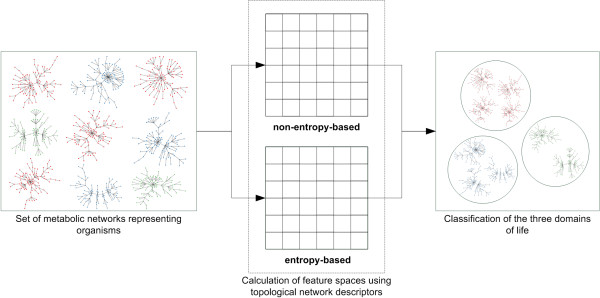
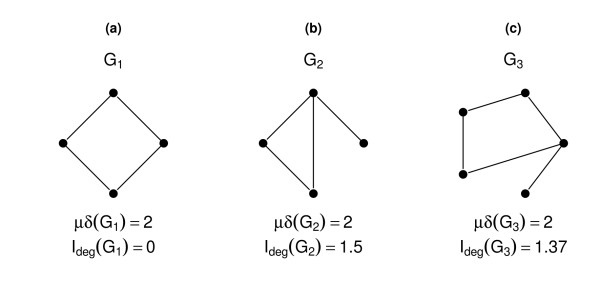
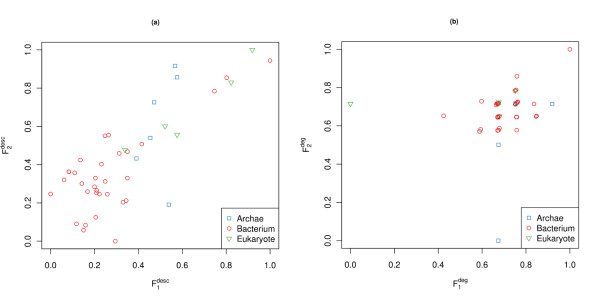
Identifying group-specific characteristics in metabolic networks can provide better insight into evolutionary developments. Here, we present an approach to classify the three domains of life using topological information about the underlying metabolic networks. These networks have been shown to share domain-independent structural similarities, which pose a special challenge for our endeavour. We quantify specific structural information by using topological network descriptors to classify this set of metabolic networks. Such measures quantify the structural complexity of the underlying networks. In this study, we use such measures to capture domain-specific structural features of the metabolic networks to classify the data set. So far, it has been a challenging undertaking to examine what kind of structural complexity such measures do detect. In this paper, we apply two groups of topological network descriptors to metabolic networks and evaluate their classification performance. Moreover, we combine the two groups to perform a feature selection to estimate the structural features with the highest classification ability in order to optimize the classification performance.
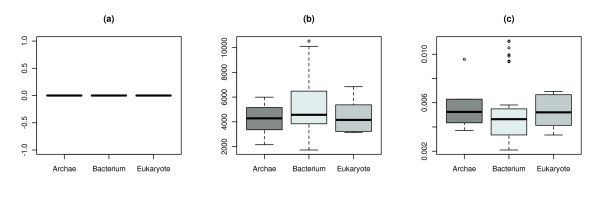
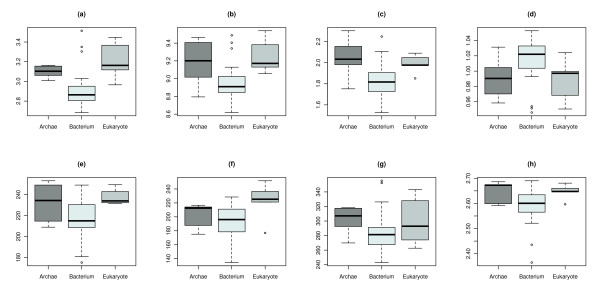
By combining the two groups, we can identify seven topological network descriptors that show a group-specific characteristic by ANOVA. A multivariate analysis using feature selection and supervised machine learning leads to a reasonable classification performance with a weighted F-score of 83.7% and an accuracy of 83.9%. We further demonstrate that our approach outperforms alternative methods. Also, our results reveal that entropy-based descriptors show the highest classification ability for this set of networks.
Our results show that these particular topological network descriptors are able to capture domain-specific structural characteristics for classifying metabolic networks between the three domains of life.
识别代谢网络中的特定群体特征可以更好地了解进化发展。在这里,我们提出了一种使用基础代谢网络的拓扑信息对生命的三个领域进行分类的方法。这些网络被证明具有独立于领域的结构相似性,这对我们的努力构成了特殊挑战。我们通过使用拓扑网络描述符来量化特定的结构信息,从而对这组代谢网络进行分类。这些措施量化了基础网络的结构复杂性。在这项研究中,我们使用这些措施来捕捉代谢网络的特定结构特征,以对数据集进行分类。到目前为止,研究什么样的结构复杂性可以被这些措施检测到一直是一项具有挑战性的任务。在本文中,我们将两组拓扑网络描述符应用于代谢网络,并评估它们的分类性能。此外,我们将这两组描述符组合起来进行特征选择,以估计具有最高分类能力的结构特征,从而优化分类性能。
通过组合这两组描述符,我们可以通过方差分析(ANOVA)确定七个具有特定群体特征的拓扑网络描述符。使用特征选择和监督机器学习的多元分析可以得到合理的分类性能,加权 F 分数为 83.7%,准确率为 83.9%。我们进一步证明,我们的方法优于替代方法。此外,我们的结果表明,基于熵的描述符对这组网络具有最高的分类能力。
我们的结果表明,这些特定的拓扑网络描述符能够捕捉代谢网络中生命的三个领域之间的特定结构特征,从而进行分类。