Department of Molecular Medicine, Aarhus University Hospital, Skejby, 8200 Aarhus N, Denmark.
BMC Genomics. 2011 Oct 14;12:505. doi: 10.1186/1471-2164-12-505.
Approximately half of all human genes use alternative transcription start sites (TSSs) to control mRNA levels and broaden the transcriptional output in healthy tissues. Aberrant expression patterns promoting carcinogenesis, however, may arise from alternative promoter usage.
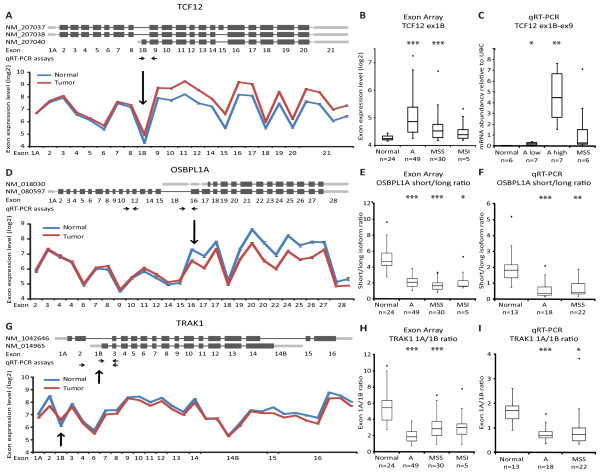
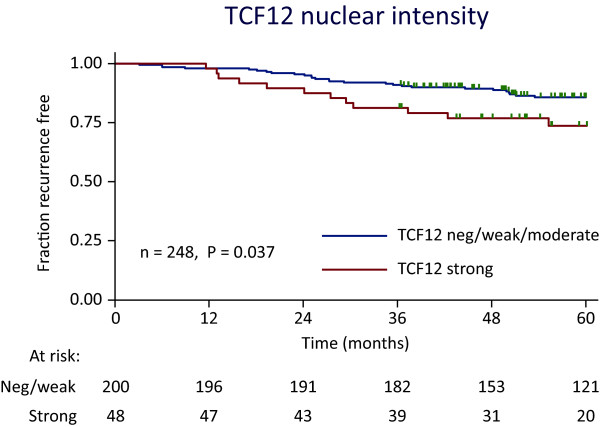
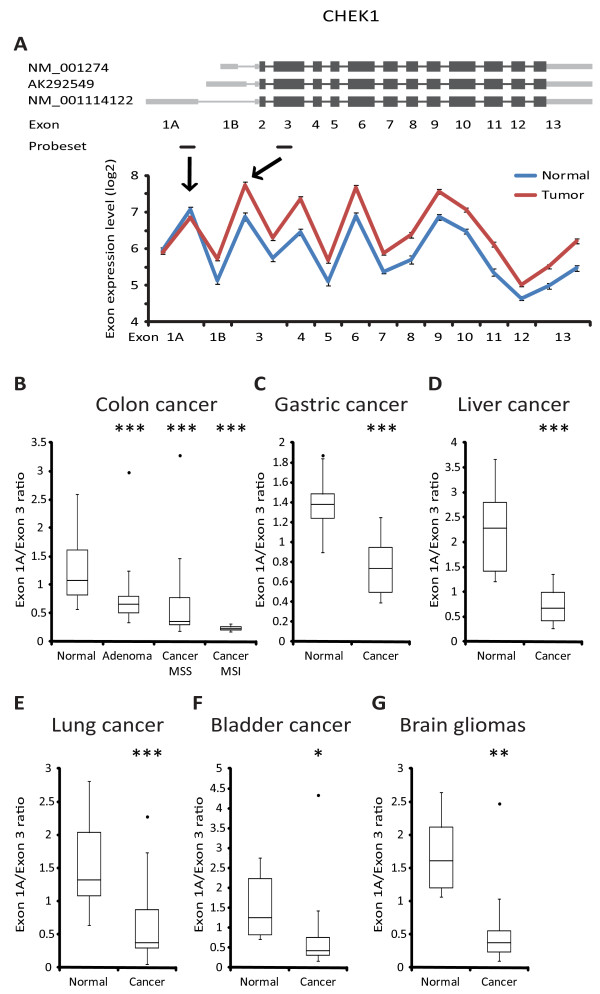
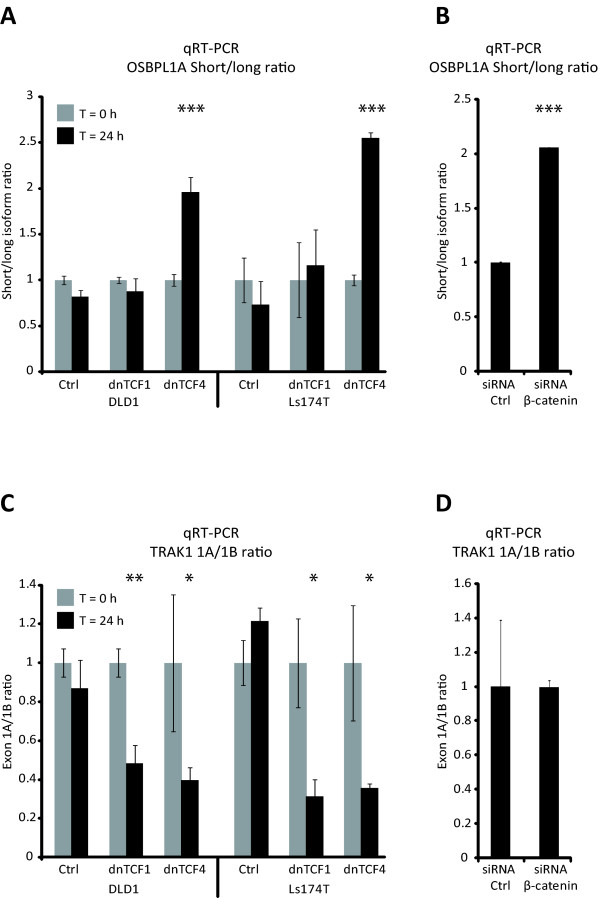
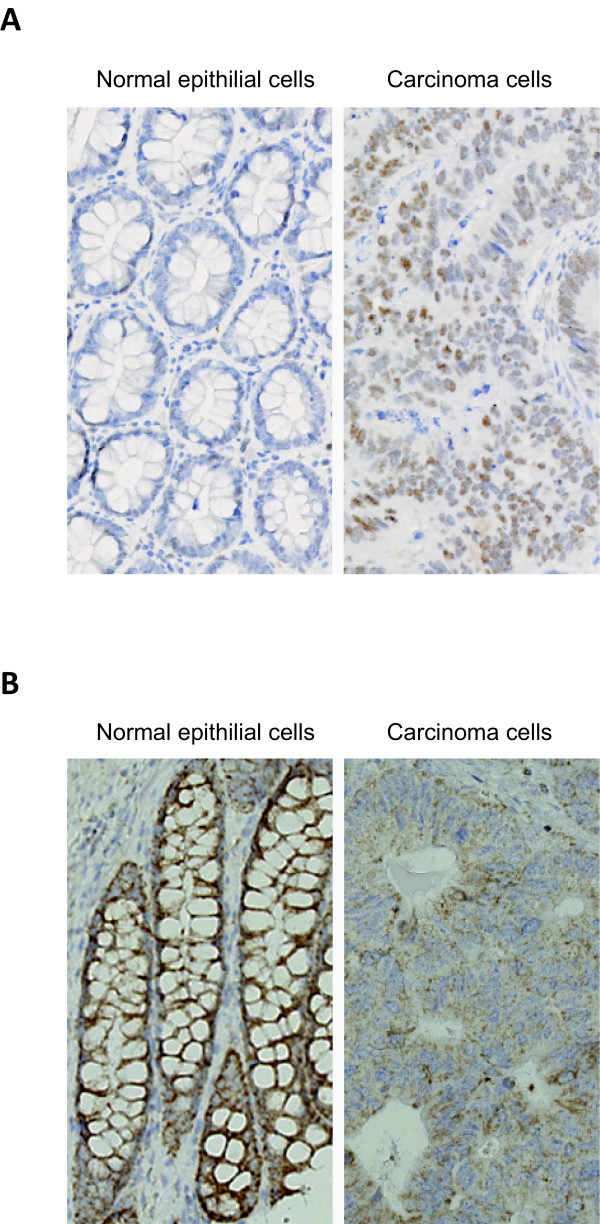
By profiling 108 colorectal samples using exon arrays, we identified nine genes (TCF12, OSBPL1A, TRAK1, ANK3, CHEK1, UGP2, LMO7, ACSL5, and SCIN) showing tumor-specific alternative TSS usage in both adenoma and cancer samples relative to normal mucosa. Analysis of independent exon array data sets corroborated these findings. Additionally, we confirmed the observed patterns for selected mRNAs using quantitative real-time reverse-transcription PCR. Interestingly, for some of the genes, the tumor-specific TSS usage was not restricted to colorectal cancer. A comprehensive survey of the nine genes in lung, bladder, liver, prostate, gastric, and brain cancer revealed significantly altered mRNA isoform ratios for CHEK1, OSBPL1A, and TCF12 in a subset of these cancer types.To identify the mechanism responsible for the shift in alternative TSS usage, we antagonized the Wnt-signaling pathway in DLD1 and Ls174T colorectal cancer cell lines, which remarkably led to a shift in the preferred TSS for both OSBPL1A and TRAK1. This indicated a regulatory role of the Wnt pathway in selecting TSS, possibly also involving TP53 and SOX9, as their transcription binding sites were enriched in the promoters of the tumor preferred isoforms together with their mRNA levels being increased in tumor samples. Finally, to evaluate the prognostic impact of the altered TSS usage, immunohistochemistry was used to show deregulation of the total protein levels of both TCF12 and OSBPL1A, corresponding to the mRNA levels observed. Furthermore, the level of nuclear TCF12 had a significant correlation to progression free survival in a cohort of 248 stage II colorectal cancer samples.
Alternative TSS usage in colorectal adenoma and cancer samples has been shown for nine genes, and OSBPL1A and TRAK1 were found to be regulated in vitro by Wnt signaling. TCF12 protein expression was upregulated in cancer samples and correlated with progression free survival.
大约一半的人类基因使用不同的转录起始位点(TSS)来控制 mRNA 水平,并在健康组织中扩大转录产物。然而,促进癌变的异常表达模式可能源于不同的启动子使用。
通过使用外显子阵列对 108 个结直肠样本进行分析,我们鉴定出九个基因(TCF12、OSBPL1A、TRAK1、ANK3、CHEK1、UGP2、LMO7、ACSL5 和 SCIN),它们在腺瘤和癌症样本相对于正常黏膜中显示出肿瘤特异性的替代 TSS 使用。对独立的外显子阵列数据集的分析证实了这些发现。此外,我们使用定量实时逆转录 PCR 验证了选定 mRNA 的观察结果。有趣的是,对于一些基因,肿瘤特异性 TSS 使用不仅限于结直肠癌。对肺癌、膀胱癌、肝癌、前列腺癌、胃癌和脑癌的九种基因的全面调查显示,在这些癌症类型的一部分中,CHEK1、OSBPL1A 和 TCF12 的肿瘤特异性 TSS 使用发生了显著改变。为了确定导致替代 TSS 使用变化的机制,我们在 DLD1 和 Ls174T 结直肠癌细胞系中拮抗 Wnt 信号通路,这显著导致 OSBPL1A 和 TRAK1 的首选 TSS 发生变化。这表明 Wnt 途径在选择 TSS 中具有调节作用,可能还涉及 TP53 和 SOX9,因为它们的转录结合位点在肿瘤偏好的异构体启动子中富集,并且它们的 mRNA 水平在肿瘤样本中增加。最后,为了评估改变的 TSS 使用的预后影响,使用免疫组织化学显示 TCF12 和 OSBPL1A 的总蛋白水平失调,与观察到的 mRNA 水平相对应。此外,在 248 例 II 期结直肠癌样本的队列中,核 TCF12 的水平与无进展生存期有显著相关性。
已经在结直肠腺瘤和癌症样本中显示了九个基因的替代 TSS 使用,并且发现 OSBPL1A 和 TRAK1 在体外受到 Wnt 信号的调节。在癌症样本中上调 TCF12 蛋白表达,并与无进展生存期相关。