LOEWE Research Centre for Synthetic Microbiology, Hans-Meerwein-Strasse, 35032 Marburg, Germany.
Microb Cell Fact. 2011 Oct 17;10:81. doi: 10.1186/1475-2859-10-81.
Poly-3-hydroxybutyrate (PHB) is a polyester with thermoplastic properties that is naturally occurring and produced by such bacteria as Ralstonia eutropha H16 and Bacillus megaterium. In contrast to currently utilized plastics and most synthetic polymers, PHB is biodegradable, and its production is not dependent on fossil resources making this bioplastic interesting for various industrial applications.
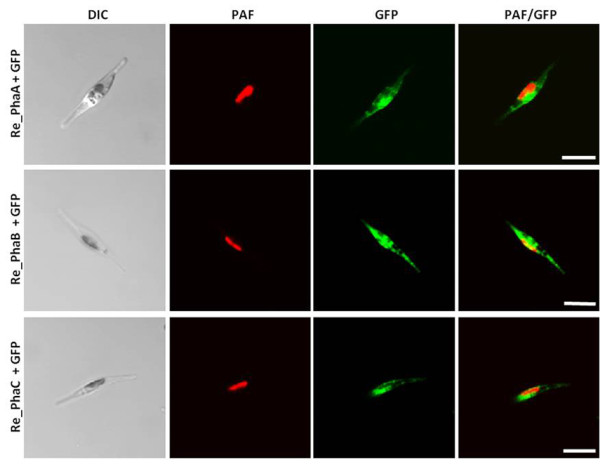
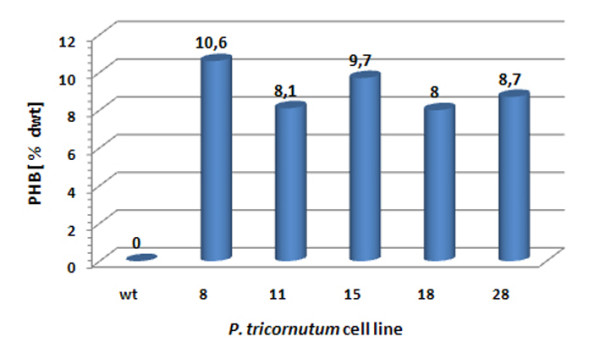
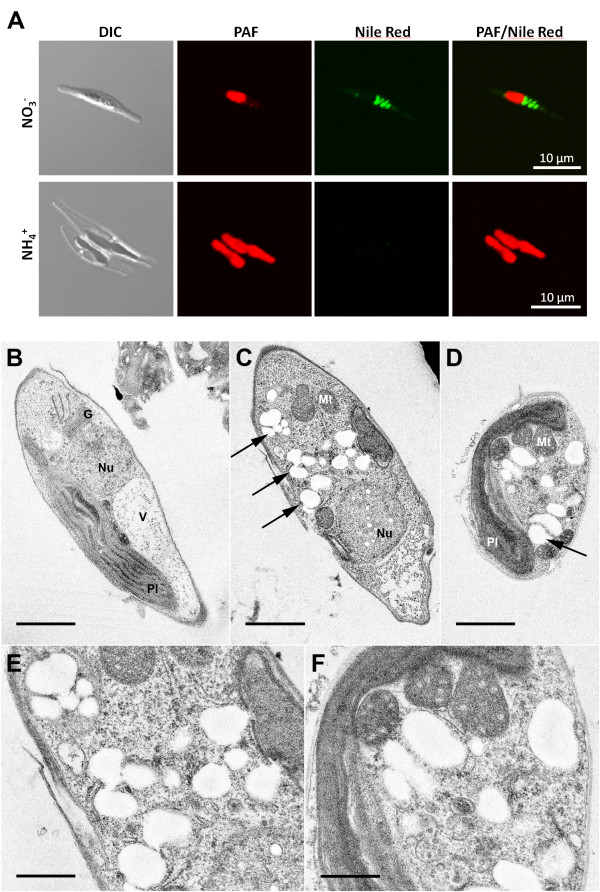
In this study, we report on introducing the bacterial PHB pathway of R. eutropha H16 into the diatom Phaeodactylum tricornutum, thereby demonstrating for the first time that PHB production is feasible in a microalgal system. Expression of the bacterial enzymes was sufficient to result in PHB levels of up to 10.6% of algal dry weight. The bioplastic accumulated in granule-like structures in the cytosol of the cells, as shown by light and electron microscopy.
Our studies demonstrate the great potential of microalgae like the diatom P. tricornutum to serve as solar-powered expression factories and reveal great advantages compared to plant based production systems.
聚-3-羟基丁酸酯(PHB)是一种具有热塑性的聚酯,由诸如 Ralstonia eutropha H16 和 Bacillus megaterium 等细菌自然产生和合成。与目前使用的塑料和大多数合成聚合物不同,PHB 是可生物降解的,其生产不依赖于化石资源,这使得这种生物塑料在各种工业应用中具有吸引力。
在这项研究中,我们报告了将 R. eutropha H16 的细菌 PHB 途径引入到硅藻三角褐指藻中,从而首次证明了 PHB 的生产在微藻系统中是可行的。细菌酶的表达足以使 PHB 水平达到藻干重的 10.6%。生物塑料以颗粒状结构在细胞的细胞质中积累,如光镜和电子显微镜所示。
我们的研究表明,像硅藻三角褐指藻这样的微藻具有作为太阳能表达工厂的巨大潜力,并显示出与植物生产系统相比的巨大优势。