Department of Biology, University of York York, UK.
Front Pharmacol. 2011 Sep 28;2:53. doi: 10.3389/fphar.2011.00053. eCollection 2011.
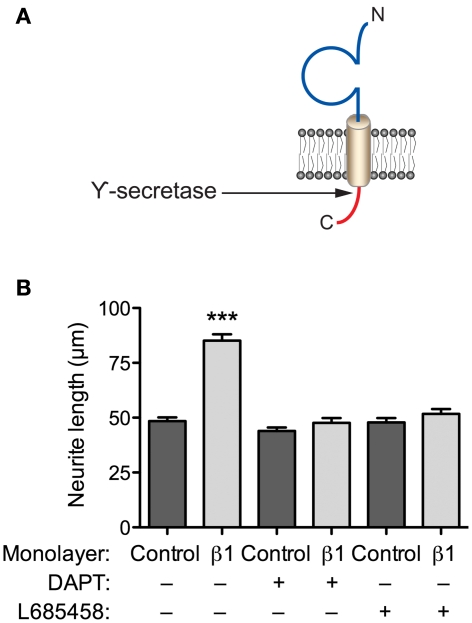
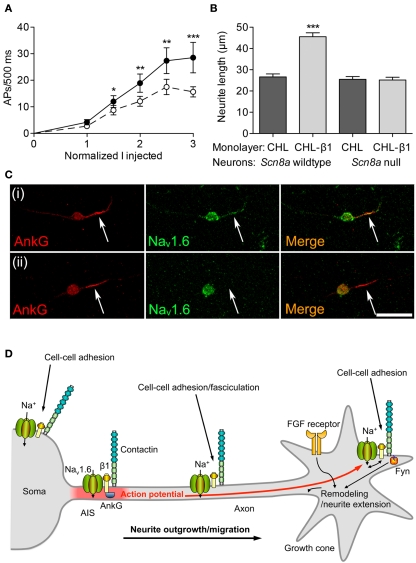
Voltage-gated Na(+) channels (VGSCs) in mammals contain a pore-forming α subunit and one or more β subunits. There are five mammalian β subunits in total: β1, β1B, β2, β3, and β4, encoded by four genes: SCN1B-SCN4B. With the exception of the SCN1B splice variant, β1B, the β subunits are type I topology transmembrane proteins. In contrast, β1B lacks a transmembrane domain and is a secreted protein. A growing body of work shows that VGSC β subunits are multifunctional. While they do not form the ion channel pore, β subunits alter gating, voltage-dependence, and kinetics of VGSCα subunits and thus regulate cellular excitability in vivo. In addition to their roles in channel modulation, β subunits are members of the immunoglobulin superfamily of cell adhesion molecules and regulate cell adhesion and migration. β subunits are also substrates for sequential proteolytic cleavage by secretases. An example of the multifunctional nature of β subunits is β1, encoded by SCN1B, that plays a critical role in neuronal migration and pathfinding during brain development, and whose function is dependent on Na(+) current and γ-secretase activity. Functional deletion of SCN1B results in Dravet Syndrome, a severe and intractable pediatric epileptic encephalopathy. β subunits are emerging as key players in a wide variety of physiopathologies, including epilepsy, cardiac arrhythmia, multiple sclerosis, Huntington's disease, neuropsychiatric disorders, neuropathic and inflammatory pain, and cancer. β subunits mediate multiple signaling pathways on different timescales, regulating electrical excitability, adhesion, migration, pathfinding, and transcription. Importantly, some β subunit functions may operate independently of α subunits. Thus, β subunits perform critical roles during development and disease. As such, they may prove useful in disease diagnosis and therapy.
电压门控钠离子通道 (VGSCs) 在哺乳动物中包含一个形成孔的α亚基和一个或多个β亚基。哺乳动物中总共有五个β亚基:β1、β1B、β2、β3 和 β4,由四个基因编码:SCN1B-SCN4B。除了 SCN1B 的剪接变体,β1B 是一种分泌型蛋白,其余β亚基都是 I 型拓扑跨膜蛋白。越来越多的研究表明,VGSCβ亚基具有多功能性。虽然它们不形成离子通道孔,但β亚基改变了 α亚基的门控、电压依赖性和动力学,从而调节体内细胞的兴奋性。除了在通道调节中的作用外,β亚基还是免疫球蛋白超家族细胞粘附分子的成员,调节细胞粘附和迁移。β亚基也是一系列蛋白水解酶切割的底物。β1 就是 β 亚基多功能性的一个例子,它由 SCN1B 编码,在大脑发育过程中对神经元迁移和寻径起着关键作用,其功能取决于钠离子电流和 γ-分泌酶活性。SCN1B 的功能缺失会导致 Dravet 综合征,这是一种严重且难以治疗的儿童癫痫性脑病。β 亚基正在成为多种生理病理学的关键参与者,包括癫痫、心律失常、多发性硬化症、亨廷顿病、神经精神障碍、神经病理性和炎性疼痛以及癌症。β 亚基在不同的时间尺度上介导多种信号通路,调节电兴奋性、粘附、迁移、寻径和转录。重要的是,一些β亚基功能可能独立于α亚基发挥作用。因此,β 亚基在发育和疾病中起着至关重要的作用。因此,它们可能在疾病诊断和治疗中具有应用价值。