Kyushu University, Fukuoka 812-8582, Japan.
BMC Genomics. 2011 Oct 20;12:516. doi: 10.1186/1471-2164-12-516.
Cellular function is regulated by the balance of stringently regulated amounts of mRNA. Previous reports revealed that RNA polymerase II (RNAPII), which transcribes mRNA, can be classified into the pausing state and the active transcription state according to the phosphorylation state of RPB1, the catalytic subunit of RNAPII. However, genome-wide association between mRNA expression level and the phosphorylation state of RNAPII is unclear. While the functional importance of pausing genes is clear, such as in mouse Embryonic Stem cells for differentiation, understanding this association is critical for distinguishing pausing genes from active transcribing genes in expression profiling data, such as microarrays and RNAseq. Therefore, we examined the correlation between the phosphorylation of RNAPII and mRNA expression levels using a combined analysis by ChIPseq and RNAseq.
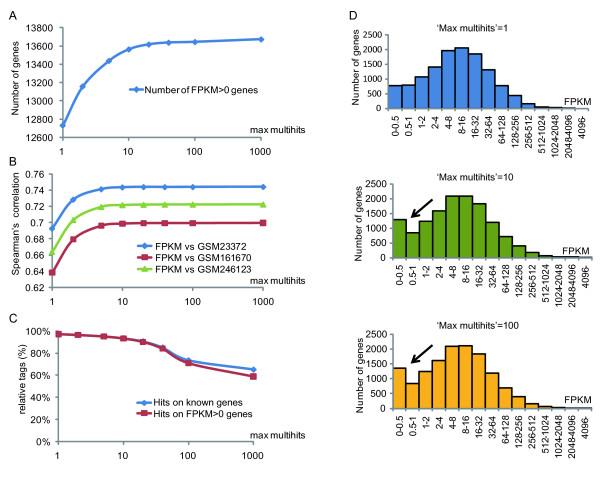
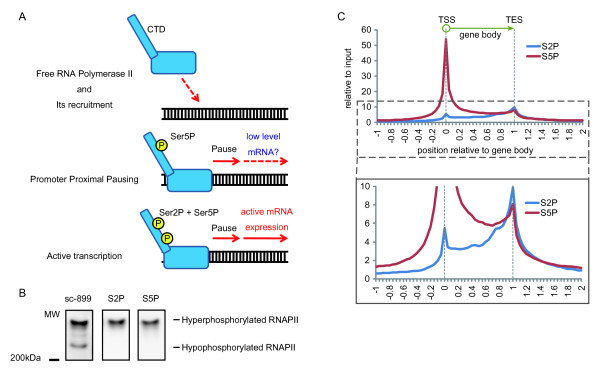
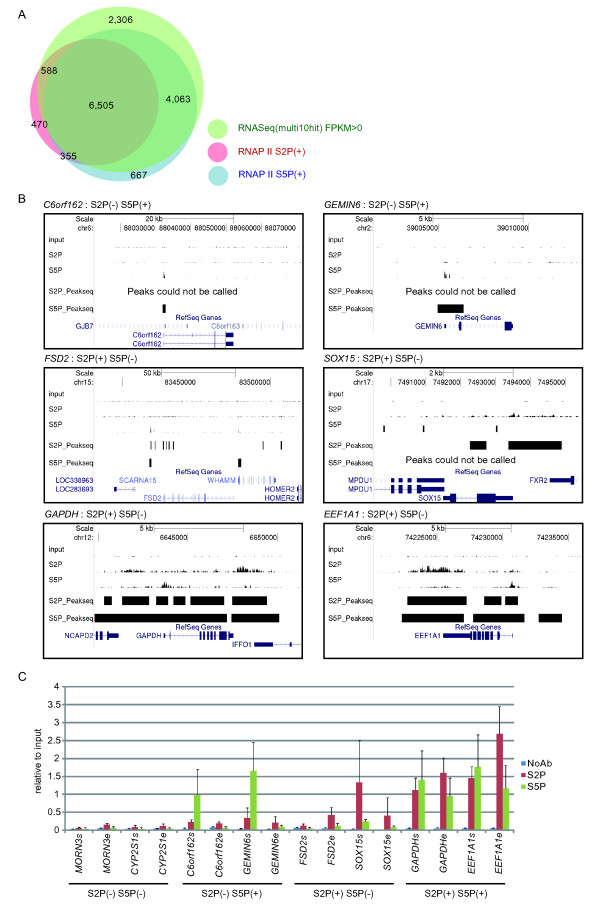
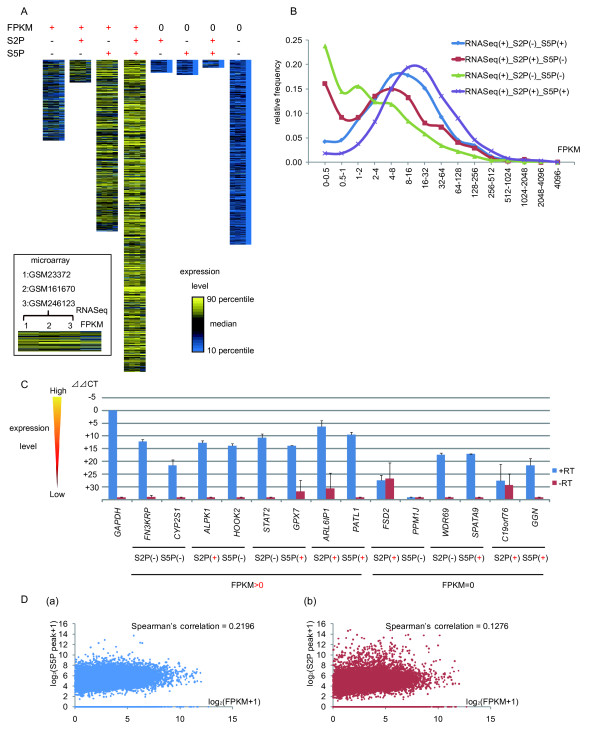
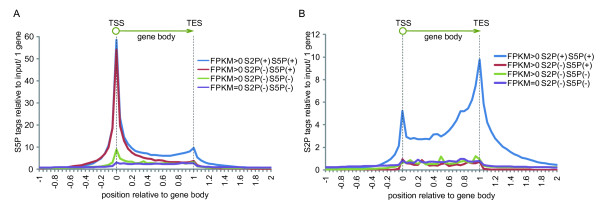
We first performed a precise quantitative measurement of mRNA by performing an optimized calculation in RNAseq. We then visualized the recruitment of various phosphorylated RNAPIIs, such as Ser2P and Ser5P. A combined analysis using optimized RNAseq and ChIPseq for phosphorylated RNAPII revealed that mRNA levels correlate with the various phosphorylation states of RNAPII.
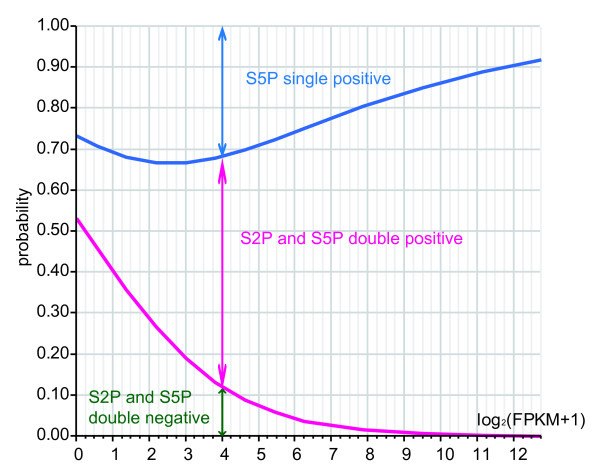
We demonstrated that the amount of mRNA is precisely reflected by the phased phosphorylation of Ser2 and Ser5. In particular, even the most "pausing" genes, for which only Ser5 is phosphorylated, were detectable at a certain level of mRNA. Our analysis indicated that the complexity of quantitative regulation of mRNA levels could be classified into three categories according to the phosphorylation state of RNAPII.
细胞功能受严格调控的 mRNA 量的平衡所调节。先前的报告表明,根据 RNA 聚合酶 II(RNAPII)的催化亚基 RPB1 的磷酸化状态,转录 mRNA 的 RNAPII 可以分为暂停状态和活跃转录状态。然而,mRNA 表达水平与 RNAPII 磷酸化状态之间的全基因组关联尚不清楚。虽然暂停基因的功能重要性是明确的,例如在小鼠胚胎干细胞分化中,但理解这种关联对于在表达谱数据(如微阵列和 RNAseq)中区分暂停基因和活跃转录基因至关重要。因此,我们使用 ChIPseq 和 RNAseq 的联合分析来检查 RNAPII 磷酸化与 mRNA 表达水平之间的相关性。
我们首先通过在 RNAseq 中进行优化计算来精确定量测量 mRNA。然后,我们可视化了各种磷酸化 RNAPII 的募集,如 Ser2P 和 Ser5P。使用优化的 RNAseq 和针对磷酸化 RNAPII 的 ChIPseq 的联合分析表明,mRNA 水平与 RNAPII 的各种磷酸化状态相关。
我们证明了 mRNA 的量由 Ser2 和 Ser5 的阶段性磷酸化精确反映。特别是,即使是只有 Ser5 磷酸化的最“暂停”基因,也可以在一定水平的 mRNA 上检测到。我们的分析表明,根据 RNAPII 的磷酸化状态,mRNA 水平的定量调节的复杂性可以分为三类。