Department of Pediatrics, B.J. Medical College and Sassoon General Hospital, Pune, MS, India.
Indian J Pediatr. 2012 Apr;79(4):459-66. doi: 10.1007/s12098-011-0578-7. Epub 2011 Oct 20.
To analyse the factors associated with increased mortality among Indian Children with H1N1.
Data were abstracted from available hospital records of children less than 12 y of age, who were admitted to Sassoon General Hospital in Pune, India, with confirmed pandemic 2009 H1N1 influenza infection from August 2009 through January 2010. Logistic regression analysis was used to identify clinical characteristics associated with mortality.
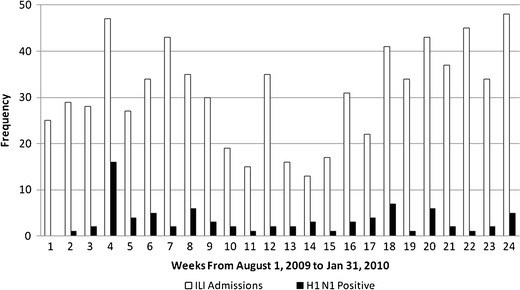
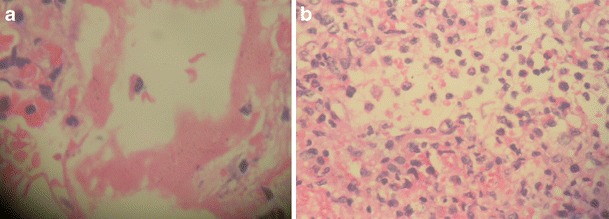
Of 775 pediatric cases admitted with Influenza Like Illness (ILI), 92 (11.8%) had confirmed H1N1 influenza infection. The median age of HIN1 cases was 2.5 y; 13 (14%) had an associated co-morbid condition. Median duration of symptoms was 4 d (interquartile range (IQR), 3-7 d). All 92 H1N1 cases received oseltamivir and empiric antimicrobials on admission. Intensive care unit (ICU) admission was required for 88 (96%) children, and 20 (23%) required mechanical ventilation.Fifteen children (16%) died; mortality was associated with presence of diffuse alveolar infiltrate on admission chest radiography (odds ratio (OR) 45, 95%CI :5.4-370; p < 0.001), use of corticosteroids in ARDS in children who required mechanical ventilation (OR 8.12, 95%CI: 2.44-27.05; p = 0.001), SpO(2) <80% on admission (OR 32.8, 95% CI: 5.8-185.5; p < 0.001) and presence of ARDS (OR 345.3, 95% CI :33.5-3564.1; p < 0.001). Necropsy from all children who died showed 9 (60%) had ARDS pattern and necrotizing pneumonitis, diffuse hemorrhage and interstitial pneumonia (n = 4 each, 27%) with gram positive organisms consistent with severe viral and bacterial co-infection.
Hypoxia, ARDS and use of corticosteroids in children with ARDS who were mechanically ventilated were the factors associated with increased odds of mortality. Necropsy also suggested bacterial co-infection as a risk factor.
分析与印度儿童 H1N1 死亡率增加相关的因素。
从 2009 年 8 月至 2010 年 1 月期间,在印度浦那的萨松总医院,对因确诊大流行性 2009 年 H1N1 流感而住院的年龄小于 12 岁的儿童的现有医院记录中提取数据。采用 logistic 回归分析确定与死亡率相关的临床特征。
在因流感样疾病(ILI)住院的 775 例儿科病例中,有 92 例(11.8%)确诊患有 H1N1 流感感染。HIN1 病例的中位年龄为 2.5 岁;有 13 例(14%)存在相关合并症。中位症状持续时间为 4 天(四分位距(IQR),3-7 天)。所有 92 例 H1N1 病例在入院时均接受了奥司他韦和经验性抗生素治疗。88 例(96%)儿童需要入住重症监护病房(ICU),20 例(23%)需要机械通气。15 例(16%)儿童死亡;死亡率与入院时胸部 X 线摄影显示弥漫性肺泡浸润有关(优势比(OR)45,95%CI:5.4-370;p<0.001),在需要机械通气的患有急性呼吸窘迫综合征(ARDS)的儿童中,使用皮质类固醇(OR 8.12,95%CI:2.44-27.05;p=0.001),入院时 SpO2<80%(OR 32.8,95%CI:5.8-185.5;p<0.001)和存在 ARDS(OR 345.3,95%CI:33.5-3564.1;p<0.001)。所有死亡儿童的尸检均显示 9 例(60%)具有 ARDS 模式和坏死性细支气管炎、弥漫性出血和间质性肺炎(各 4 例,27%),有革兰阳性菌,提示严重的病毒和细菌合并感染。
缺氧、ARDS 和在需要机械通气的患有 ARDS 的儿童中使用皮质类固醇是与死亡率增加相关的因素。尸检还表明细菌合并感染是一个危险因素。