Diabetes Center, University of California, San Francisco, San Francisco, California, USA.
Diabetes. 2011 Dec;60(12):3208-16. doi: 10.2337/db10-1192. Epub 2011 Oct 19.
Despite their origins in different germ layers, pancreatic islet cells share many common developmental features with neurons, especially serotonin-producing neurons in the hindbrain. Therefore, we tested whether these developmental parallels have functional consequences.
We used transcriptional profiling, immunohistochemistry, DNA-binding analyses, and mouse genetic models to assess the expression and function of key serotonergic genes in the pancreas.
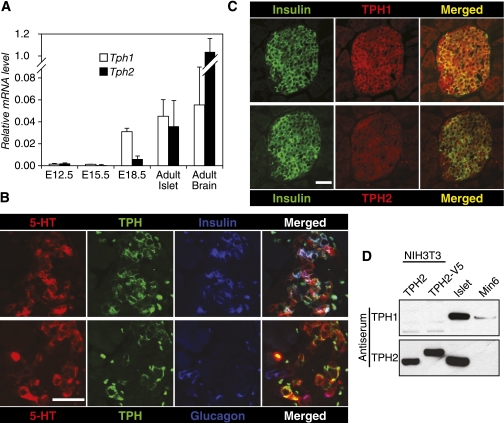
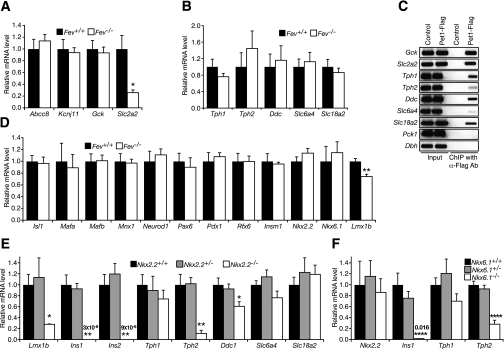
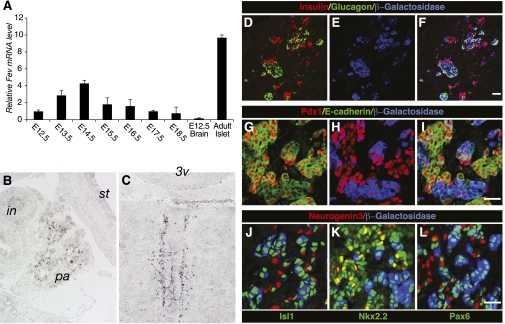
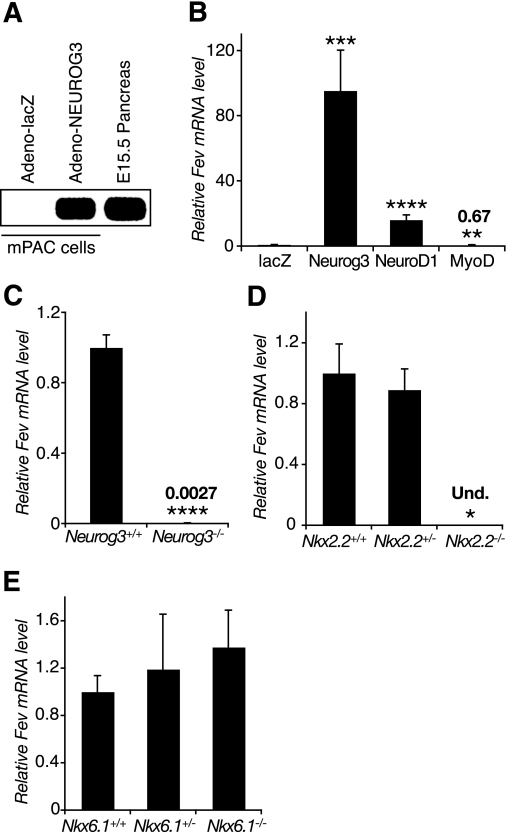
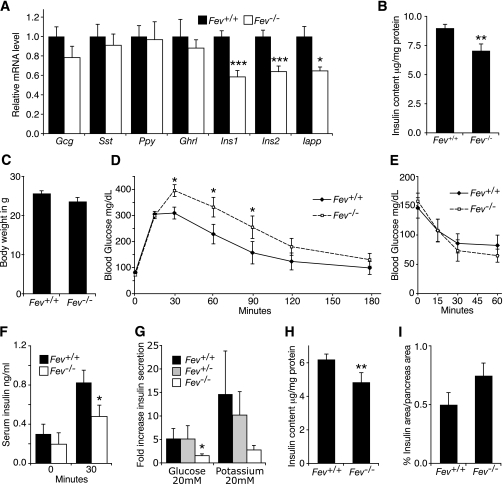
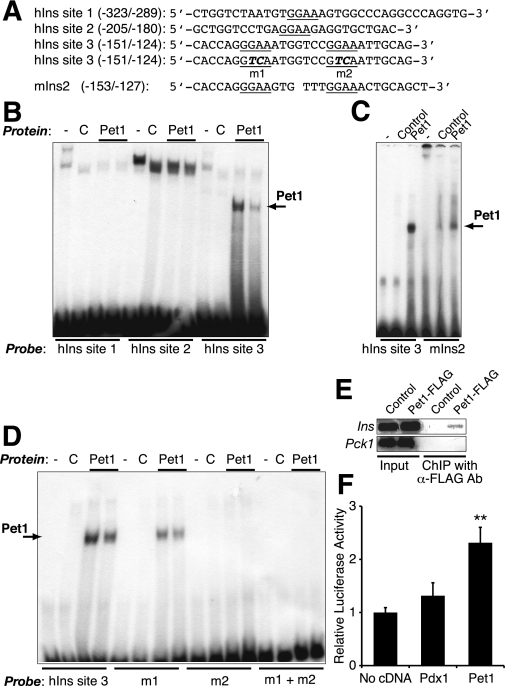
We found that islet cells expressed the genes encoding all of the products necessary for synthesizing, packaging, and secreting serotonin, including both isoforms of the serotonin synthetic enzyme tryptophan hydroxylase and the archetypal serotonergic transcription factor Pet1. As in serotonergic neurons, Pet1 expression in islets required homeodomain transcription factor Nkx2.2 but not Nkx6.1. In β-cells, Pet1 bound to the serotonergic genes but also to a conserved insulin gene regulatory element. Mice lacking Pet1 displayed reduced insulin production and secretion and impaired glucose tolerance.
These studies demonstrate that a common transcriptional cascade drives the differentiation of β-cells and serotonergic neurons and imparts the shared ability to produce serotonin. The interrelated biology of these two cell types has important implications for the pathology and treatment of diabetes.
尽管胰腺胰岛细胞起源于不同的胚层,但它们与神经元,尤其是后脑的 5-羟色胺能神经元,具有许多共同的发育特征。因此,我们测试了这些发育上的相似性是否具有功能后果。
我们使用转录谱分析、免疫组织化学、DNA 结合分析以及小鼠遗传模型来评估胰腺中关键 5-羟色胺能基因的表达和功能。
我们发现胰岛细胞表达了合成、包装和分泌 5-羟色胺所需的所有产物的基因,包括色氨酸羟化酶的两种同工酶和典型的 5-羟色胺能转录因子 Pet1。与 5-羟色胺能神经元一样,胰岛细胞中 Pet1 的表达需要同源域转录因子 Nkx2.2 而不是 Nkx6.1。在 β 细胞中,Pet1 结合于 5-羟色胺能基因,但也结合于保守的胰岛素基因调控元件。缺乏 Pet1 的小鼠表现出胰岛素产生和分泌减少以及葡萄糖耐量受损。
这些研究表明,一个共同的转录级联驱动了 β 细胞和 5-羟色胺能神经元的分化,并赋予了产生 5-羟色胺的共同能力。这两种细胞类型的相互关联的生物学对糖尿病的病理学和治疗具有重要意义。