Division of Immunology, Department of Internal Medicine, Interdisciplinary Graduate Program in Immunology, University of Iowa Carver College of Medicine, Veterans Affairs Medical Center, Iowa City, IA 52242, USA.
J Immunol. 2011 Nov 15;187(10):5099-113. doi: 10.4049/jimmunol.1002697. Epub 2011 Oct 19.
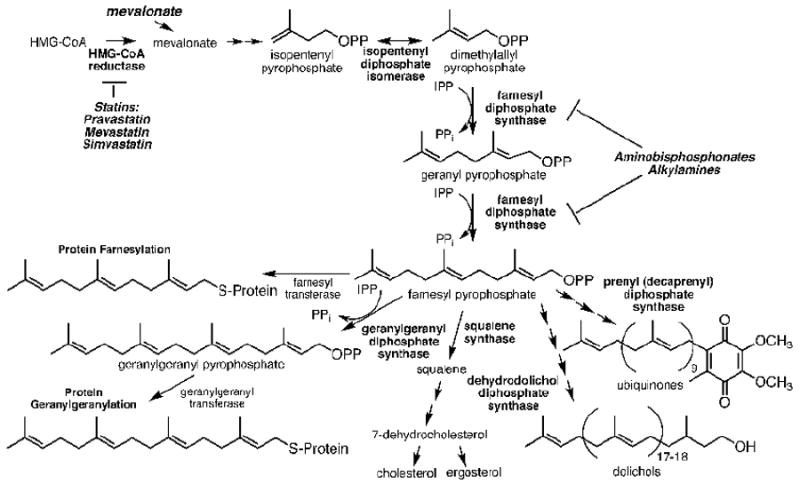
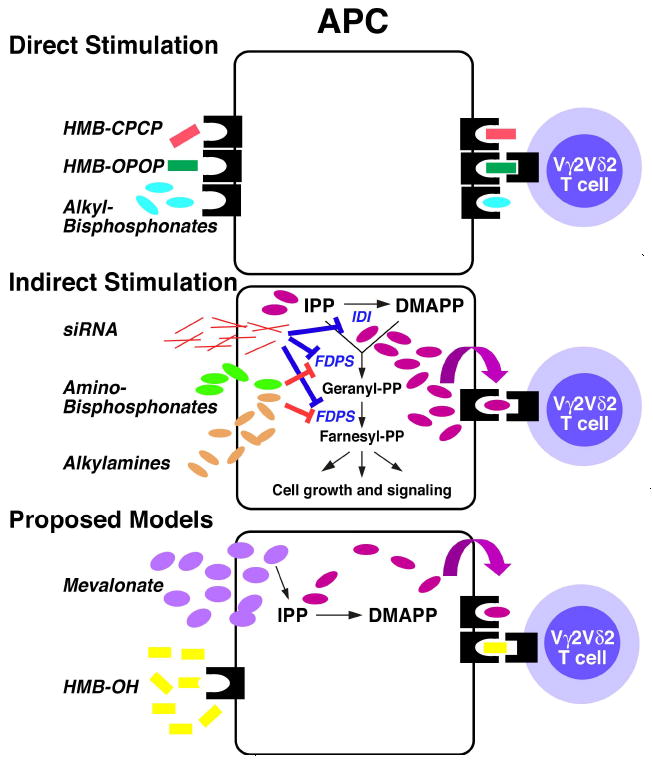
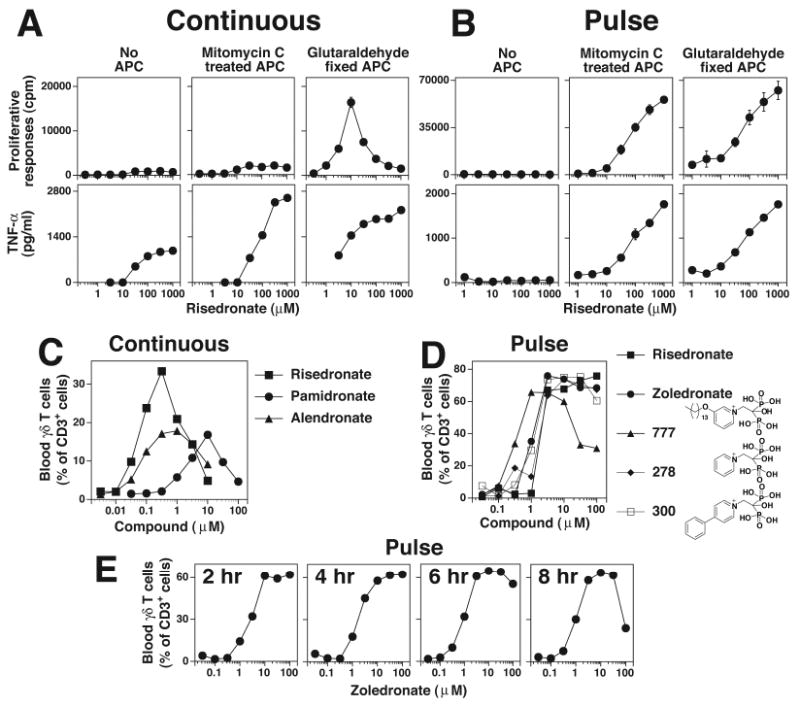
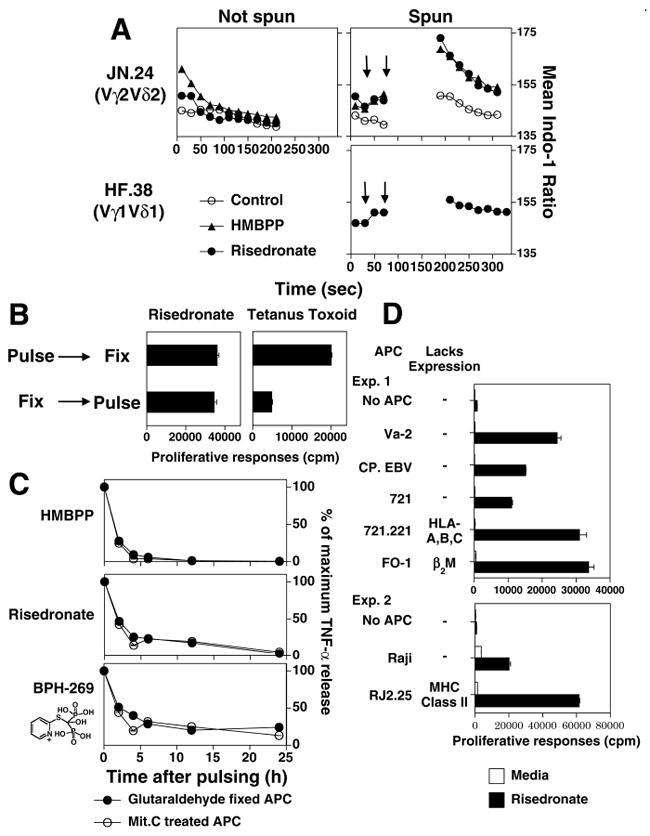
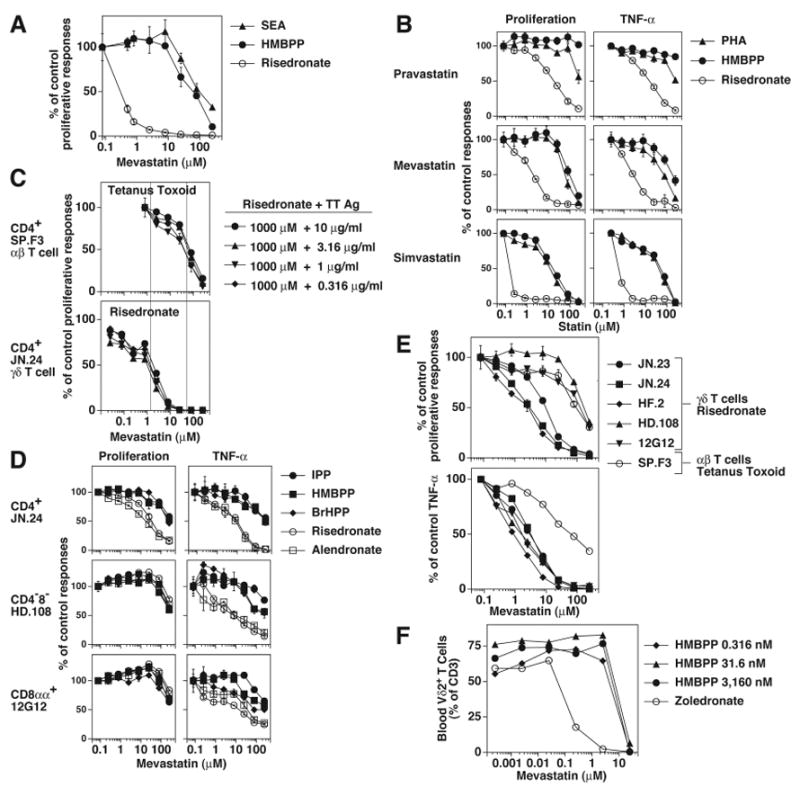
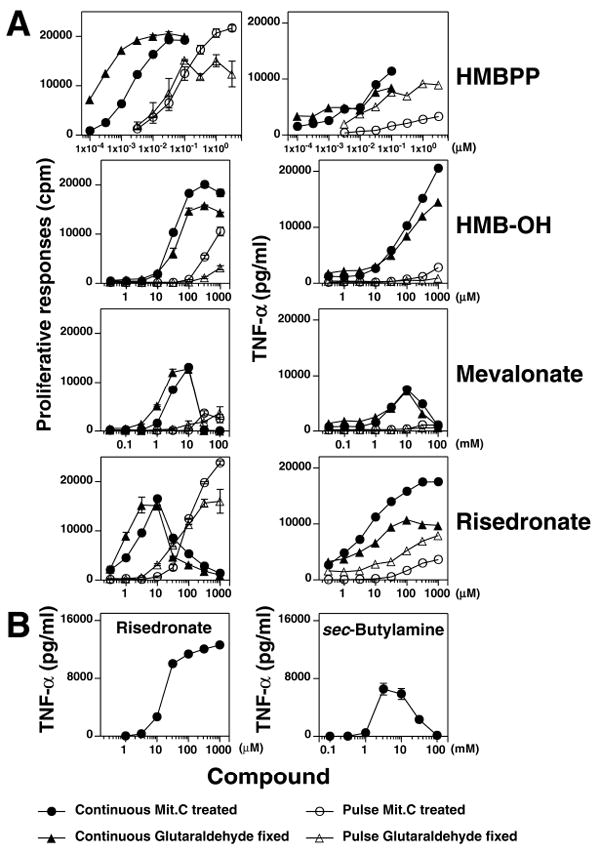
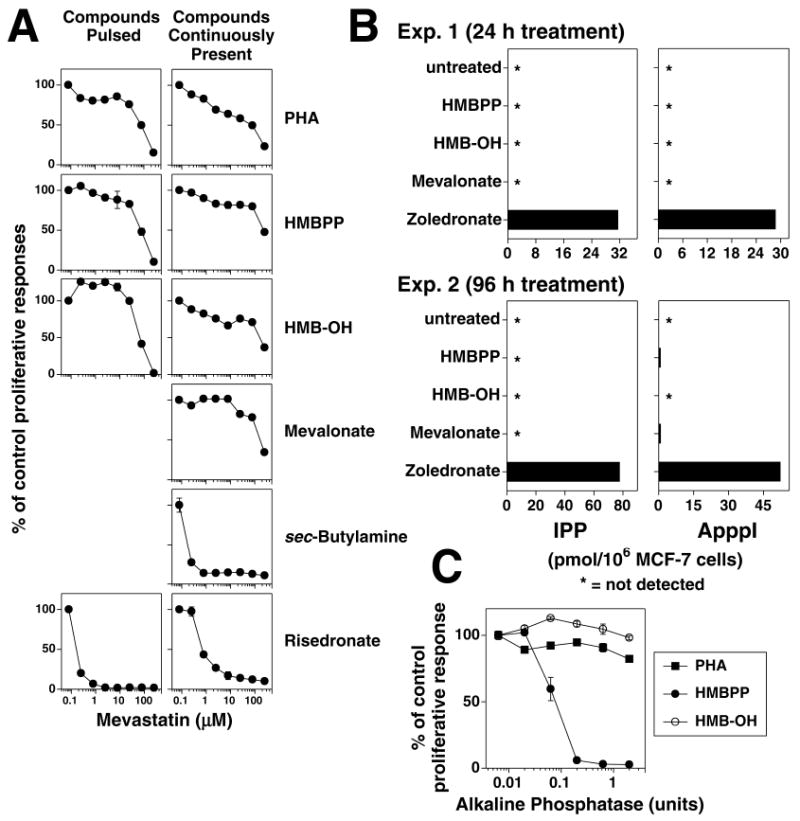
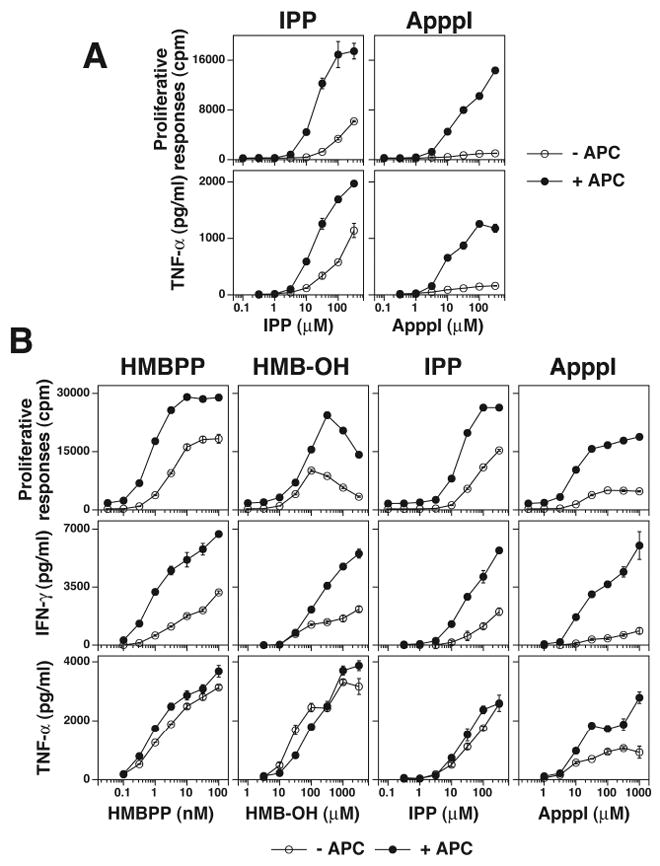
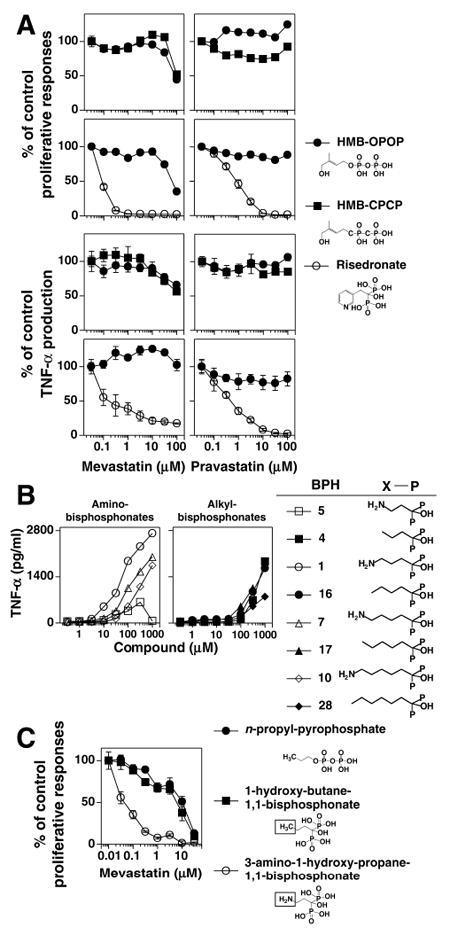
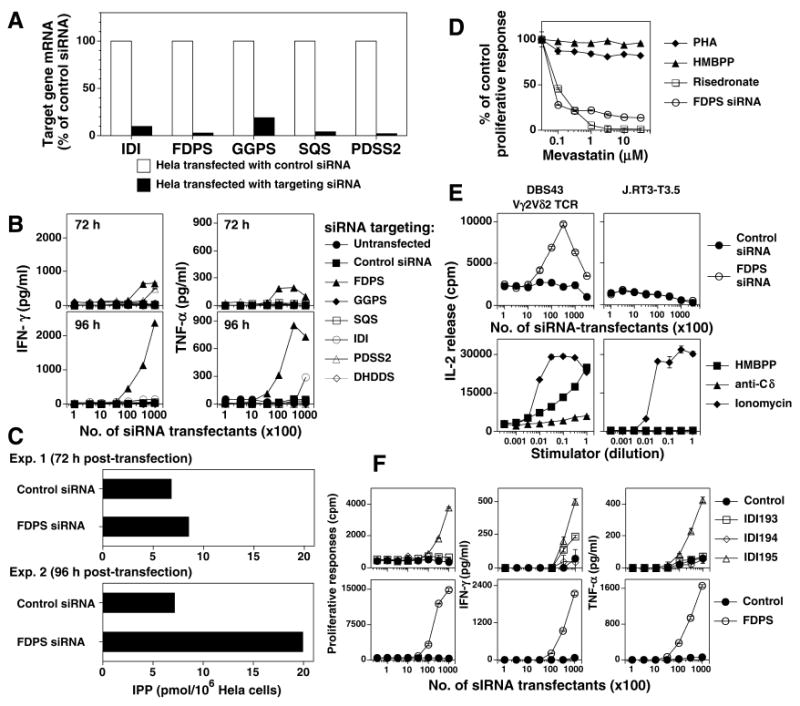
Human Vγ2Vδ2 T cells monitor isoprenoid metabolism by recognizing (E)-4-hydroxy-3-methyl-but-2-enyl pyrophosphate (HMBPP), an intermediate in the 2-C-methyl-d-erythritol-4-phosphate pathway used by microbes, and isopentenyl pyrophosphate (IPP), an intermediate in the mevalonate pathway used by humans. Aminobisphosphonates and alkylamines indirectly stimulate Vγ2Vδ2 cells by inhibiting farnesyl diphosphate synthase (FDPS) in the mevalonate pathway, thereby increasing IPP/triphosphoric acid 1-adenosin-5'-yl ester 3-(3-methylbut-3-enyl) ester that directly stimulate. In this study, we further characterize stimulation by these compounds and define pathways used by new classes of compounds. Consistent with FDPS inhibition, stimulation of Vγ2Vδ2 cells by aminobisphosphonates and alkylamines was much more sensitive to statin inhibition than stimulation by prenyl pyrophosphates; however, the continuous presence of aminobisphosphonates was toxic for T cells and blocked their proliferation. Aminobisphosphonate stimulation was rapid and prolonged, independent of known Ag-presenting molecules, and resistant to fixation. New classes of stimulatory compounds-mevalonate, the alcohol of HMBPP, and alkenyl phosphonates-likely stimulate differently. Mevalonate, a rate-limiting metabolite, appears to enter cells to increase IPP levels, whereas the alcohol of HMBPP and alkenyl phosphonates are directly recognized. The critical chemical feature of bisphosphonates is the amino moiety, because its loss switched aminobisphosphonates to direct Ags. Transfection of APCs with small interfering RNA downregulating FDPS rendered them stimulatory for Vγ2Vδ2 cells and increased cellular IPP. Small interfering RNAs for isopentenyl diphosphate isomerase functioned similarly. Our results show that a variety of manipulations affecting isoprenoid metabolism lead to stimulation of Vγ2Vδ2 T cells and that pulsing aminobisphosphonates would be more effective for the ex vivo expansion of Vγ2Vδ2 T cells for adoptive cancer immunotherapy.
人 Vγ2Vδ2 T 细胞通过识别(E)-4-羟基-3-甲基-2-丁烯基焦磷酸(HMBPP),即微生物使用的 2-C-甲基-D-赤-4-磷酸途径的中间产物,以及异戊烯焦磷酸(IPP),即人类使用的甲羟戊酸途径的中间产物,来监测异戊烯代谢物。氨基双膦酸盐和烷基胺通过抑制甲羟戊酸途径中的法呢基二磷酸合酶(FDPS)间接刺激 Vγ2Vδ2 细胞,从而增加直接刺激的 IPP/三磷酸腺苷 1-腺苷-5′-一磷酸 3-(3-甲基-2-丁烯基)酯。在这项研究中,我们进一步描述了这些化合物的刺激作用,并确定了新类化合物所使用的途径。与 FDPS 抑制一致,氨基双膦酸盐和烷基胺对 Vγ2Vδ2 细胞的刺激作用比焦磷酸酯的刺激作用对他汀类药物的抑制更为敏感;然而,氨基双膦酸盐的持续存在对 T 细胞有毒,阻止了它们的增殖。氨基双膦酸盐的刺激作用迅速而持久,独立于已知的 Ag 呈递分子,并且不受固定的影响。新类别的刺激化合物——甲羟戊酸、HMBPP 的醇和烯基膦酸酯——可能以不同的方式刺激。甲羟戊酸是一种限速代谢物,它似乎进入细胞以增加 IPP 水平,而 HMBPP 的醇和烯基膦酸酯则被直接识别。双膦酸盐的关键化学特征是氨基部分,因为它的缺失将氨基双膦酸盐转变为直接的 Ag。用小干扰 RNA 转染 APC 下调 FDPS 可使其对 Vγ2Vδ2 细胞具有刺激作用,并增加细胞内 IPP。异戊烯二磷酸异构酶的小干扰 RNA 也具有类似的功能。我们的结果表明,多种影响异戊烯代谢物的操作会导致 Vγ2Vδ2 T 细胞的刺激,并且脉冲氨基双膦酸盐将更有效地用于体外扩增 Vγ2Vδ2 T 细胞,以用于过继性癌症免疫治疗。