Kotil Kadir, Ozyuvaci Emine
Department of Neurosurgery, Istanbul Educational and Research Hospital, Istanbul, Turkey.
J Craniovertebr Junction Spine. 2011 Jan;2(1):27-31. doi: 10.4103/0974-8237.85310.
Cervical laminectomies with transpedicular insertion technique is known to be a biomechanically stronger method in cervical pathologies. However, its frequency of use is low in the routine practice, as the pedicle is thin and risk of neurovascular damage is high. In this study, we emphasize the results of cervical laminectomies with transpedicular fixation using fluoroscopy in degenerative cervical spine disorder.
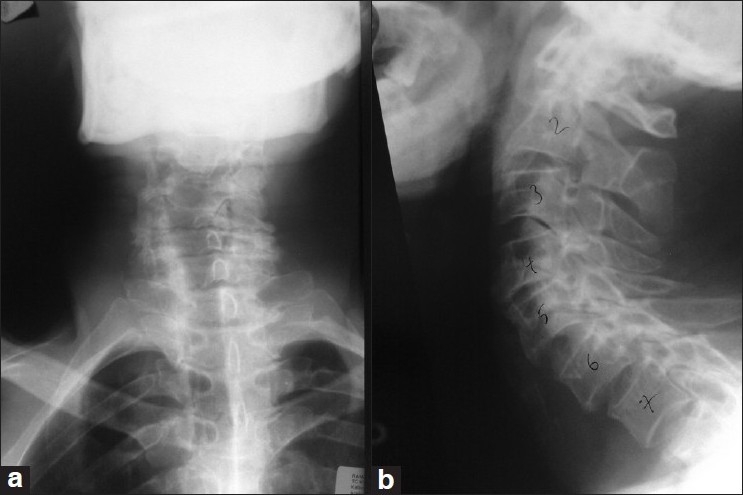
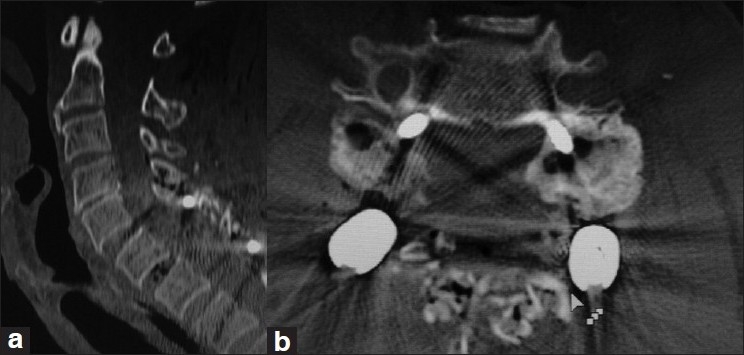
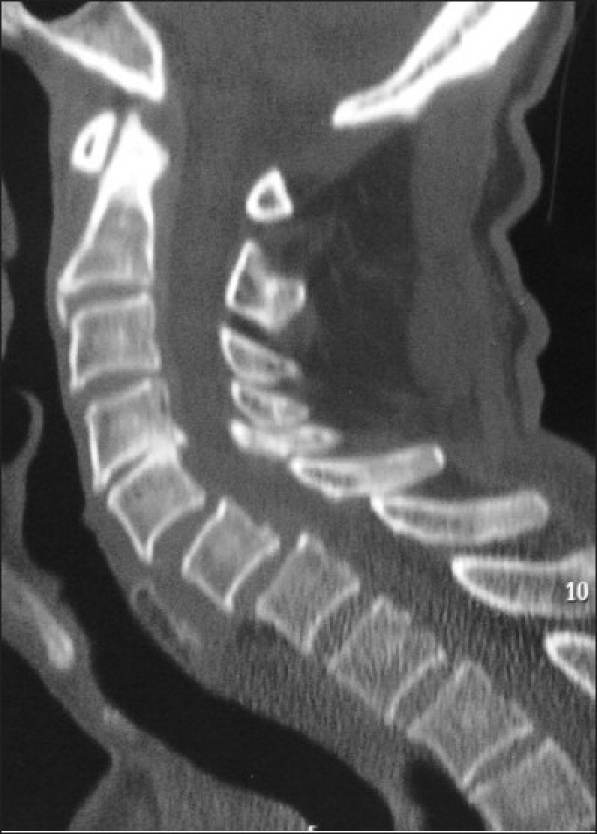
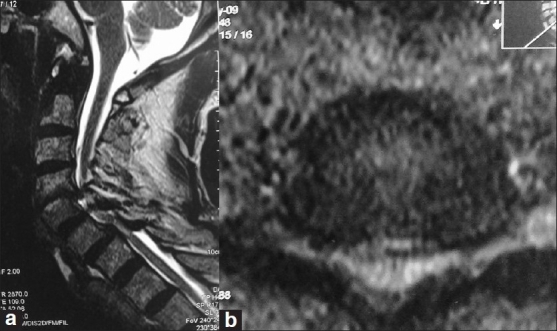
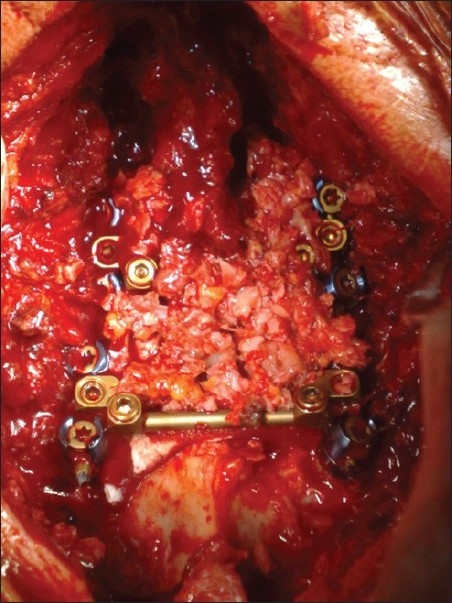
Postoperative malposition of the transpedicular screws of the 70 pedicles of the 10 patients we operated due to degenerative stenosis in the cervical region, were investigated. Fixation was performed between C3 and C7, and we used resected lamina bone chips for fusion. Clinical indicators included age, gender, neurologic status, surgical indication, and number of levels stabilized. Dominant vertebral artery of all the patients was evaluated with Doppler ultrasonography. Preoperative and postoperative Nurick grade of each patient was documented.
No patients experienced neurovascular injury as a result of pedicle screw placement. Two patients had screw malposition, which did not require reoperation due to minor breaking. Most patients had 32-mm screws placed. Postoperative computed tomography scanning showed no compromise of the foramen transversarium. A total of 70 pedicle screws were placed. Good bony fusion was observed in all patients. At follow-up, 9/10 (90%) patients had improved in their Nurick grades. The cases were followed-up for an average of 35.7 months (30-37 months).
Use of the cervical pedicular fixation (CPF) provides a very strong three-column stabilization but also carries vascular injury without nerve damage. Laminectomies technique may reduce the risk of malposition due to visualization of the spinal canal. CPF can be performed in a one-stage posterior procedure. This technique yielded good fusion rate without complications and can be considered as a good alternative compared other techniques.
经椎弓根置入技术的颈椎椎板切除术在颈椎疾病中是一种生物力学上更强的方法。然而,在常规实践中其使用频率较低,因为椎弓根较细且神经血管损伤风险较高。在本研究中,我们着重介绍在退行性颈椎疾病中使用透视引导下经椎弓根固定的颈椎椎板切除术的结果。
对我们因颈椎退行性狭窄而手术的10例患者的70个椎弓根的椎弓根螺钉术后位置不当情况进行了研究。固定在C3至C7之间进行,我们使用切除的椎板骨块进行融合。临床指标包括年龄、性别、神经状况、手术指征和稳定的节段数。所有患者的优势椎动脉均用多普勒超声进行评估。记录每位患者术前和术后的Nurick分级。
没有患者因椎弓根螺钉置入而发生神经血管损伤。2例患者出现螺钉位置不当,但因轻微移位无需再次手术。大多数患者置入的是32毫米的螺钉。术后计算机断层扫描显示横突孔未受影响。共置入70枚椎弓根螺钉。所有患者均观察到良好的骨融合。随访时,10例患者中有9例(90%)的Nurick分级有所改善。这些病例平均随访35.7个月(30 - 37个月)。
颈椎椎弓根固定(CPF)提供了非常强大的三柱稳定作用,但也存在血管损伤而无神经损伤的风险。椎板切除术技术可能因椎管可视化而降低位置不当的风险。CPF可在一期后路手术中进行。该技术产生了良好的融合率且无并发症,与其他技术相比可被视为一种良好的替代方法。