Department of Chemical Engineering, Faculty of Engineering, Graduate School, Kyushu University, 744 Moto-oka, Nishi-ku, Fukuoka 819-0395, Japan.
Biotechnol Biofuels. 2011 Oct 21;4(1):42. doi: 10.1186/1754-6834-4-42.
The enzymatic production of biodiesel through alcoholysis of triglycerides has become more attractive because it shows potential in overcoming the drawbacks of chemical processes. In this study, we investigate the production of biodiesel from crude, non-edible Jatropha oil and methanol to characterize Burkholderia cepacia lipase immobilized in an n-butyl-substituted hydrophobic silica monolith. We also evaluate the performance of a lipase-immobilized silica monolith bioreactor in the continuous production of biodiesel.
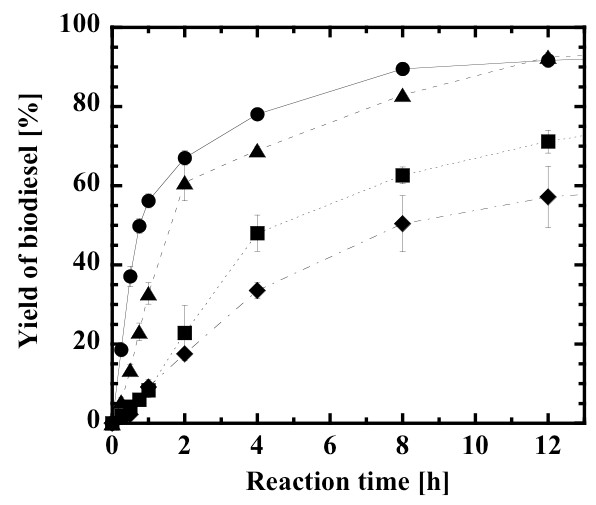
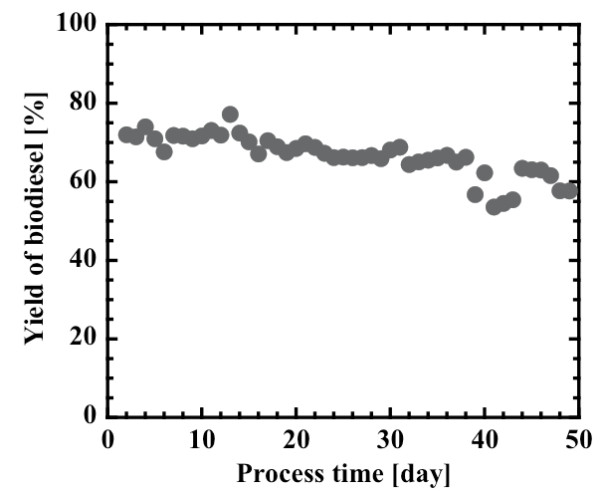
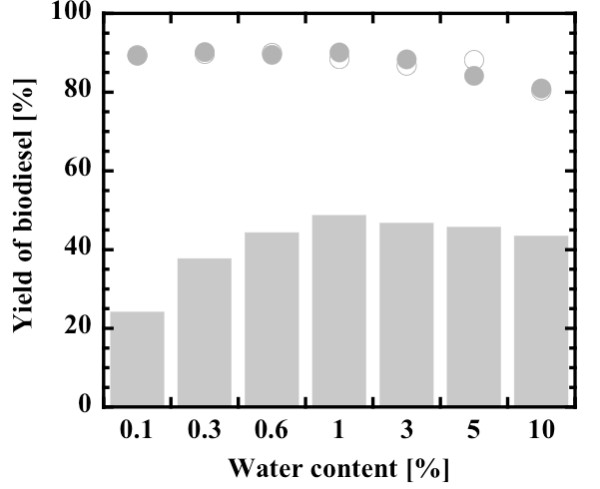
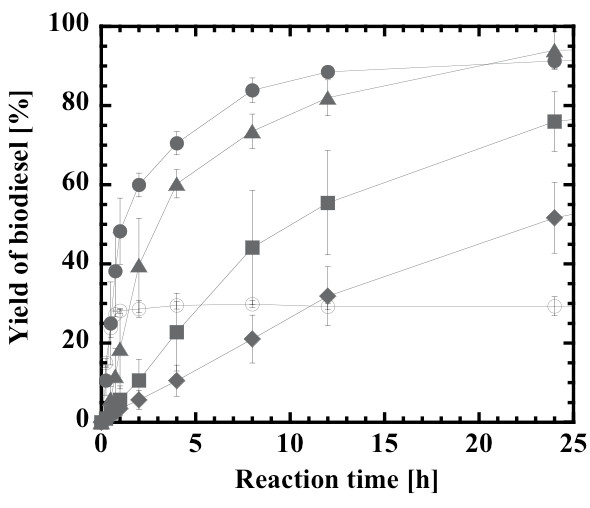
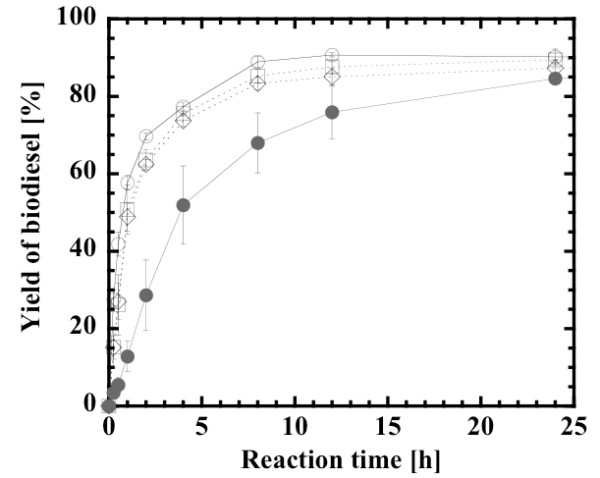
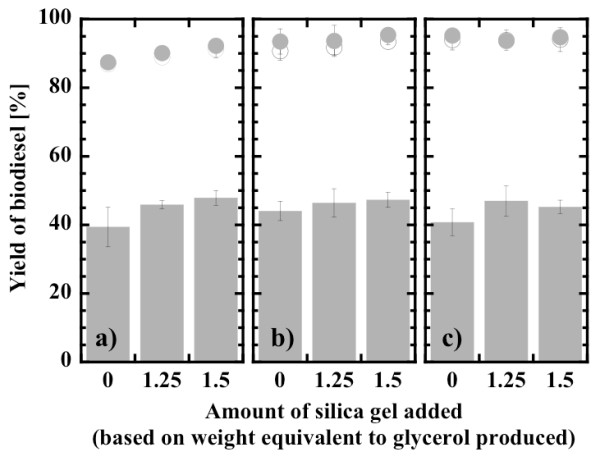
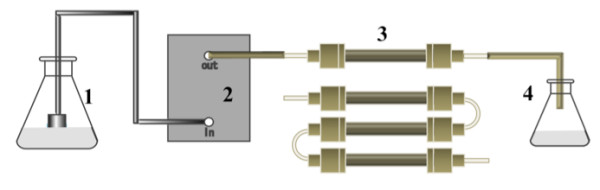
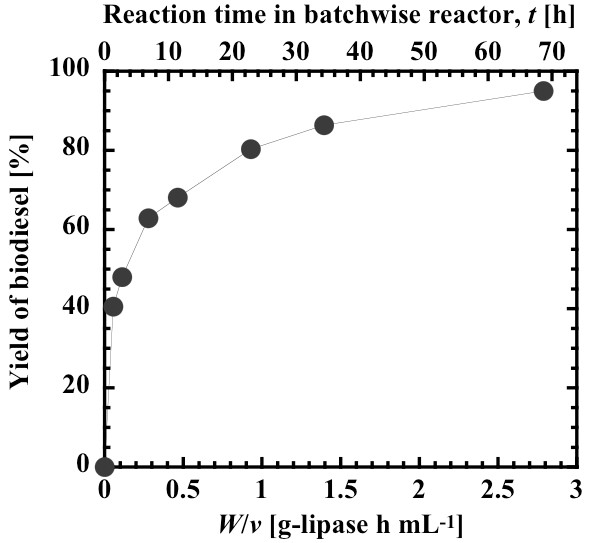
The Jatropha oil used contained 18% free fatty acids, which is problematic in a base-catalyzed process. In the lipase-catalyzed reaction, the presence of free fatty acids made the reaction mixture homogeneous and allowed bioconversion to proceed to 90% biodiesel yield after a 12 hour reaction time. The optimal molar ratio of methanol to oil was 3.3 to 3.5 parts methanol to one part oil, with water content of 0.6% (w/w). Further experiments revealed that B. cepacia lipase immobilized in hydrophobic silicates was sufficiently tolerant to methanol, and glycerol adsorbed on the support disturbed the reaction to some extent in the present reaction system. The continuous production of biodiesel was performed at steady state using a lipase-immobilized silica monolith bioreactor loaded with 1.67 g of lipase. The yield of 95% was reached at a flow rate of 0.6 mL/h, although the performance of the continuous bioreactor was somewhat below that predicted from the batch reactor. The bioreactor was operated successfully for almost 50 days with 80% retention of the initial yield.
The presence of free fatty acids originally contained in Jatropha oil improved the reaction efficiency of the biodiesel production. A combination of B. cepacia lipase and its immobilization support, n-butyl-substituted silica monolith, was effective in the production of biodiesel. This procedure is easily applicable to the design of a continuous flow-through bioreactor system.
通过甘油三酯的醇解来生产生物柴油的酶法已变得更具吸引力,因为它在克服化学过程的缺点方面显示出潜力。在这项研究中,我们研究了利用粗制的、不可食用的麻疯树油和甲醇来生产生物柴油,所用的方法是固定化 Burkholderia cepacia 脂肪酶于正丁基取代的疏水性硅胶整体柱。我们还评估了固定化脂肪酶硅胶整体柱生物反应器在连续生产生物柴油中的性能。
所用的麻疯树油含有 18%的游离脂肪酸,这在碱催化过程中是一个问题。在脂肪酶催化反应中,游离脂肪酸的存在使反应混合物呈均相,使生物转化在 12 小时的反应时间后达到 90%的生物柴油产率。甲醇与油的最佳摩尔比为 3.3 至 3.5 份甲醇对 1 份油,水含量为 0.6%(w/w)。进一步的实验表明,固定化于疏水性硅酸盐的 Burkholderia cepacia 脂肪酶对甲醇有足够的耐受性,并且在本反应体系中,吸附在载体上的甘油在一定程度上干扰了反应。使用负载 1.67 g 脂肪酶的固定化脂肪酶硅胶整体柱生物反应器在稳态下进行生物柴油的连续生产。在流速为 0.6 mL/h 时达到 95%的产率,尽管连续生物反应器的性能略低于批式反应器的预测值。该生物反应器在近 50 天的时间内成功运行,初始产率保持在 80%。
麻疯树油中原有的游离脂肪酸提高了生物柴油生产的反应效率。 Burkholderia cepacia 脂肪酶与其固定化载体正丁基取代硅胶整体柱的组合在生物柴油的生产中是有效的。该方法易于应用于连续流动式生物反应器系统的设计。