Inserm Unit 851, Lyon, France.
BMC Microbiol. 2011 Oct 20;11:234. doi: 10.1186/1471-2180-11-234.
The genus Flavivirus encompasses more than 50 distinct species of arthropod-borne viruses, including several major human pathogens, such as West Nile virus, yellow fever virus, Japanese encephalitis virus and the four serotypes of dengue viruses (DENV type 1-4). Each year, flaviviruses cause more than 100 million infections worldwide, some of which lead to life-threatening conditions such as encephalitis or haemorrhagic fever. Among the viral proteins, NS3 and NS5 proteins constitute the major enzymatic components of the viral replication complex and are essential to the flavivirus life cycle.
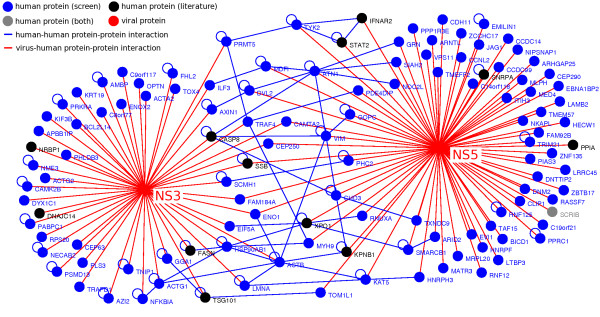
We report here the results of a high-throughput yeast two-hybrid screen to identify the interactions between human host proteins and the flavivirus NS3 and NS5 proteins. Using our screen results and literature curation, we performed a global analysis of the NS3 and NS5 cellular targets based on functional annotation with the Gene Ontology features. We finally created the first flavivirus NS3 and NS5 proteins interaction network and analysed the topological features of this network. Our proteome mapping screen identified 108 human proteins interacting with NS3 or NS5 proteins or both. The global analysis of the cellular targets revealed the enrichment of host proteins involved in RNA binding, transcription regulation, vesicular transport or innate immune response regulation.
We proposed that the selective disruption of these newly identified host/virus interactions could represent a novel and attractive therapeutic strategy in treating flavivirus infections. Our virus-host interaction map provides a basis to unravel fundamental processes about flavivirus subversion of the host replication machinery and/or immune defence strategy.
黄病毒属包括 50 多种不同的节肢动物传播病毒,包括几种主要的人类病原体,如西尼罗河病毒、黄热病病毒、日本脑炎病毒和四种登革热病毒(DENV 型 1-4)。每年,黄病毒在全球造成超过 1 亿例感染,其中一些导致威胁生命的情况,如脑炎或出血热。在病毒蛋白中,NS3 和 NS5 蛋白构成病毒复制复合物的主要酶成分,对黄病毒生命周期至关重要。
我们在此报告了使用高通量酵母双杂交筛选来鉴定人类宿主蛋白与黄病毒 NS3 和 NS5 蛋白之间相互作用的结果。根据基因本体论功能注释,我们利用我们的筛选结果和文献整理,对 NS3 和 NS5 细胞靶标进行了全局分析。我们最终创建了第一个黄病毒 NS3 和 NS5 蛋白相互作用网络,并分析了该网络的拓扑特征。我们的蛋白质组映射筛选鉴定了 108 种与人 NS3 或 NS5 蛋白相互作用或两者都相互作用的人类蛋白。细胞靶标的全局分析显示,宿主蛋白富集参与 RNA 结合、转录调节、囊泡运输或先天免疫反应调节。
我们提出,选择性破坏这些新鉴定的宿主/病毒相互作用可能代表治疗黄病毒感染的一种新的有吸引力的治疗策略。我们的病毒-宿主相互作用图谱为揭示黄病毒对宿主复制机制和/或免疫防御策略的颠覆的基本过程提供了基础。