Keller Rob C A
Section Chemistry, Charlemagne College, Wilhelminastraat 13-15, 6524 AJ Nijmegen, The Netherlands; E-Mail:
Int J Mol Sci. 2011;12(9):5577-91. doi: 10.3390/ijms12095577. Epub 2011 Aug 30.
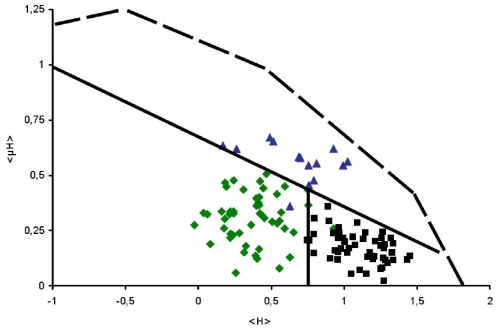
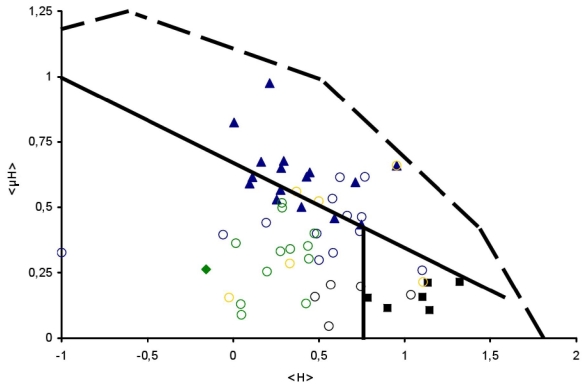
The Eisenberg plot or hydrophobic moment plot methodology is one of the most frequently used methods of bioinformatics. Bioinformatics is more and more recognized as a helpful tool in Life Sciences in general, and recent developments in approaches recognizing lipid binding regions in proteins are promising in this respect. In this study a bioinformatics approach specialized in identifying lipid binding helical regions in proteins was used to obtain an Eisenberg plot. The validity of the Heliquest generated hydrophobic moment plot was checked and exemplified. This study indicates that the Eisenberg plot methodology can be transferred to another hydrophobicity scale and renders a user-friendly approach which can be utilized in routine checks in protein-lipid interaction and in protein and peptide lipid binding characterization studies. A combined approach seems to be advantageous and results in a powerful tool in the search of helical lipid-binding regions in proteins and peptides. The strength and limitations of the Eisenberg plot approach itself are discussed as well. The presented approach not only leads to a better understanding of the nature of the protein-lipid interactions but also provides a user-friendly tool for the search of lipid-binding regions in proteins and peptides.
艾森伯格图或疏水矩图方法是生物信息学中最常用的方法之一。一般来说,生物信息学越来越被视为生命科学中的一种有用工具,并且在识别蛋白质中脂质结合区域的方法方面,最近的进展在这方面很有前景。在本研究中,使用一种专门用于识别蛋白质中脂质结合螺旋区域的生物信息学方法来获得艾森伯格图。对Heliquest生成的疏水矩图的有效性进行了检验和举例说明。本研究表明,艾森伯格图方法可以转换到另一种疏水性标度,并提供一种用户友好的方法,可用于蛋白质-脂质相互作用的常规检查以及蛋白质和肽脂质结合特性研究。一种联合方法似乎具有优势,并在寻找蛋白质和肽中的螺旋脂质结合区域方面产生了一种强大的工具。同时也讨论了艾森伯格图方法本身的优点和局限性。所提出的方法不仅有助于更好地理解蛋白质-脂质相互作用的本质,而且为寻找蛋白质和肽中的脂质结合区域提供了一种用户友好的工具。