Division of Microbial Resources, Research Center for Chemistry, Biology and Agriculture (CPQBA), UNICAMP, CP 6171, CEP 13081-970, Campinas, SP, Brazil.
AMB Express. 2011 Oct 22;1:35. doi: 10.1186/2191-0855-1-35.
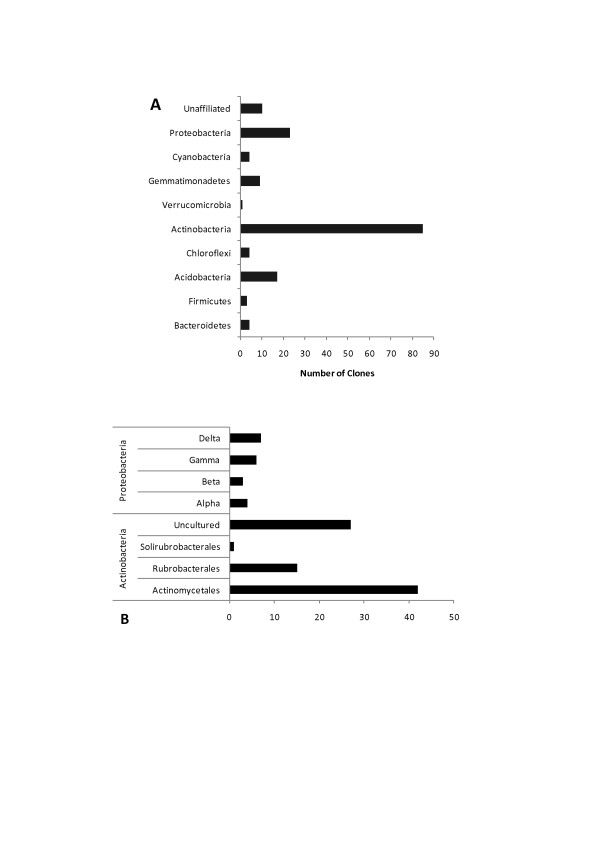
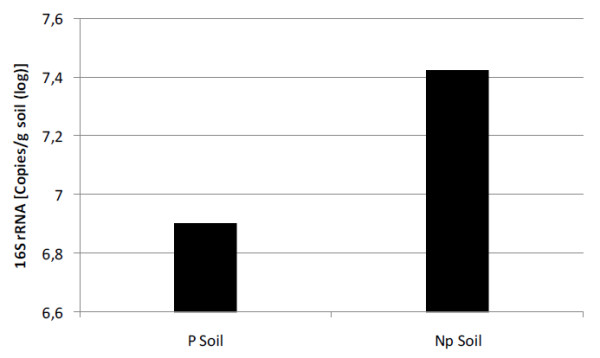
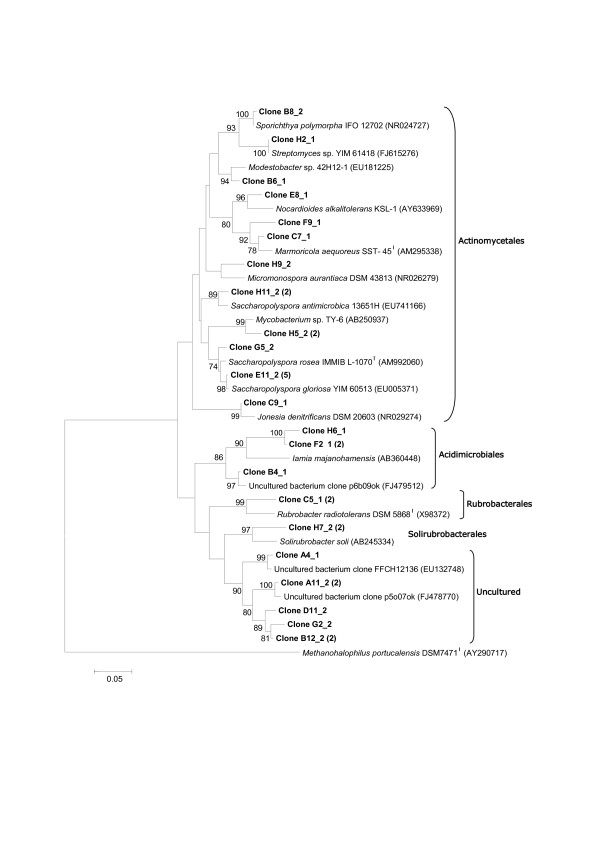
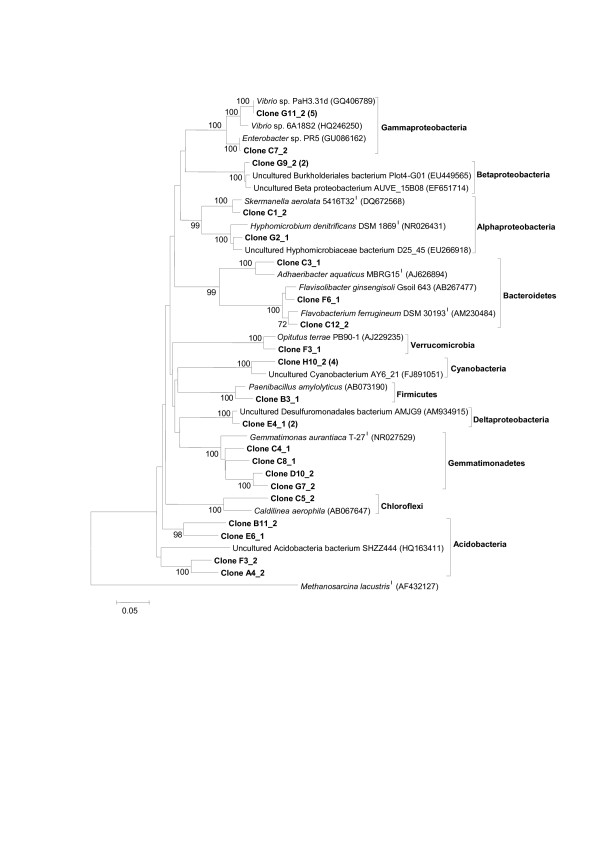
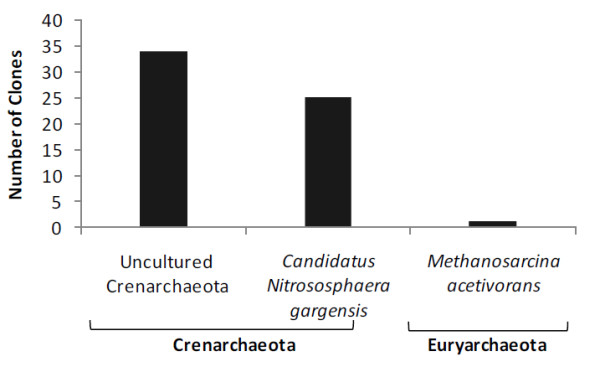
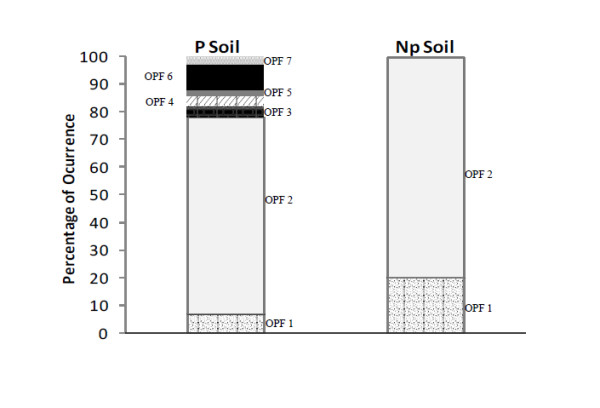
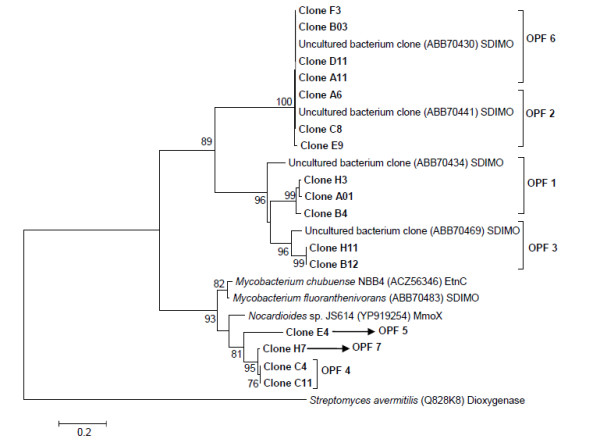
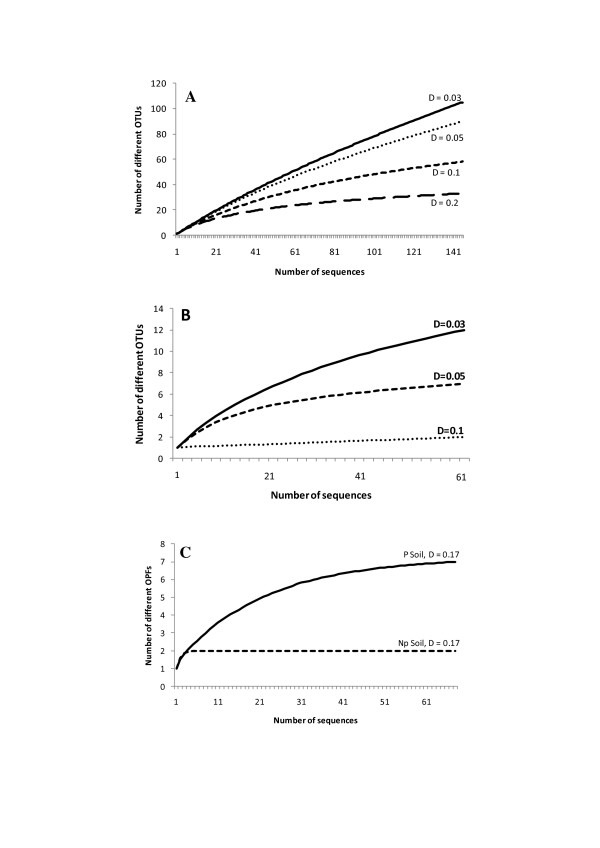
The upper parts of oil field structures may leak gas which is supposed to be indirectly detected by the soil bacterial populations. Such microorganisms are capable of consuming this gas, supporting the Microbial Prospection of Oil and Gas (MPOG) methodology. The goal of the present work was to characterize microbial communities involved in short-chain alkane metabolism, namely methane, ethane and propane, in samples from a petroliferous (P) soil through clone libraries of the 16S rRNA gene of the Domains Bacteria and Archaea and the catabolic gene coding for the soluble di-iron monooxygenase (SDIMO) enzyme alpha subunit. The microbial community presented high abundance of the bacterial phylum Actinobacteria, which represented 53% of total clones, and the Crenarchaeota group I.1b from the Archaea Domain. The analysis of the catabolic genes revealed the occurrence of seven Operational Protein Families (OPF) and higher richness (Chao = 7; Ace = 7.5) and diversity (Shannon = 1.09) in P soil when compared with a non-petroliferous (Np) soil (Chao = 2; Ace = 0, Shannon = 0.44). Clones related to the ethene monooxygenase (EtnC) and methane monooxygenase (MmoX) coding genes occurred only in P soil, which also presented higher levels of methane and lower levels of ethane and propane, revealed by short-chain hydrocarbon measures. Real-time PCR results suggested that the SDIMO genes occur in very low abundance in the soil samples under study. Further investigations on SDIMOs genes in natural environments are necessary to unravel their still uncharted diversity and to provide reliable tools for the prospection of degrading populations.
油田结构的上部可能会泄漏气体,这些气体应该可以通过土壤中的细菌种群间接检测到。这些微生物能够消耗这种气体,支持油气微生物勘探(MPOG)方法。本工作的目的是通过细菌和古菌域 16S rRNA 基因和编码可溶性二铁单加氧酶(SDIMO)酶α亚基的降解基因的克隆文库,对参与短链烷烃代谢(即甲烷、乙烷和丙烷)的微生物群落进行特征描述。该微生物群落中细菌门放线菌的丰度很高,占总克隆数的 53%,古菌域的 Crenarchaeota 组 I.1b。对降解基因的分析表明,存在七个操作蛋白家族(OPF),并且与非产油(Np)土壤相比,产油(P)土壤的丰富度(Chao = 7;Ace = 7.5)和多样性(Shannon = 1.09)更高。与乙烯单加氧酶(EtnC)和甲烷单加氧酶(MmoX)编码基因相关的克隆仅在 P 土壤中出现,该土壤还表现出较高的甲烷水平和较低的乙烷和丙烷水平,这是通过短链烃测量得出的。实时 PCR 结果表明,SDIMO 基因在研究土壤样本中的丰度非常低。进一步研究自然环境中的 SDIMOs 基因对于揭示它们尚未被发现的多样性并为降解种群的勘探提供可靠工具是必要的。