School of Paediatrics and Child Health, The University of Western Australia, Perth, Western Australia, Australia.
BMC Pediatr. 2011 Oct 24;11:94. doi: 10.1186/1471-2431-11-94.
Bacteria which are metabolically active yet unable to be cultured and eradicated by antibiotic treatment are present in the middle ear effusion of children with chronic otitis media with effusion (COME) and recurrent acute otitis media (rAOM). These observations are suggestive of biofilm presence or intracellular sequestration of bacteria and may play a role in OM pathogenesis. The aim of this project is to provide evidence for the presence of otopathogenic bacteria intracellularly or within biofilm in the middle ear mucosa of children with COME or rAOM.
Middle ear mucosal biopsies from 20 children with COME or rAOM were examined for otopathogenic bacteria (either in biofilm or located intracellularly) using transmission electron microscopy (TEM) or species specific fluorescent in situ hybridisation (FISH) and confocal laser scanning microscopy (CLSM). One healthy control biopsy from a child undergoing cochlear implant surgery was also examined.
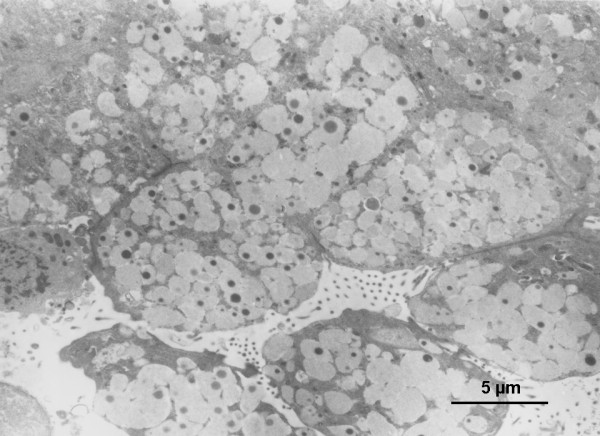
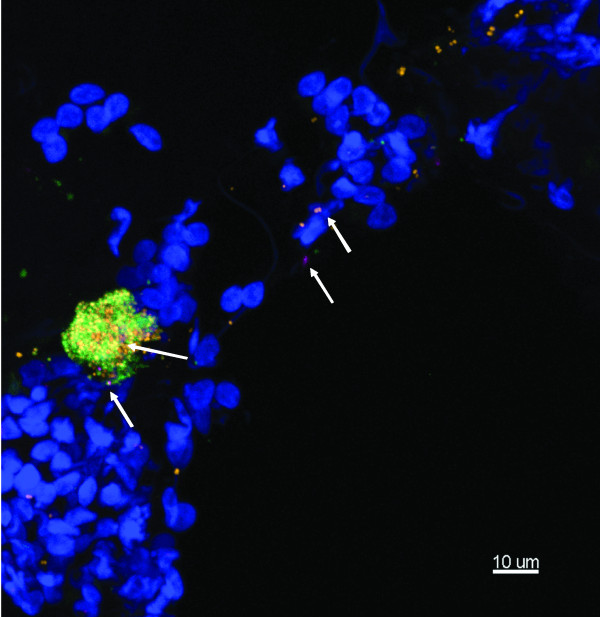
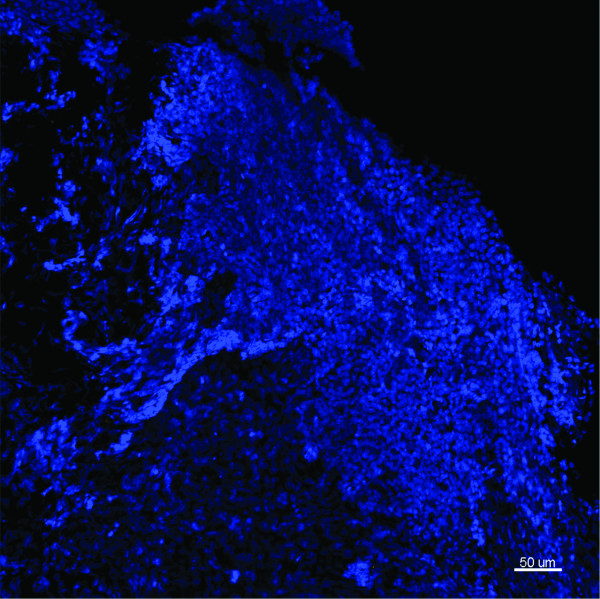
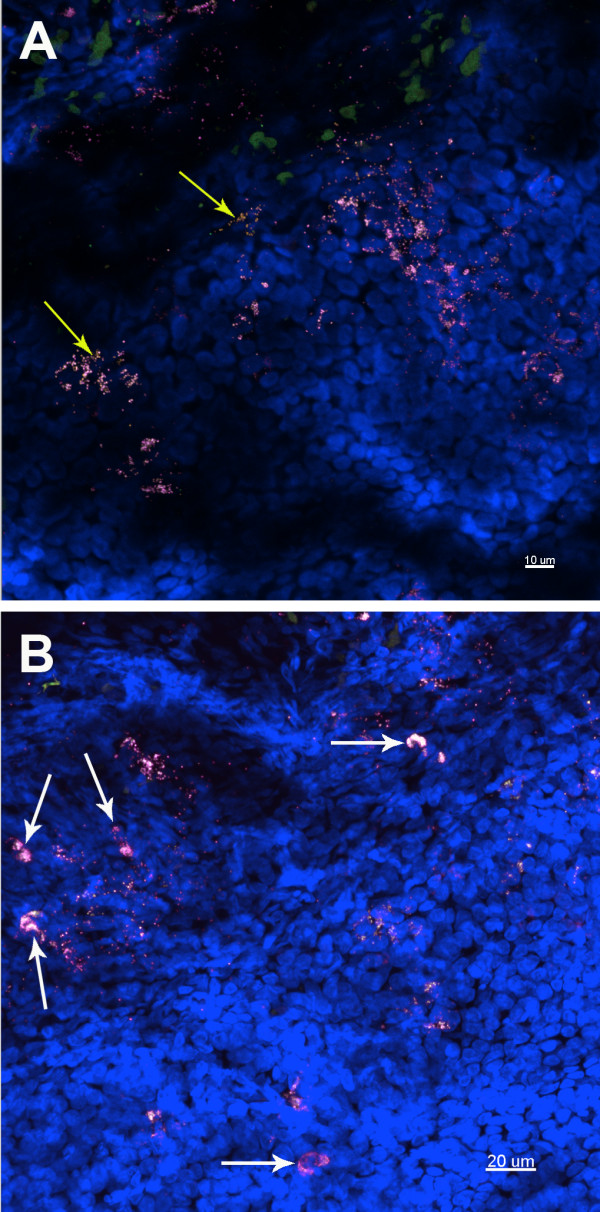
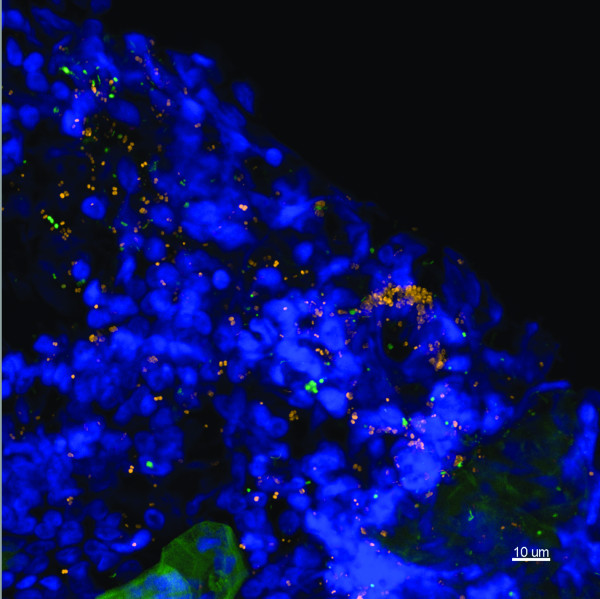
No bacteria were observed in the healthy control sample. In 2 of the 3 biopsies imaged using TEM, bacteria were observed in mucus containing vacuoles within epithelial cells. Bacterial species within these could not be identified and biofilm was not observed. Using FISH with CLSM, bacteria were seen in 15 of the 17 otitis media mucosal specimens. In this group, 11 (65%) of the 17 middle ear mucosal biopsies showed evidence of bacterial biofilm and 12 demonstrated intracellular bacteria. 52% of biopsies were positive for both biofilm and intracellular bacteria. At least one otopathogen was identified in 13 of the 15 samples where bacteria were present. No differences were observed between biopsies from children with COME and those with rAOM.
Using FISH and CLSM, bacterial biofilm and intracellular infection with known otopathogens are demonstrated on/in the middle ear mucosa of children with COME and/or rAOM. While their role in disease pathogenesis remains to be determined, this previously undescribed infection pattern may help explain the ineffectiveness of current treatment strategies at preventing or resolving COME or rAOM.
患有分泌性中耳炎(OME)和复发性急性中耳炎(rAOM)的儿童的中耳积液中存在代谢活跃但无法通过抗生素治疗培养和根除的细菌。这些观察结果表明存在生物膜或细菌的细胞内隔离,并且可能在 OM 发病机制中起作用。本项目的目的是提供证据证明OME 或 rAOM 儿童的中耳黏膜中存在细胞内或生物膜内的耳病原体细菌。
使用透射电子显微镜(TEM)或物种特异性荧光原位杂交(FISH)和共聚焦激光扫描显微镜(CLSM)检查 20 名患有OME 或 rAOM 的儿童的中耳黏膜活检标本,以检查耳病原体细菌(无论是在生物膜中还是位于细胞内)。还检查了 1 名正在接受耳蜗植入手术的健康对照儿童的活检标本。
在健康对照组样本中未观察到细菌。在使用 TEM 成像的 3 个活检中的 2 个中,在含有上皮细胞内的黏液的空泡中观察到细菌。无法确定这些空泡内的细菌种类,也没有观察到生物膜。使用 FISH 和 CLSM,在 17 个中耳炎黏膜标本中的 15 个中观察到细菌。在这一组中,17 个中耳黏膜活检中有 11 个(65%)显示出细菌生物膜的证据,有 12 个显示出细胞内细菌。52%的活检标本同时存在生物膜和细胞内细菌。在存在细菌的 15 个样本中的 13 个中至少鉴定出一种耳病原体。在患有OME 和 rAOM 的儿童的活检标本之间未观察到差异。
使用 FISH 和 CLSM,在患有OME 和/或 rAOM 的儿童的中耳黏膜上/中证明了细菌生物膜和已知耳病原体的细胞内感染。虽然它们在疾病发病机制中的作用仍有待确定,但这种以前未描述的感染模式可能有助于解释当前治疗策略预防或解决OME 或 rAOM 的无效性。