Department of Medicinal Chemistry, University of Florida, P.O. Box 100485, 1600 SW Archer Road, Gainesville, FL 32610-0485, USA.
Eur J Pharmacol. 2011 Dec 30;673(1-3):1-12. doi: 10.1016/j.ejphar.2011.10.006. Epub 2011 Oct 12.
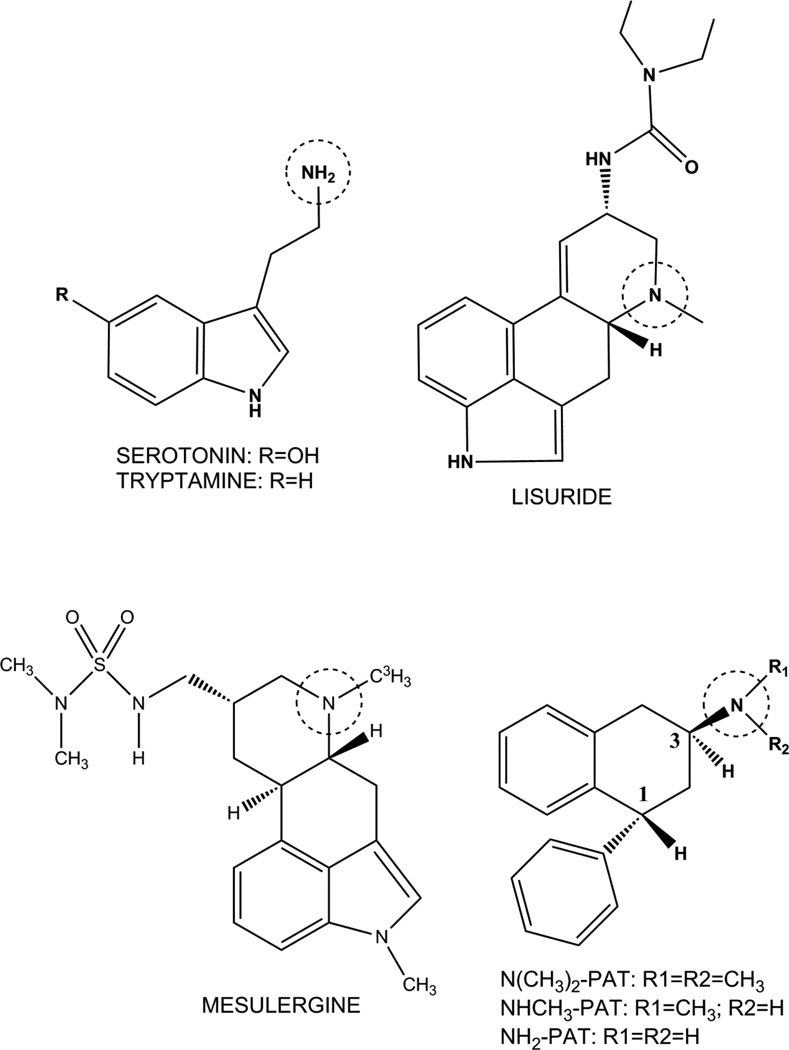
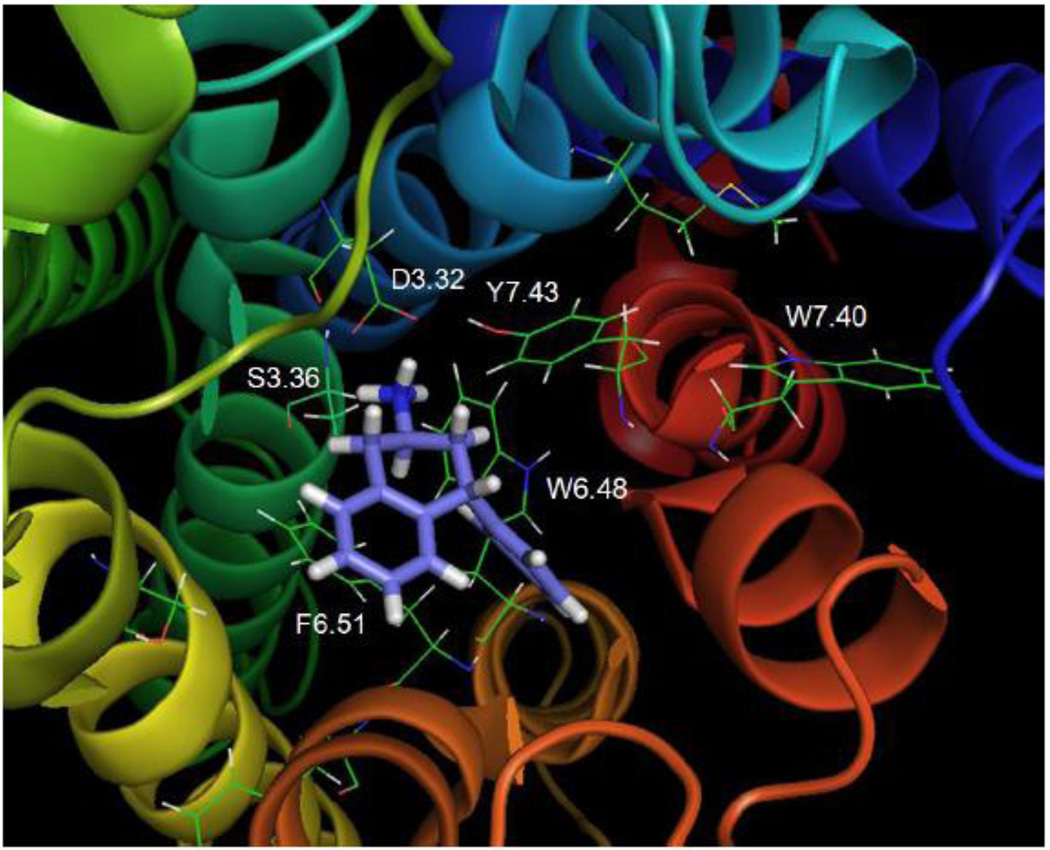
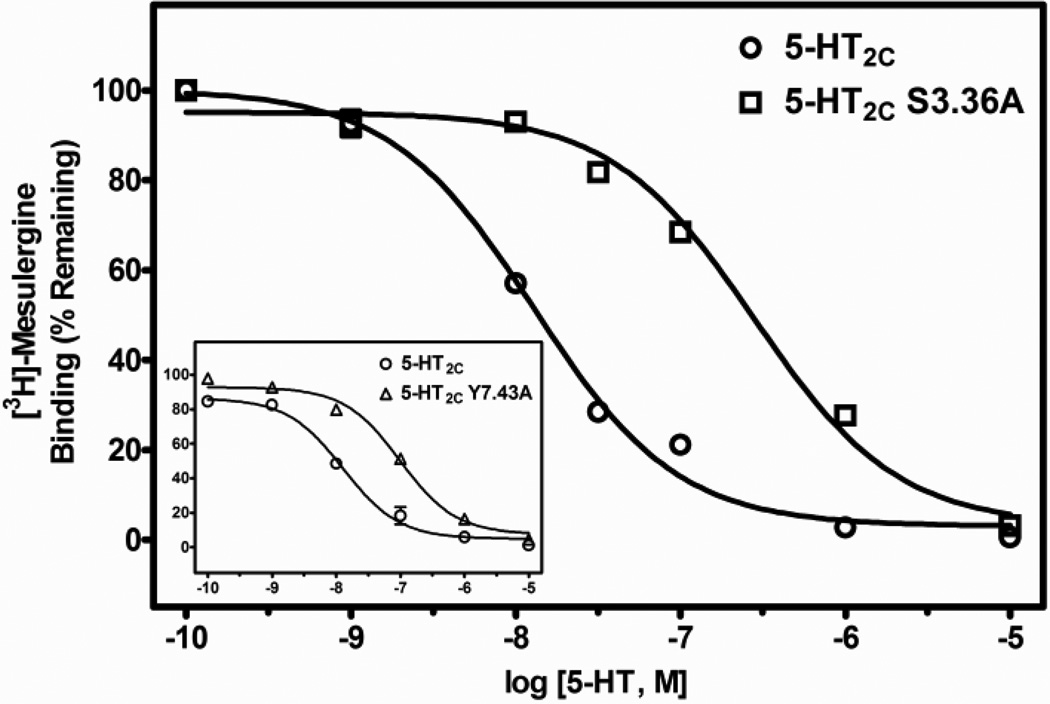
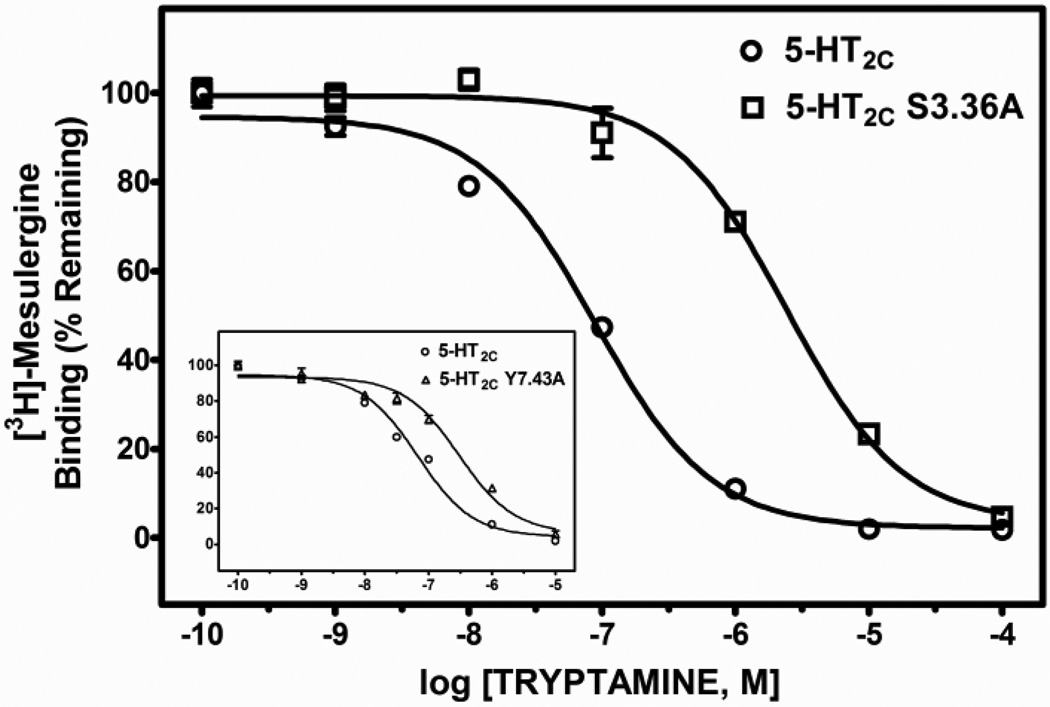
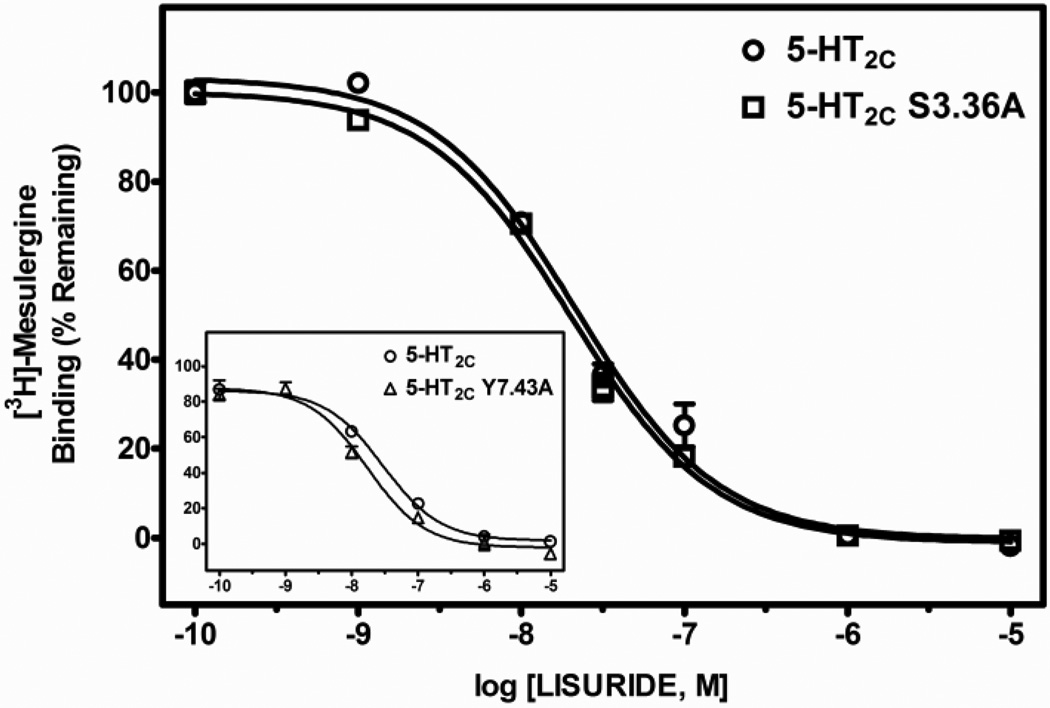
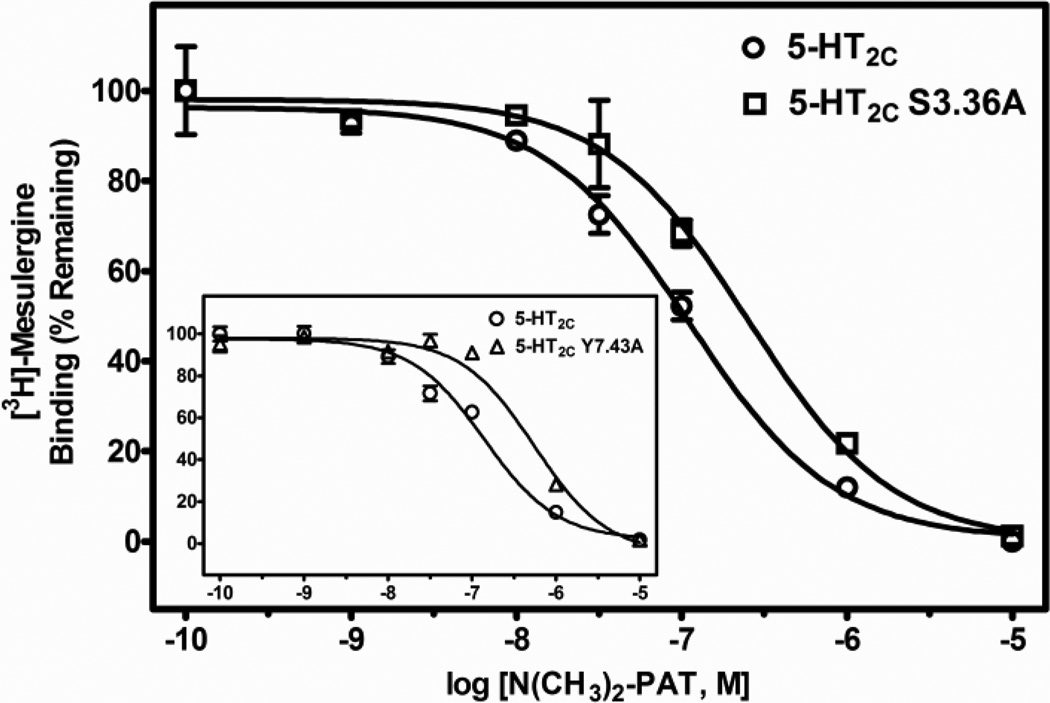
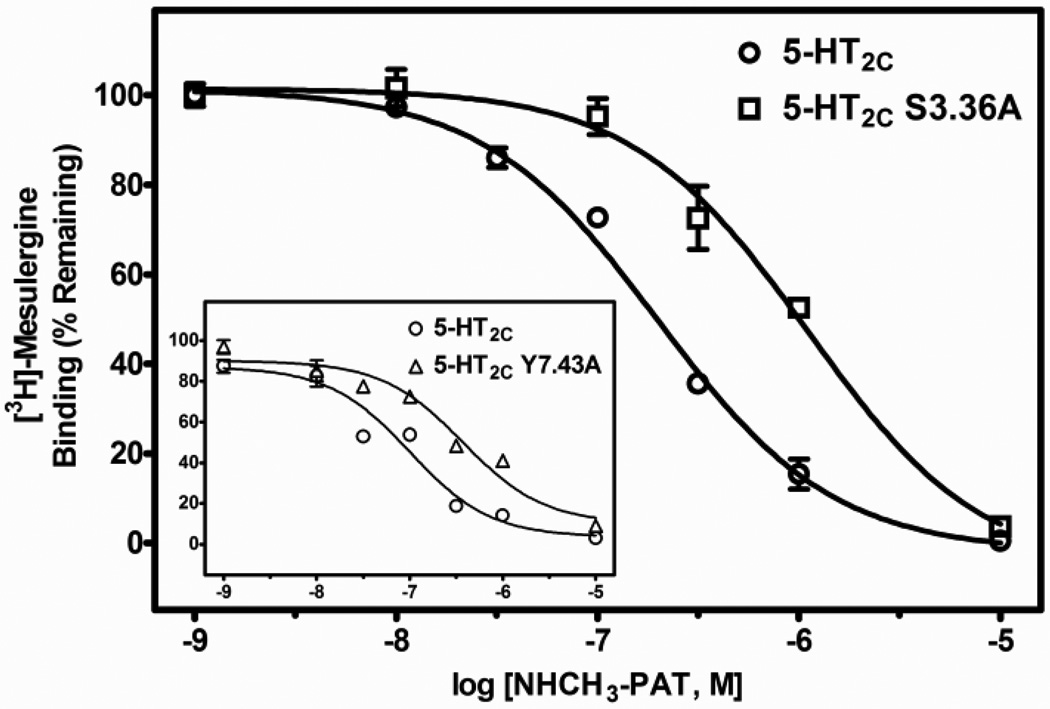
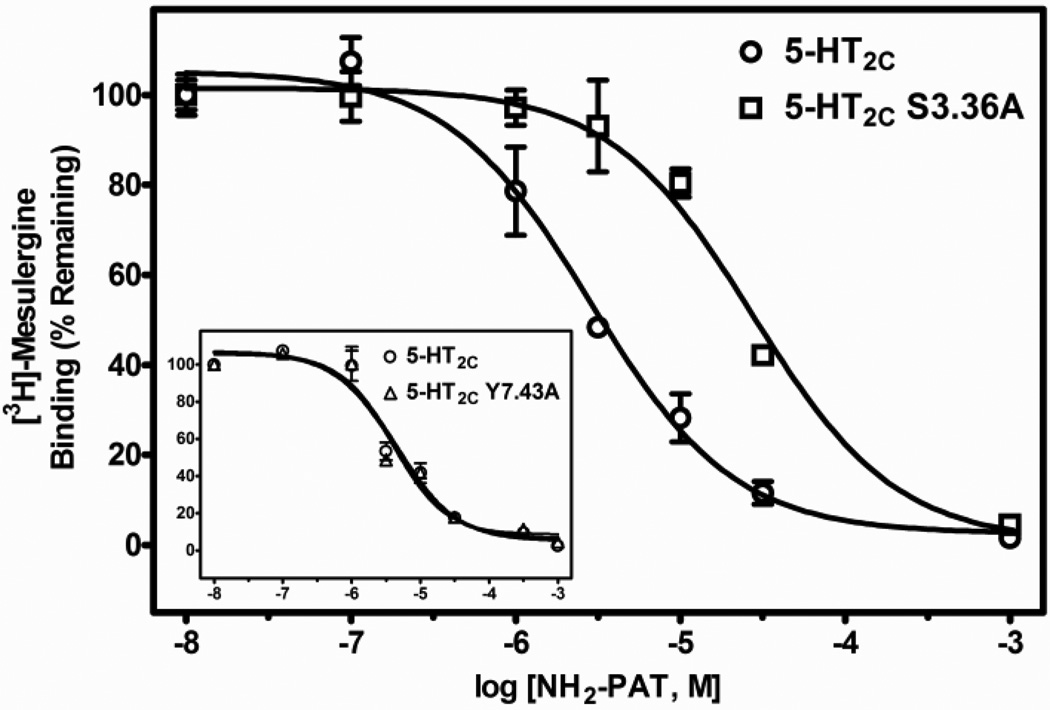
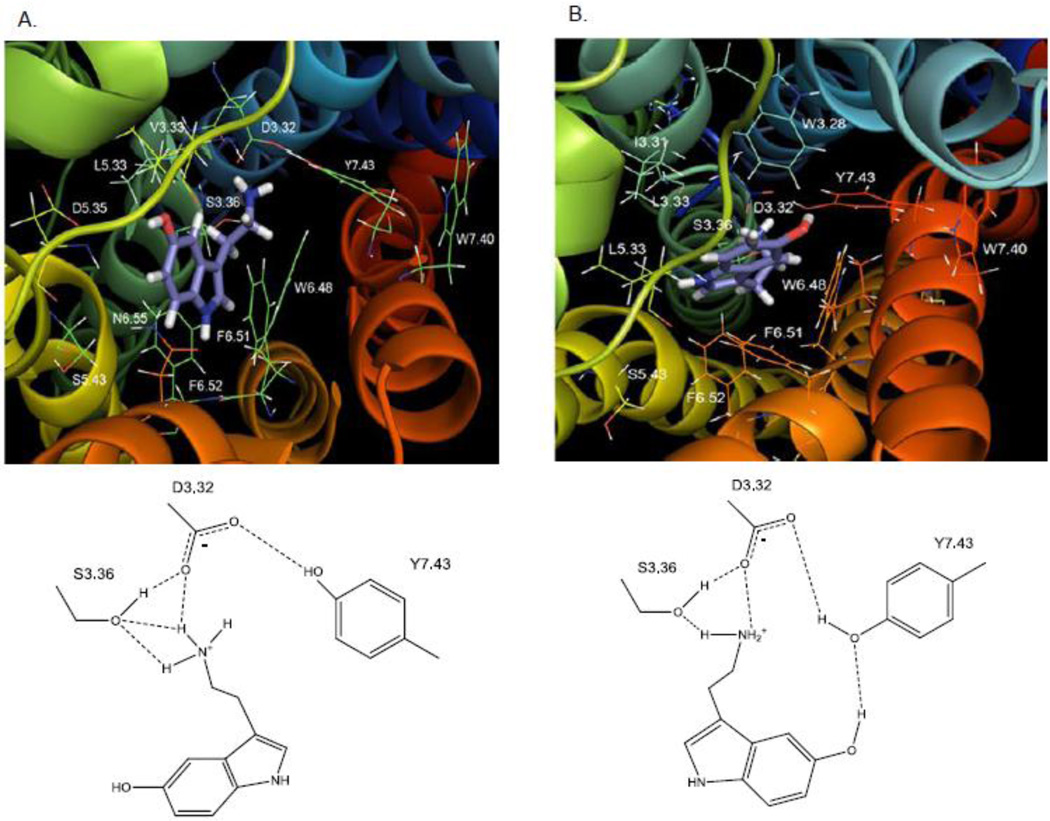
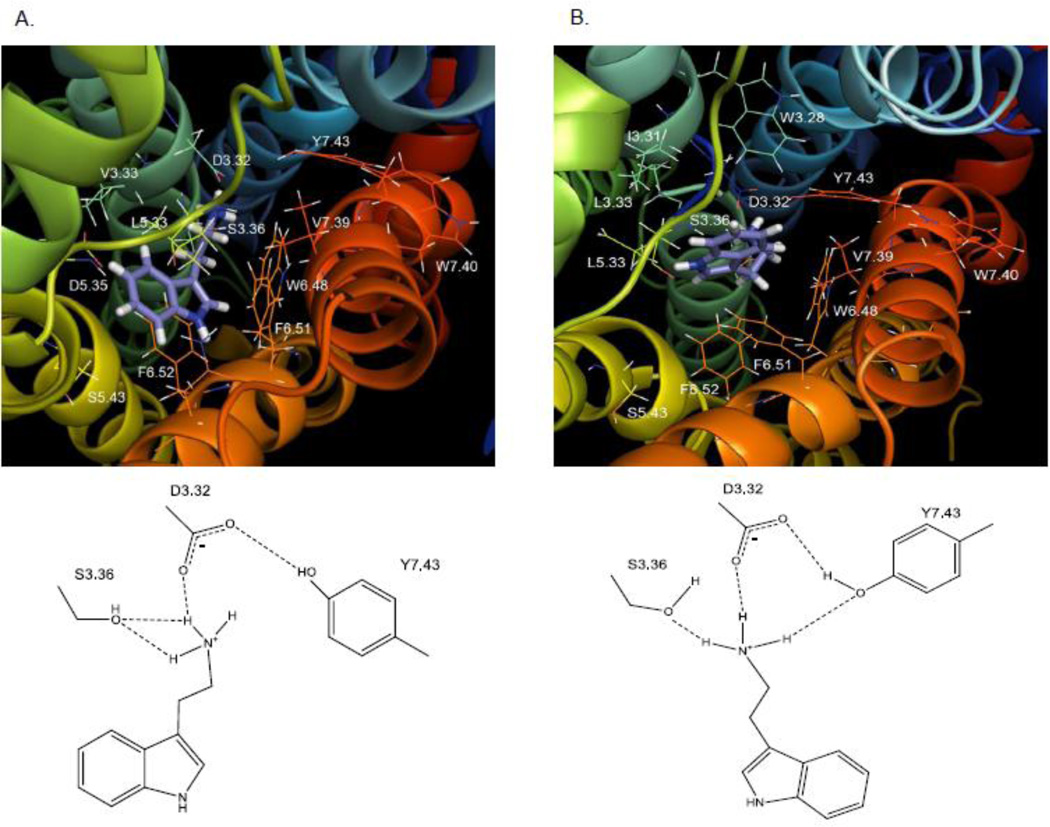
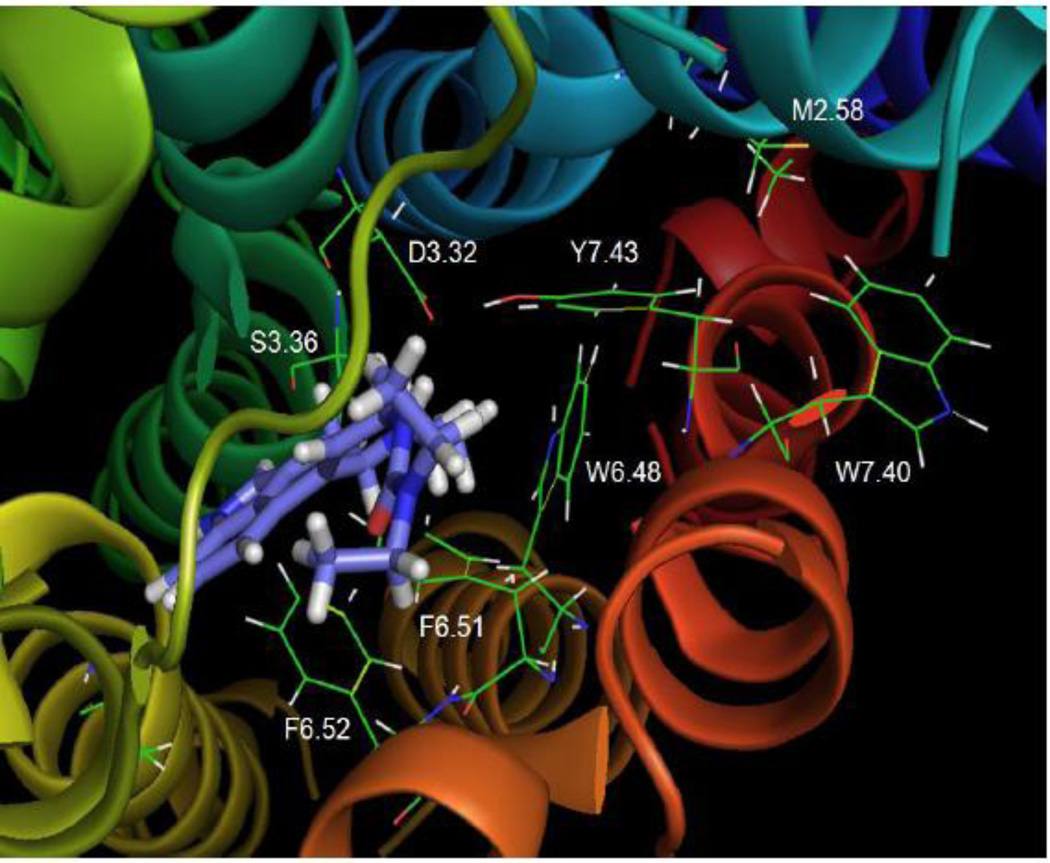
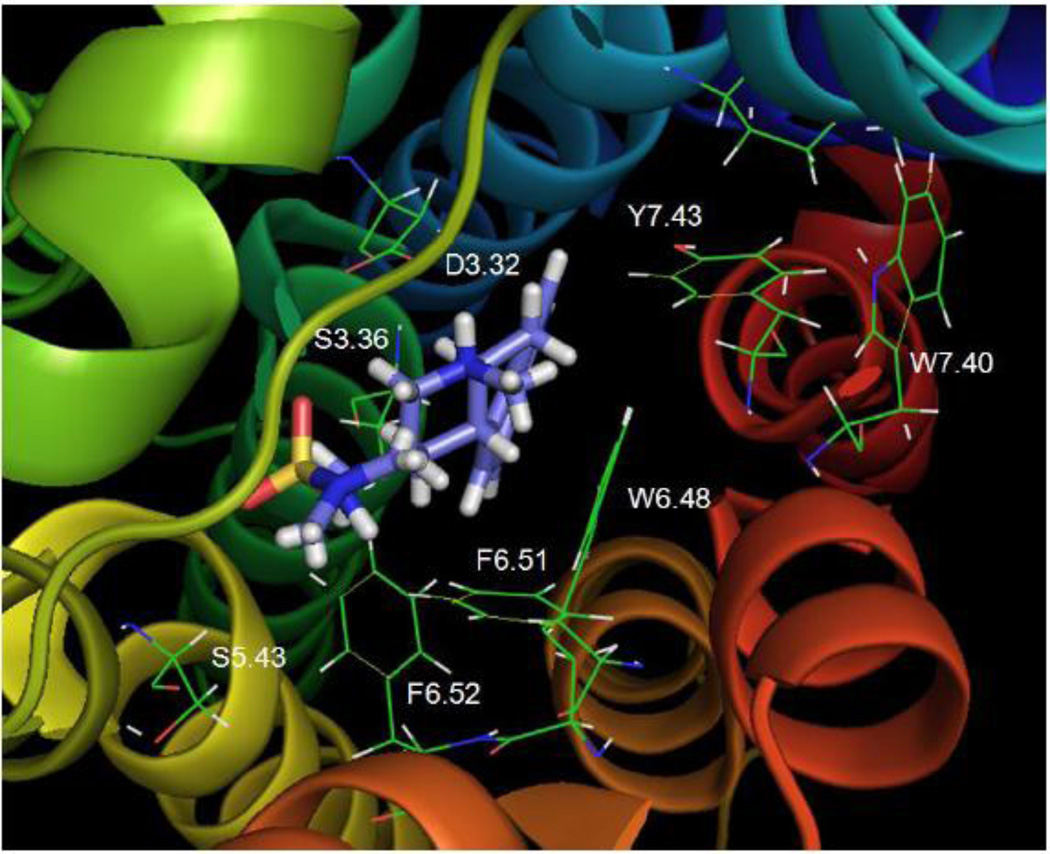
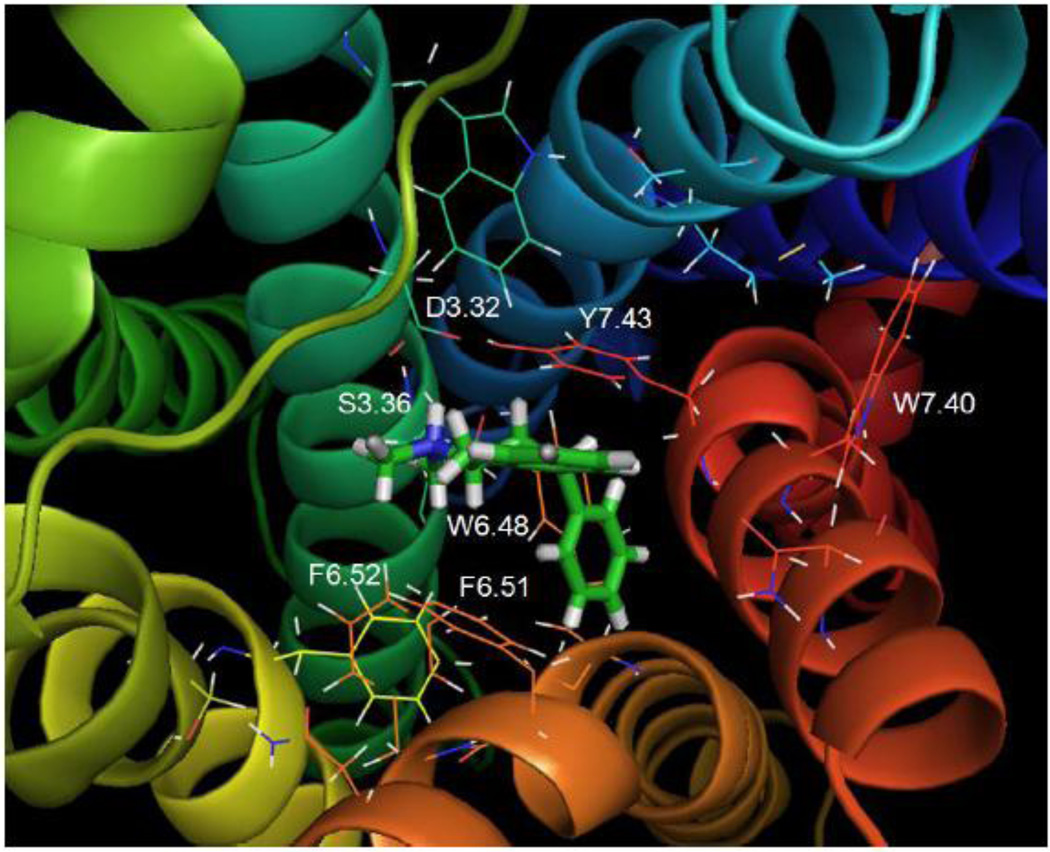
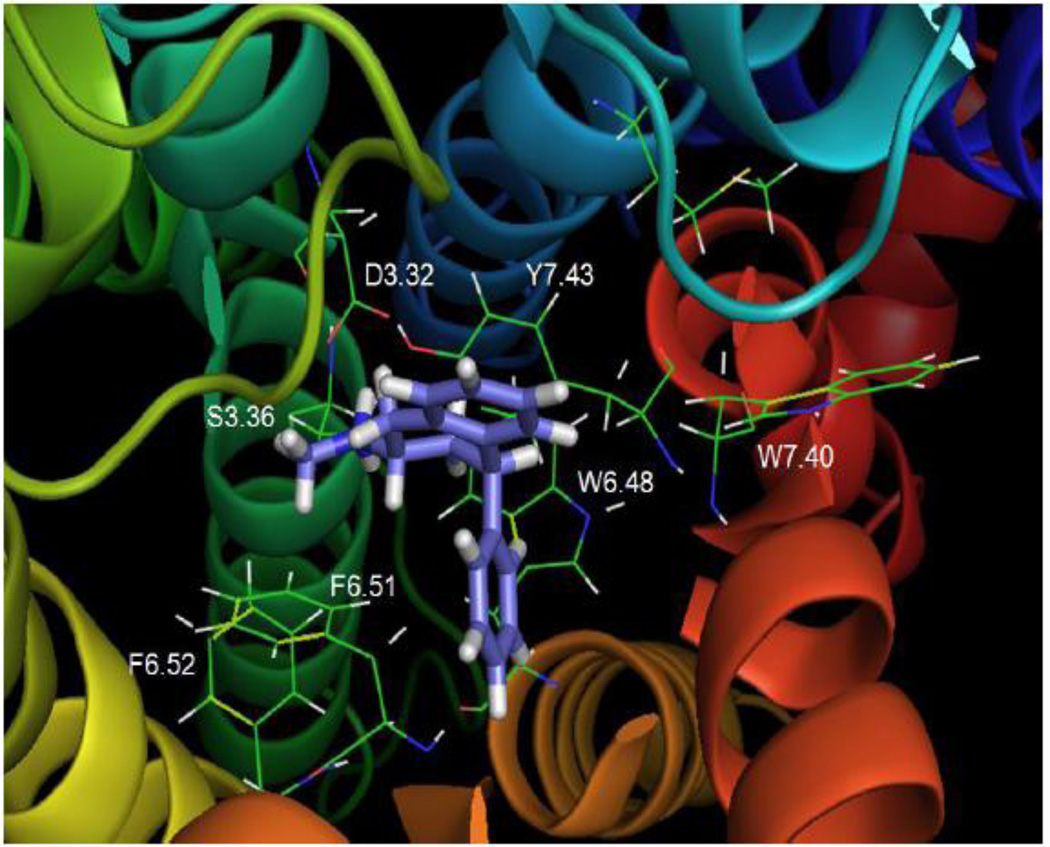
Specific activation of serotonin (5-HT) 5-HT(2C) G protein-coupled receptors may be therapeutic for obesity and neuropsychiatric disorders. Mutagenesis coupled with computational and molecular modeling experiments based on the human β₂ adrenergic receptor structure was employed to delineate the interactions of different ligands at human 5-HT(2C) residues D3.32, S3.36 and Y7.43. No binding of the tertiary amine radioligand ([³H]-mesulergine) could be detected when the 5-HT(2C) D3.32 residue was mutated to alanine (D3.32A). The S3.36A point-mutation greatly reduced affinity of primary amine ligands, modestly reduced affinity of a secondary amine, and except for the 5-HT(2C)-specific agonist N(CH₃)₂-PAT, affinity of tertiary amines was unaffected. Molecular modeling results indicated that the primary amines form hydrogen bonds with the S3.36 residue, whereas, with the exception of N(CH₃)₂-PAT, tertiary amines do not interact considerably with this residue. The Y7.43A point-mutation greatly reduced affinity of 5-HT, yet reduced to a lesser extent the affinity of tryptamine that lacks the 5-hydroxy moiety present in 5-HT; modeling results indicated that the 5-HT 5-hydroxy moiety hydrogen bonds with Y7.43 at the 5-HT(2C) receptor. Additional modeling results showed that 5-HT induced a hydrogen bond between Y7.43 and D3.32. Finally, modeling results revealed two low-energy binding modes for 5-HT in the 5-HT(2C) binding pocket, supporting the concept that multiple agonist binding modes may stabilize different receptor active conformations to influence signaling. Ligand potencies for modulating WT and point-mutated 5-HT(2C) receptor-mediated phospholipase C activity were in accordance with the affinity data. Ligand efficacies, however, were altered considerably by the S3.36A mutation only.
特定的血清素(5-HT)5-HT(2C)G 蛋白偶联受体的激活可能对肥胖和神经精神疾病具有治疗作用。基于人β₂肾上腺素能受体结构的诱变结合计算和分子建模实验,用于描绘不同配体在人 5-HT(2C)残基 D3.32、S3.36 和 Y7.43 处的相互作用。当 5-HT(2C)D3.32 残基突变为丙氨酸(D3.32A)时,无法检测到三价胺放射性配体[³H]-mesulergine 的结合。S3.36A 点突变大大降低了伯胺配体的亲和力,适度降低了仲胺配体的亲和力,除了 5-HT(2C)特异性激动剂 N(CH₃)₂-PAT 外,三价胺的亲和力不受影响。分子建模结果表明,伯胺与 S3.36 残基形成氢键,而除了 N(CH₃)₂-PAT 外,三价胺与该残基没有明显相互作用。Y7.43A 点突变大大降低了 5-HT 的亲和力,但对缺乏 5-HT 中存在的 5-羟基部分的色胺亲和力降低较小;建模结果表明,5-HT 的 5-羟基部分与 5-HT(2C)受体上的 Y7.43 形成氢键。进一步的建模结果表明,5-HT 在 Y7.43 和 D3.32 之间诱导氢键。最后,建模结果显示 5-HT 在 5-HT(2C)结合口袋中有两种低能量结合模式,支持多种激动剂结合模式可能稳定不同的受体活性构象以影响信号传递的概念。调节 WT 和点突变 5-HT(2C)受体介导的磷酯酶 C 活性的配体效力与亲和力数据一致。然而,配体效力仅因 S3.36A 突变而发生很大变化。