Department of Medicine, Department of Pathology and Immunology, Washington University School of Medicine, St. Louis, Missouri, United States of America.
PLoS Pathog. 2011 Oct;7(10):e1002322. doi: 10.1371/journal.ppat.1002322. Epub 2011 Oct 20.
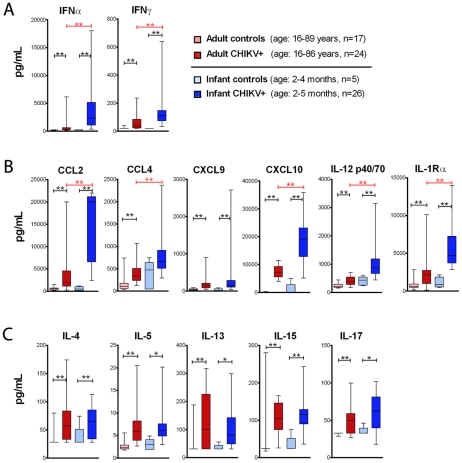
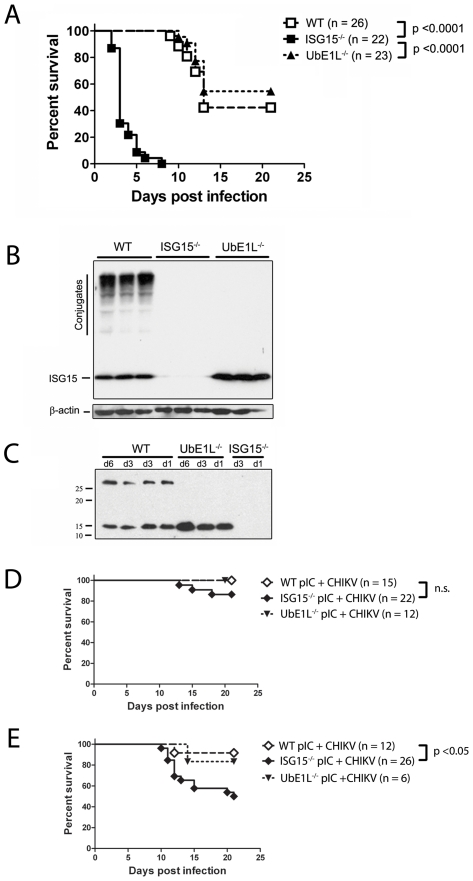
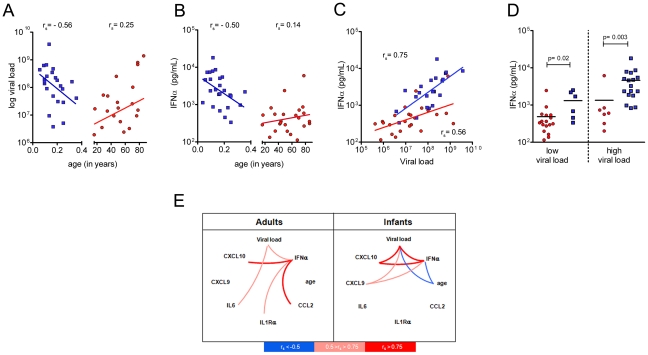
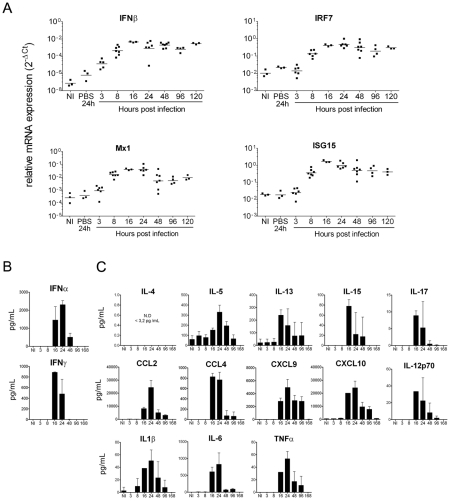
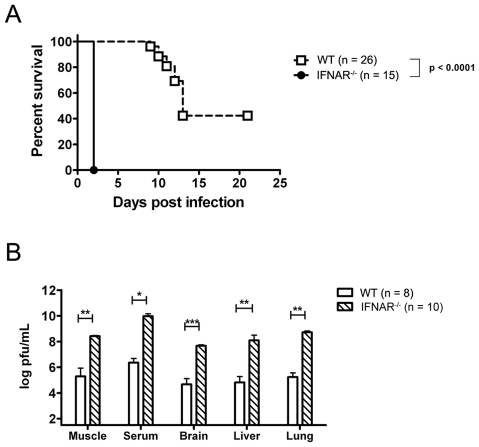
Chikungunya virus (CHIKV) is a re-emerging alphavirus that has caused significant disease in the Indian Ocean region since 2005. During this outbreak, in addition to fever, rash and arthritis, severe cases of CHIKV infection have been observed in infants. Challenging the notion that the innate immune response in infants is immature or defective, we demonstrate that both human infants and neonatal mice generate a robust type I interferon (IFN) response during CHIKV infection that contributes to, but is insufficient for, the complete control of infection. To characterize the mechanism by which type I IFNs control CHIKV infection, we evaluated the role of ISG15 and defined it as a central player in the host response, as neonatal mice lacking ISG15 were profoundly susceptible to CHIKV infection. Surprisingly, UbE1L⁻/⁻ mice, which lack the ISG15 E1 enzyme and therefore are unable to form ISG15 conjugates, displayed no increase in lethality following CHIKV infection, thus pointing to a non-classical role for ISG15. No differences in viral loads were observed between wild-type (WT) and ISG15⁻/⁻ mice, however, a dramatic increase in proinflammatory cytokines and chemokines was observed in ISG15⁻/⁻ mice, suggesting that the innate immune response to CHIKV contributes to their lethality. This study provides new insight into the control of CHIKV infection, and establishes a new model for how ISG15 functions as an immunomodulatory molecule in the blunting of potentially pathologic levels of innate effector molecules during the host response to viral infection.
基孔肯雅热病毒(CHIKV)是一种重新出现的甲病毒,自 2005 年以来在印度洋地区引起了严重疾病。在这次疫情中,除了发热、皮疹和关节炎外,还观察到婴儿中出现严重的 CHIKV 感染病例。我们挑战了婴儿固有免疫反应不成熟或有缺陷的观点,证明人类婴儿和新生小鼠在 CHIKV 感染期间会产生强烈的 I 型干扰素(IFN)反应,有助于但不足以完全控制感染。为了描述 I 型 IFN 控制 CHIKV 感染的机制,我们评估了 ISG15 的作用,并将其定义为宿主反应的核心参与者,因为缺乏 ISG15 的新生小鼠对 CHIKV 感染非常敏感。令人惊讶的是,缺乏 ISG15 E1 酶因此无法形成 ISG15 缀合物的 UbE1L⁻/⁻ 小鼠在感染 CHIKV 后并未增加致死率,因此指出 ISG15 具有非经典作用。在野生型(WT)和 ISG15⁻/⁻小鼠之间未观察到病毒载量的差异,然而,在 ISG15⁻/⁻小鼠中观察到促炎细胞因子和趋化因子的急剧增加,表明对 CHIKV 的固有免疫反应导致了它们的致死率。这项研究为 CHIKV 感染的控制提供了新的见解,并建立了一个新的模型,说明 ISG15 如何作为一种免疫调节分子,在宿主对病毒感染的反应中,调节潜在病理性水平的固有效应分子。