Sheba Regenerative Medicine, Sheba Medical Center, Tel-Hashomer, Israel.
PLoS One. 2011;6(10):e26298. doi: 10.1371/journal.pone.0026298. Epub 2011 Oct 18.
Cellular differentiation and lineage commitment have previously been considered irreversible processes. However, recent studies have indicated that differentiated adult cells can be reprogrammed to pluripotency and, in some cases, directly into alternate committed lineages. However, although pluripotent cells can be induced in numerous somatic cell sources, it was thought that inducing alternate committed lineages is primarily only possible in cells of developmentally related tissues. Here, we challenge this view and analyze whether direct adult cell reprogramming to alternate committed lineages can cross the boundaries of distinct developmental germ layers.
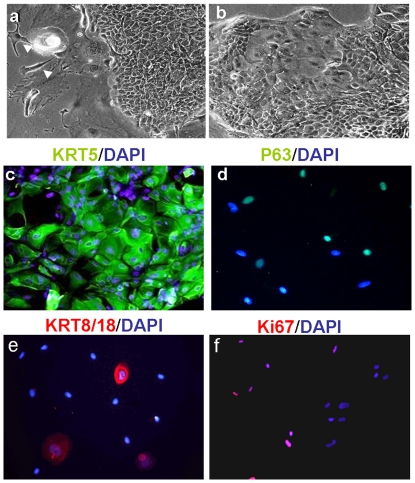
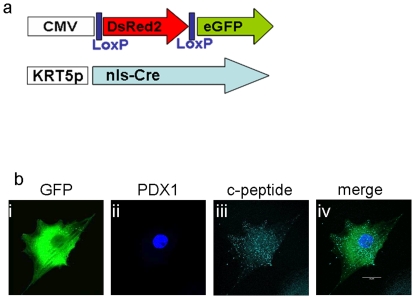
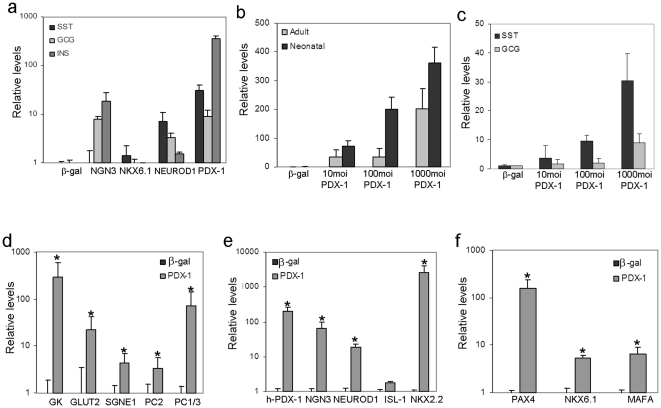
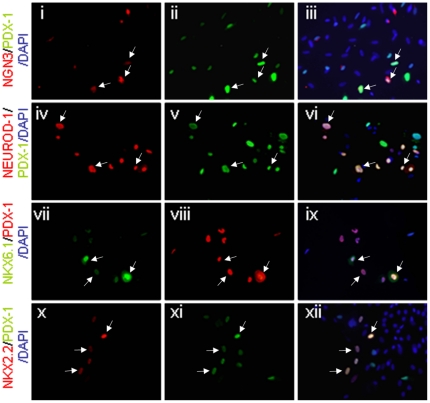
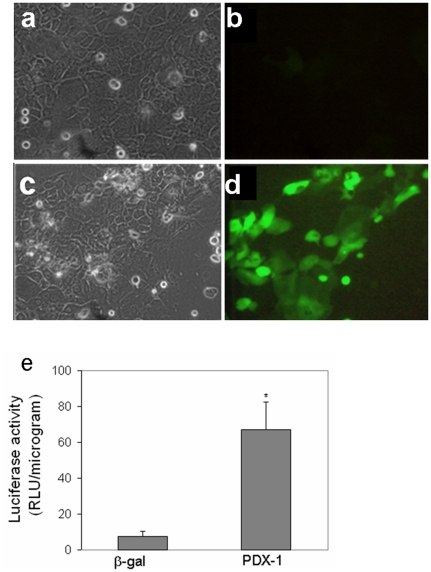
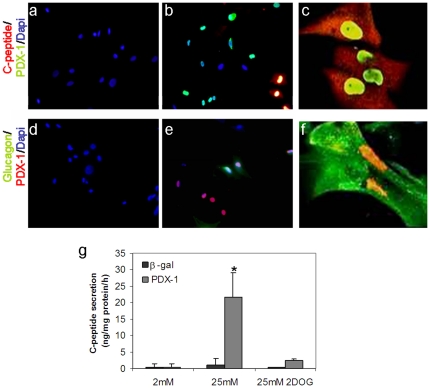
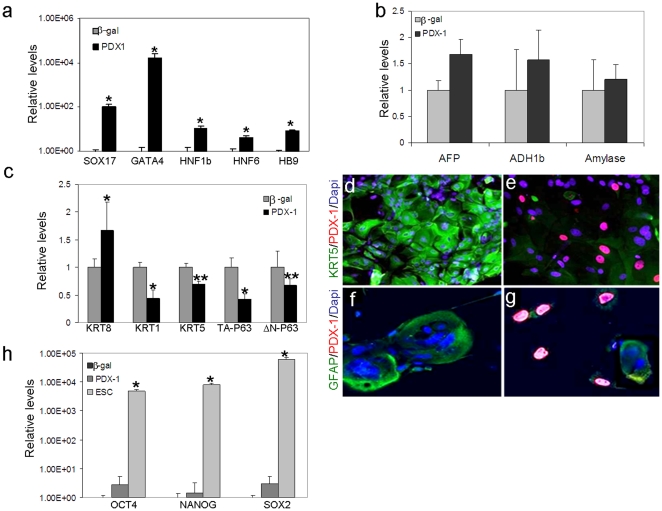
METHODOLOGY/PRINCIPAL FINDINGS: We ectopically expressed non-integrating pancreatic differentiation factors in ectoderm-derived human keratinocytes to determine whether these factors could directly induce endoderm-derived pancreatic lineage and β-cell-like function. We found that PDX-1 and to a lesser extent other pancreatic transcription factors, could rapidly and specifically activate pancreatic lineage and β-cell-like functional characteristics in ectoderm-derived human keratinocytes. Human keratinocytes transdifferentiated along the β cell lineage produced processed and secreted insulin in response to elevated glucose concentrations. Using irreversible lineage tracing for KRT-5 promoter activity, we present supporting evidence that insulin-positive cells induced by ectopic PDX-1 expression are generated in ectoderm derived keratinocytes.
CONCLUSIONS/SIGNIFICANCE: These findings constitute the first demonstration of human ectoderm cells to endoderm derived pancreatic cells transdifferentiation. The study represents a proof of concept which suggests that transcription factors induced reprogramming is wider and more general developmental process than initially considered. These results expanded the arsenal of adult cells that can be used as a cell source for generating functional endocrine pancreatic cells. Directly reprogramming somatic cells into alternate desired tissues has important implications in developing patient-specific, regenerative medicine approaches.
细胞分化和谱系特化此前被认为是不可逆的过程。然而,最近的研究表明,分化的成体细胞可以被重编程为多能性,并且在某些情况下,可以直接分化为另一种特化谱系。然而,尽管可以在许多体细胞来源中诱导多能性细胞,但人们认为诱导另一种特化谱系主要仅在发育相关组织的细胞中才有可能。在这里,我们挑战这一观点,并分析直接将成体细胞重编程为另一种特化谱系是否可以跨越不同发育胚层的界限。
方法/主要发现:我们在外胚层来源的人角质形成细胞中异位表达非整合的胰腺分化因子,以确定这些因子是否可以直接诱导内胚层来源的胰腺谱系和β细胞样功能。我们发现 PDX-1 以及在较小程度上的其他胰腺转录因子,可以快速且特异性地激活外胚层来源的人角质形成细胞中的胰腺谱系和β细胞样功能特征。沿着β细胞谱系转分化的人角质形成细胞在葡萄糖浓度升高时会产生和分泌加工后的胰岛素。使用不可逆的谱系追踪 KRT-5 启动子活性,我们提供了支持性证据,表明由异位 PDX-1 表达诱导的胰岛素阳性细胞是在外胚层来源的角质形成细胞中产生的。
结论/意义:这些发现构成了首例人外胚层细胞向内胚层来源的胰腺细胞转分化的证明。该研究代表了一个概念验证,表明转录因子诱导的重编程是一个比最初认为的更广泛和更普遍的发育过程。这些结果扩展了可用于生成功能性内分泌胰腺细胞的成体细胞库。将体细胞直接重编程为另一种所需组织具有重要意义,可用于开发针对患者的再生医学方法。