Department of Pediatrics, University of Pittsburgh School of Medicine, Children's Hospital of Pittsburgh, University of Pittsburgh Medical Center, Pittsburgh, Pennsylvania, United States of America.
PLoS One. 2011;6(10):e26558. doi: 10.1371/journal.pone.0026558. Epub 2011 Oct 20.
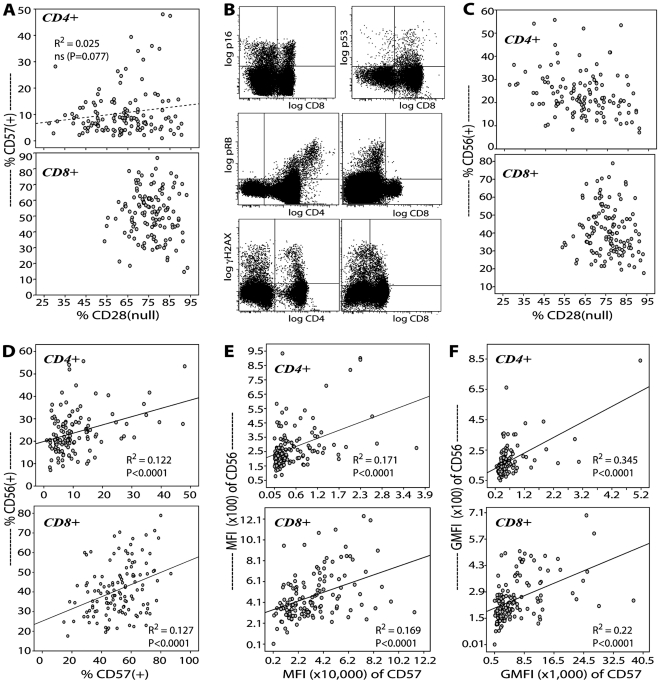
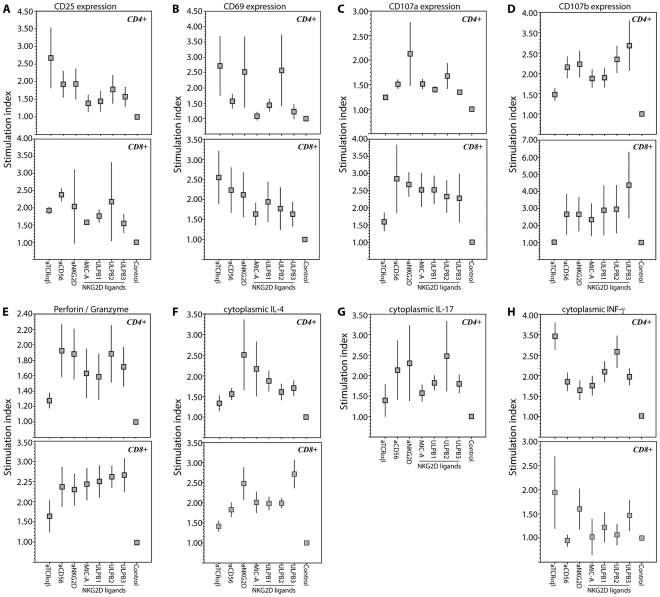
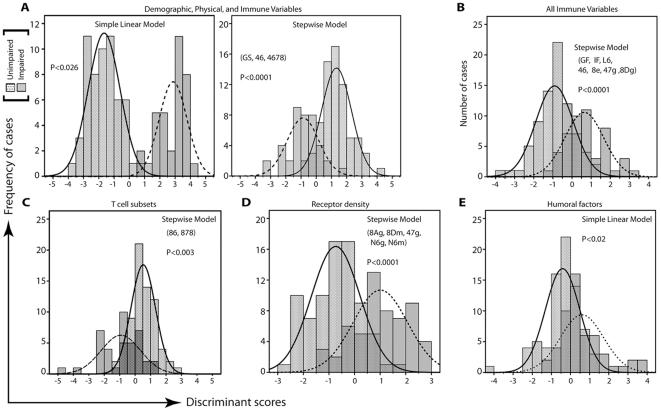
Exceptional aging has been defined as maintenance of physical and cognitive function beyond the median lifespan despite a history of diseases and/or concurrent subclinical conditions. Since immunity is vital to individual fitness, we examined immunologic fingerprint(s) of highly functional elders. Therefore, survivors of the Cardiovascular Health Study in Pittsburgh, Pennsylvania, USA were recruited (n = 140; mean age = 86 years) and underwent performance testing. Blood samples were collected and examined blindly for humoral factors and T cell phenotypes. Based on results of physical and cognitive performance testing, elders were classified as "impaired" or "unimpaired", accuracy of group assignment was verified by discriminant function analysis. The two groups showed distinct immune profiles as determined by factor analysis. The dominant immune signature of impaired elders consisted of interferon (IFN)-γ, interleukin (IL)-6, tumor necrosis factor-α, and T cells expressing inhibitory natural killer-related receptors (NKR) CD158a, CD158e, and NKG2A. In contrast, the dominant signature of unimpaired elders consisted of IL-5, IL-12p70, and IL-13 with co-expression of IFN-γ, IL-4, and IL-17, and T cells expressing stimulatory NKRs CD56, CD16, and NKG2D. In logistic regression models, unimpaired phenotype was predicted independently by IL-5 and by CD4(+)CD28(null)CD56(+)CD57(+) T cells. All elders had high antibody titers to common viruses including cytomegalovirus. In cellular bioassays, T cell receptor (TCR)-independent ligation of either CD56 or NKG2D elicited activation of T cells. Collectively, these data demonstrate the importance of immunological parameters in distinguishing between health phenotypes of older adults. NKR(+) T cells and cytokine upregulation indicate a unique physiologic environment in old age. Correlation of particular NKR(+) T cell subsets and IL-5 with unimpaired performance, and NKR-driven TCR-independent activation of T cells suggest novel immunopathway(s) that could be exploited to improve immunity in old age.
非凡的衰老被定义为在存在疾病和/或并发亚临床疾病的情况下,维持超出中位数寿命的身体和认知功能。由于免疫对于个体健康至关重要,我们检查了功能强大的老年人的免疫学特征。因此,在美国宾夕法尼亚州匹兹堡的心血管健康研究中的幸存者被招募(n=140;平均年龄=86 岁)并进行了性能测试。采集血液样本并进行盲法检查,以检查体液因子和 T 细胞表型。根据身体和认知表现测试的结果,老年人被分为“受损”或“未受损”,通过判别函数分析验证组分配的准确性。通过因子分析,两组表现出明显不同的免疫特征。受损老年人的主要免疫特征是干扰素(IFN)-γ、白细胞介素(IL)-6、肿瘤坏死因子-α和表达抑制性自然杀伤相关受体(NKR)CD158a、CD158e 和 NKG2A 的 T 细胞。相比之下,未受损老年人的主要特征是白细胞介素(IL)-5、白细胞介素(IL)-12p70 和白细胞介素(IL)-13,同时表达 IFN-γ、白细胞介素(IL)-4 和白细胞介素(IL)-17,以及表达刺激性 NKRs CD56、CD16 和 NKG2D 的 T 细胞。在逻辑回归模型中,未受损表型可独立预测白细胞介素(IL)-5 和 CD4(+)CD28(null)CD56(+)CD57(+)T 细胞。所有老年人对包括巨细胞病毒在内的常见病毒均具有高抗体滴度。在细胞生物测定中,T 细胞受体(TCR)非依赖性 CD56 或 NKG2D 的连接引发了 T 细胞的激活。总的来说,这些数据表明免疫学参数在区分老年人的健康表型方面非常重要。NKR(+)T 细胞和细胞因子上调表明老年时存在独特的生理环境。特定 NKR(+)T 细胞亚群和白细胞介素(IL)-5 与未受损表现的相关性,以及 NKR 驱动的 TCR 非依赖性 T 细胞激活表明可能利用新的免疫途径来改善老年时的免疫功能。