Department of Neuroscience, Mayo Clinic, Jacksonville, 32224, USA.
Mol Neurodegener. 2011 Oct 26;6:73. doi: 10.1186/1750-1326-6-73.
Abnormal distribution, modification and aggregation of transactivation response DNA-binding protein 43 (TDP-43) are the hallmarks of multiple neurodegenerative diseases, especially frontotemporal lobar degeneration with ubiquitin-positive inclusions (FTLD-U) and amyotrophic lateral sclerosis (ALS). Researchers have identified 44 mutations in the TARDBP gene that encode TDP-43 as causative for cases of sporadic and familial ALS http://www.molgen.ua.ac.be/FTDMutations/. Certain mutant forms of TDP-43, such as M337V, are associated with increased low molecular weight (LMW) fragments compared to wild-type (WT) TDP-43 and cause neuronal apoptosis and developmental delay in chick embryos. Such findings support a direct link between altered TDP-43 function and neurodegeneration.
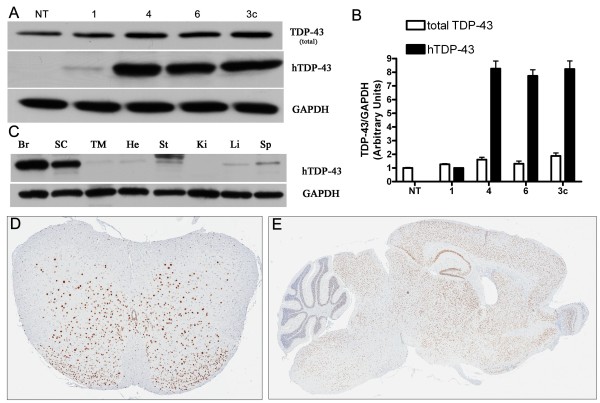
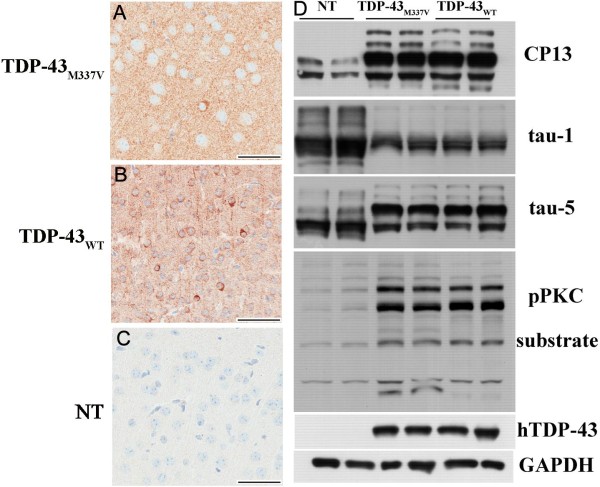
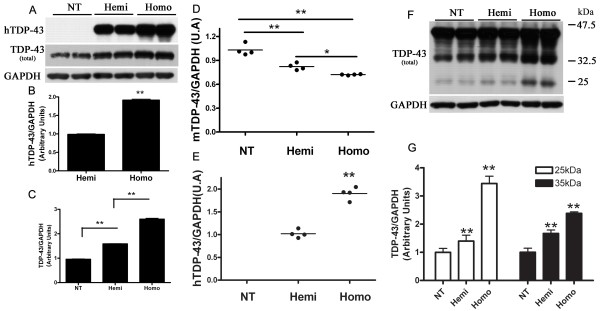
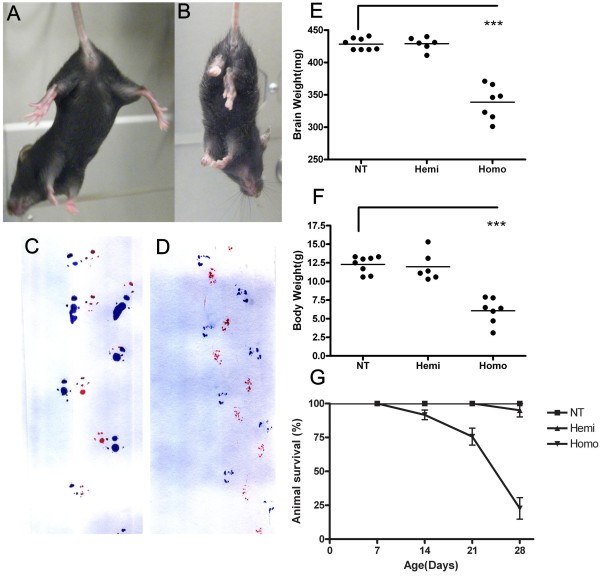
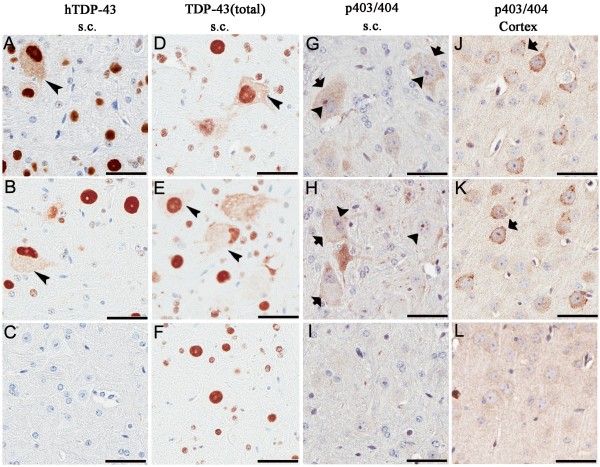
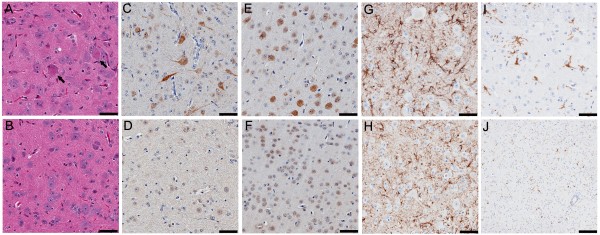
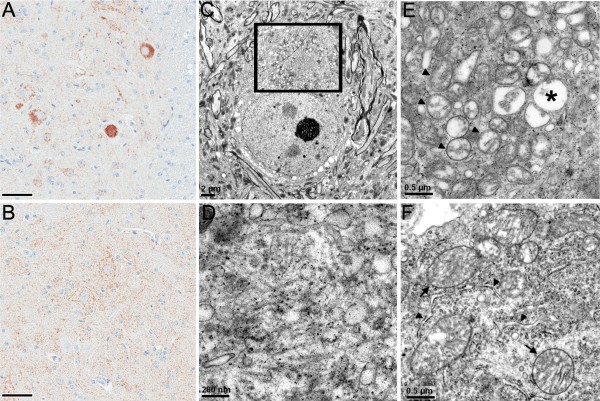
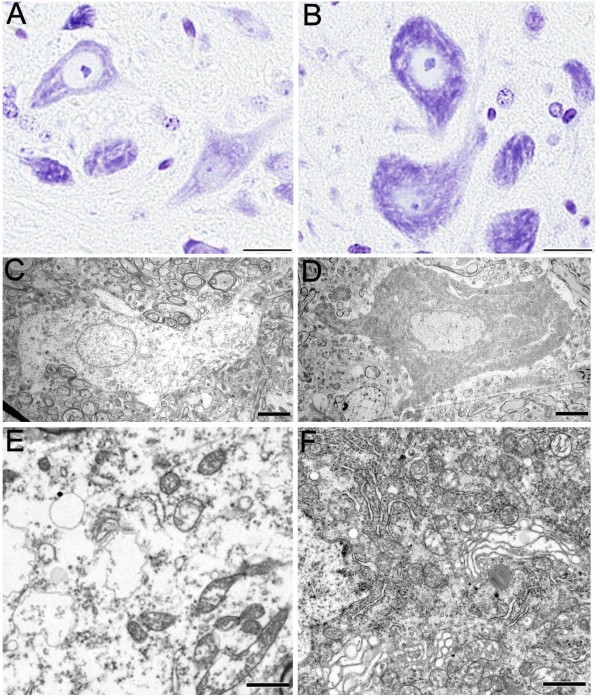
To explore the pathogenic properties of the M337V mutation, we generated and characterized two mouse lines expressing human TDP-43 (hTDP-43(M337V)) carrying this mutation. hTDP-43(M337V) was expressed primarily in the nuclei of neurons in the brain and spinal cord, and intranuclear and cytoplasmic phosphorylated TDP-43 aggregates were frequently detected. The levels of TDP-43 LMW products of ~25 kDa and ~35 kDa species were also increased in the transgenic mice. Moreover, overexpression of hTDP-43(M337V) dramatically down regulated the levels of mouse TDP-43 (mTDP-43) protein and RNA, indicating TDP-43 levels are tightly controlled in mammalian systems. TDP-43M337V mice displayed reactive gliosis, widespread ubiquitination, chromatolysis, gait abnormalities, and early lethality. Abnormal cytoplasmic mitochondrial aggregates and abnormal phosphorylated tau were also detected in the mice.
Our novel TDP-43M337V mouse model indicates that overexpression of hTDP-43(M337V) alone is toxic in vivo. Because overexpression of hTDP-43 in wild-type TDP-43 and TDP-43M337V mouse models produces similar phenotypes, the mechanisms causing pathogenesis in the mutant model remain unknown. However, our results suggest that overexpression of the hTDP-43(M337V) can cause neuronal dysfunction due to its effect on a number of cell organelles and proteins, such as mitochondria and TDP-43, that are critical for neuronal activity. The mutant model will serve as a valuable tool in the development of future studies designed to uncover pathways associated with TDP-43 neurotoxicity and the precise roles TDP-43 RNA targets play in neurodegeneration.
反转型应答 DNA 结合蛋白 43(TDP-43)的异常分布、修饰和聚集是多种神经退行性疾病的特征,尤其是额颞叶变性伴泛素阳性包涵体(FTLD-U)和肌萎缩性侧索硬化症(ALS)。研究人员已经在 TARDBP 基因中发现了 44 种突变,这些突变导致 TDP-43 编码异常,是散发性和家族性 ALS 的致病因素。http://www.molgen.ua.ac.be/FTDMutations/。某些突变形式的 TDP-43,如 M337V,与野生型(WT)TDP-43 相比,与低分子量(LMW)片段的增加有关,并导致鸡胚中的神经元凋亡和发育迟缓。这些发现支持 TDP-43 功能改变与神经退行性变之间的直接联系。
为了探索 M337V 突变的致病特性,我们生成并表征了两种表达人类 TDP-43(hTDP-43(M337V))的小鼠品系,这些突变携带这种突变。hTDP-43(M337V)主要在大脑和脊髓神经元的核内表达,并且经常检测到核内和细胞质磷酸化的 TDP-43 聚集物。转基因小鼠中也检测到25 kDa 和35 kDa 物种的 TDP-43 LMW 产物水平增加。此外,hTDP-43(M337V)的过表达显著下调了小鼠 TDP-43(mTDP-43)蛋白和 RNA 的水平,表明在哺乳动物系统中 TDP-43 水平受到严格控制。TDP-43M337V 小鼠表现出反应性神经胶质增生、广泛的泛素化、染色质溶解、步态异常和早期致死性。还在小鼠中检测到异常的细胞质线粒体聚集物和异常磷酸化的 tau。
我们的新型 TDP-43M337V 小鼠模型表明,hTDP-43(M337V)的过表达在体内是有毒的。由于 hTDP-43 在野生型 TDP-43 和 TDP-43M337V 小鼠模型中的过表达产生相似的表型,因此在突变模型中导致发病机制的机制仍不清楚。然而,我们的结果表明,由于 hTDP-43(M337V)对许多细胞细胞器和蛋白质(如线粒体和 TDP-43)的作用,其过表达可能导致神经元功能障碍,这些细胞器和蛋白质对神经元活动至关重要。该突变模型将成为未来研究的有价值工具,旨在揭示与 TDP-43 神经毒性相关的途径以及 TDP-43 RNA 靶标在神经退行性变中的精确作用。