Fuchs Eberhard, Flügge Gabriele
Clinical Neurobiology Laboratory, German Primate Center, Göttingen, Germany.
Dialogues Clin Neurosci. 2004 Jun;6(2):171-83. doi: 10.31887/DCNS.2004.6.2/efuchs.
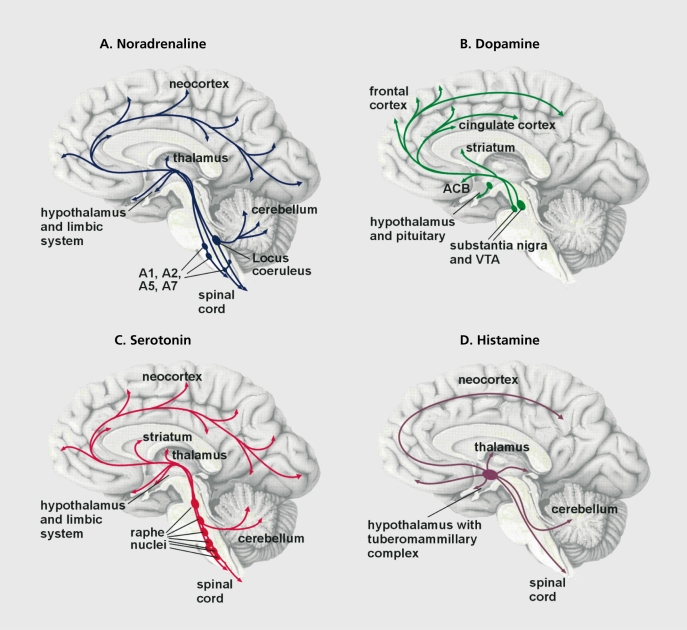
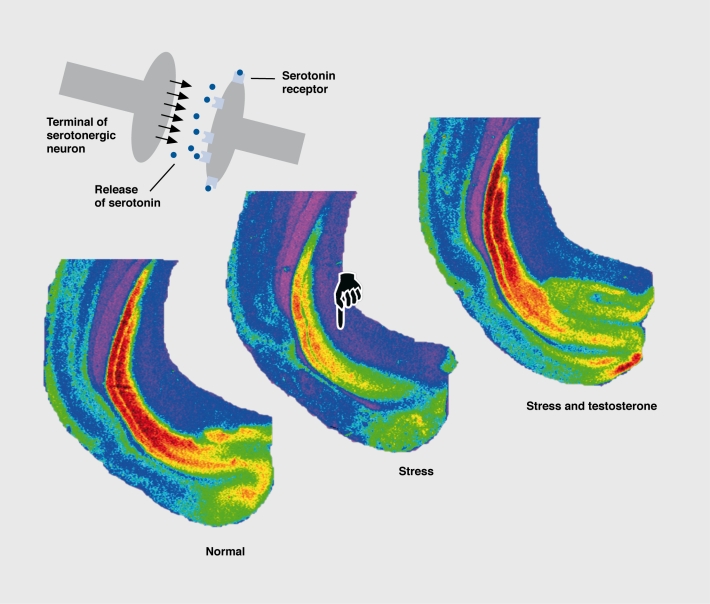
Stress is known to activate distinct neuronal circuits in the brain and induce multiple changes on the cellular level, including alterations in neuronal structures. On the basis of clinical observations that stress often precipitates a depressive disease, chronic psychosocial stress serves as an experimental model to evaluate the cellular and molecular alterations associated with the consequences of major depression. Antidepressants are presently believed to exert their primary biochemical effects by readjusting aberrant intrasynaptic concentrations of neurotransmitters, such as serotonin or noradrenaline, suggesting that imbalances viihin the monoaminergic systems contribute to the disorder (monoaminergic hypothesis of depression). Here, we reviev the results that comprise our understanding of stressful experience on cellular processes, with particular focus on the monoaminergic systems and structural changes within brain target areas of monoaminergic neurons.
已知压力会激活大脑中不同的神经回路,并在细胞水平上引发多种变化,包括神经元结构的改变。基于压力常常诱发抑郁症的临床观察结果,慢性心理社会压力作为一种实验模型,用于评估与重度抑郁症后果相关的细胞和分子改变。目前认为,抗抑郁药主要通过重新调整神经递质(如血清素或去甲肾上腺素)异常的突触内浓度来发挥其生化作用,这表明单胺能系统内的失衡导致了这种疾病(抑郁症的单胺能假说)。在此,我们回顾了一些结果,这些结果构成了我们对压力经历在细胞过程方面的理解,尤其关注单胺能系统以及单胺能神经元脑靶区内的结构变化。