Department of Pulmonology, Leiden University Medical Center, Leiden, The Netherlands.
Cell Stress Chaperones. 2012 Mar;17(2):275-9. doi: 10.1007/s12192-011-0306-2. Epub 2011 Oct 31.
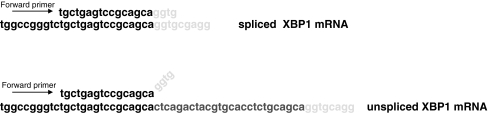
Endoplasmic reticulum (ER) stress is increasingly recognized as an important mechanism in a wide range of diseases including cystic fibrosis, alpha-1 antitrypsin deficiency, Parkinson's and Alzheimer's disease. Therefore, there is an increased need for reliable and quantitative markers for detection of ER stress in human tissues and cells. Accumulation of unfolded or misfolded proteins in the endoplasmic reticulum can cause ER stress, which leads to the activation of the unfolded protein response (UPR). UPR signaling involves splicing of X-box binding protein-1 (XBP1) mRNA, which is frequently used as a marker for ER stress. In most studies, the splicing of the XBP1 mRNA is visualized by gel electrophoresis which is laborious and difficult to quantify. In the present study, we have developed and validated a quantitative real-time RT-PCR method to detect the spliced form of XBP1 mRNA.
内质网(ER)应激越来越被认为是广泛的疾病机制中的一个重要因素,包括囊性纤维化、α-1 抗胰蛋白酶缺乏症、帕金森病和阿尔茨海默病。因此,对于在人体组织和细胞中检测 ER 应激的可靠和定量标志物的需求不断增加。未折叠或错误折叠的蛋白质在内质网中的积累会导致 ER 应激,从而导致未折叠蛋白反应(UPR)的激活。UPR 信号转导涉及 X 盒结合蛋白-1(XBP1)mRNA 的剪接,该 mRNA 通常用作 ER 应激的标志物。在大多数研究中,XBP1 mRNA 的剪接通过凝胶电泳可视化,这是繁琐且难以定量的。在本研究中,我们开发并验证了一种定量实时 RT-PCR 方法来检测 XBP1 mRNA 的剪接形式。