Department of Cell Biology, Harvard Medical School, Boston, MA, USA.
Aligning Science Across Parkinson's (ASAP) Collaborative Research Network, Chevy Chase, MD, USA.
Nat Cell Biol. 2024 Mar;26(3):378-392. doi: 10.1038/s41556-024-01356-4. Epub 2024 Mar 1.
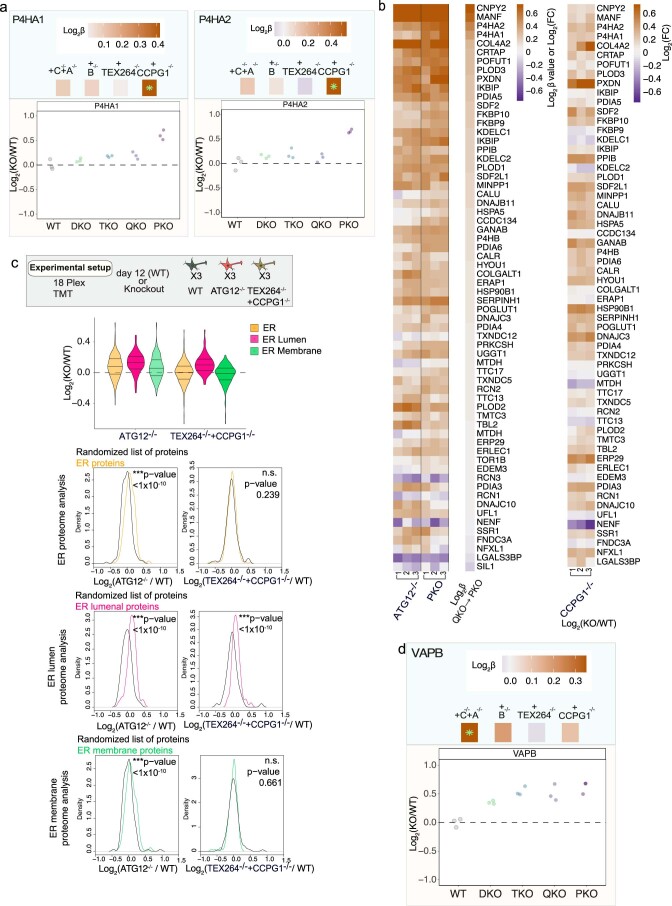
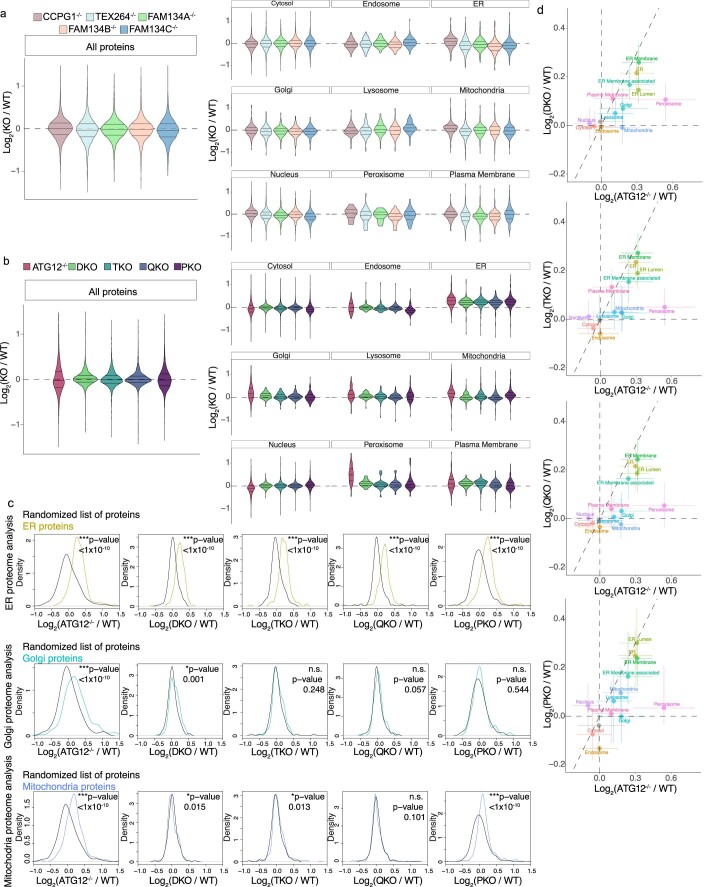
The endoplasmic reticulum (ER) employs a diverse proteome landscape to orchestrate many cellular functions, ranging from protein and lipid synthesis to calcium ion flux and inter-organelle communication. A case in point concerns the process of neurogenesis, where a refined tubular ER network is assembled via ER shaping proteins into the newly formed neuronal projections to create highly polarized dendrites and axons. Previous studies have suggested a role for autophagy in ER remodelling, as autophagy-deficient neurons in vivo display axonal ER accumulation within synaptic boutons, and the membrane-embedded ER-phagy receptor FAM134B has been genetically linked with human sensory and autonomic neuropathy. However, our understanding of the mechanisms underlying selective removal of the ER and the role of individual ER-phagy receptors is limited. Here we combine a genetically tractable induced neuron (iNeuron) system for monitoring ER remodelling during in vitro differentiation with proteomic and computational tools to create a quantitative landscape of ER proteome remodelling via selective autophagy. Through analysis of single and combinatorial ER-phagy receptor mutants, we delineate the extent to which each receptor contributes to both the magnitude and selectivity of ER protein clearance. We define specific subsets of ER membrane or lumenal proteins as preferred clients for distinct receptors. Using spatial sensors and flux reporters, we demonstrate receptor-specific autophagic capture of ER in axons, and directly visualize tubular ER membranes within autophagosomes in neuronal projections by cryo-electron tomography. This molecular inventory of ER proteome remodelling and versatile genetic toolkit provide a quantitative framework for understanding the contributions of individual ER-phagy receptors for reshaping ER during cell state transitions.
内质网 (ER) 利用多样化的蛋白质组景观来协调许多细胞功能,从蛋白质和脂质合成到钙离子流和细胞器间通讯。一个典型的例子是神经发生过程,其中通过 ER 成型蛋白将精细的管状 ER 网络组装成新形成的神经元突起,以创建高度极化的树突和轴突。先前的研究表明自噬在 ER 重塑中起作用,因为体内缺乏自噬的神经元在突触小球内显示出轴突 ER 积累,并且膜嵌入式 ER 吞噬受体 FAM134B 已在遗传上与人类感觉和自主神经病变相关联。然而,我们对选择性去除 ER 的机制以及各个 ER 吞噬受体的作用的理解是有限的。在这里,我们将可遗传的诱导神经元 (iNeuron) 系统与蛋白质组学和计算工具结合起来,用于监测体外分化过程中 ER 重塑,以通过选择性自噬创建 ER 蛋白质组重塑的定量景观。通过分析单个和组合的 ER 吞噬受体突变体,我们描述了每个受体对 ER 蛋白清除的幅度和选择性的贡献程度。我们将特定的 ER 膜或腔室蛋白子集定义为不同受体的首选客户。使用空间传感器和通量报告器,我们证明了受体特异性自噬捕获轴突中的 ER,并通过冷冻电子断层扫描直接在神经元突起中的自噬体中可视化管状 ER 膜。这种 ER 蛋白质组重塑的分子清单和多功能遗传工具包为理解单个 ER 吞噬受体在细胞状态转变过程中重塑 ER 的贡献提供了定量框架。