Molecular and Cellular Biology Graduate Program, Biology Department, University of Massachusetts, Amherst, MA 01003, USA.
Dis Model Mech. 2012 Mar;5(2):248-58. doi: 10.1242/dmm.008383. Epub 2011 Nov 1.
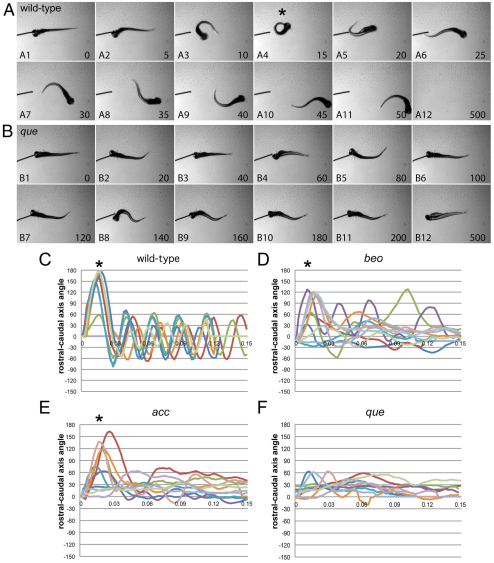
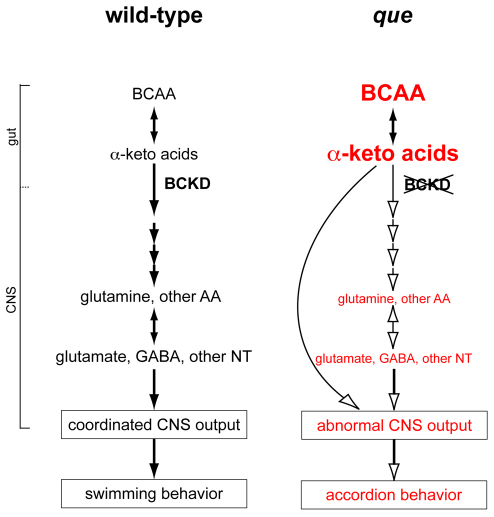
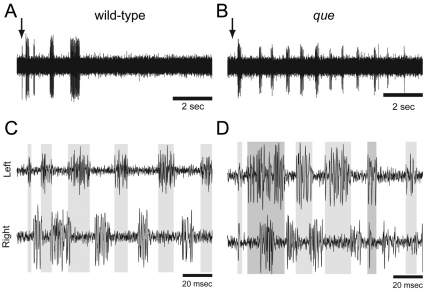
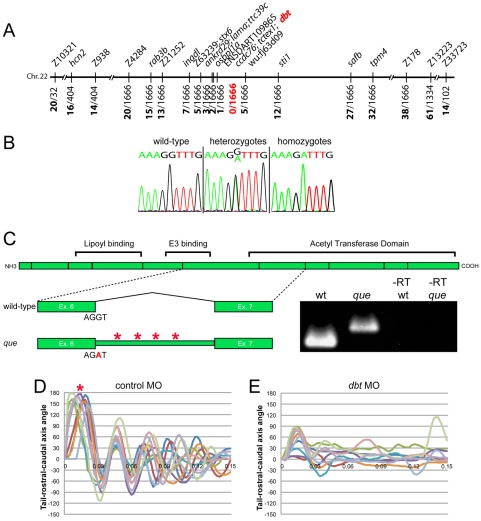
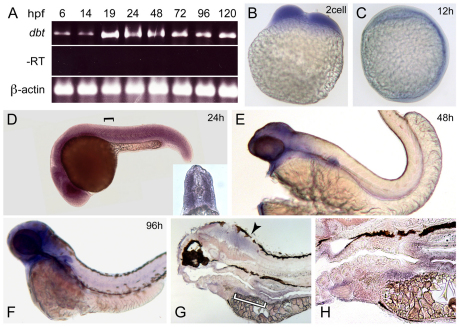
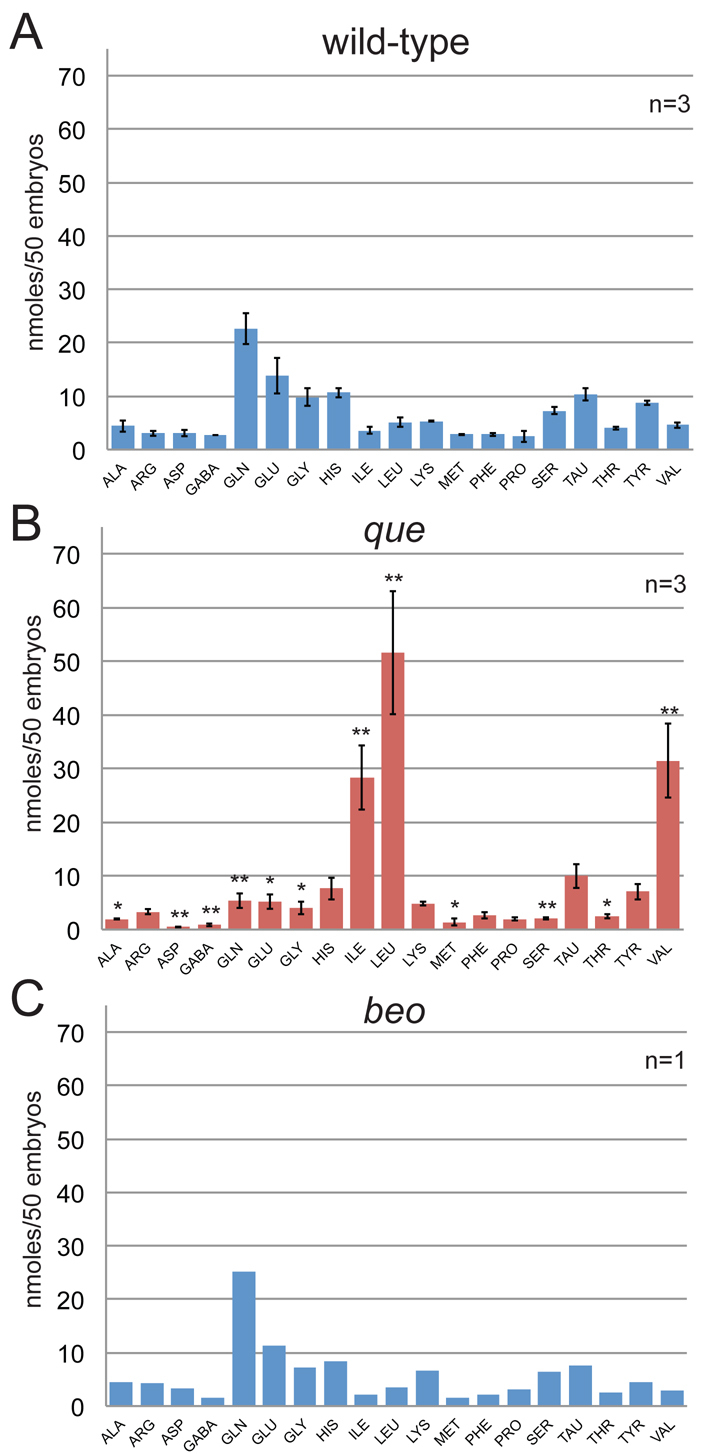
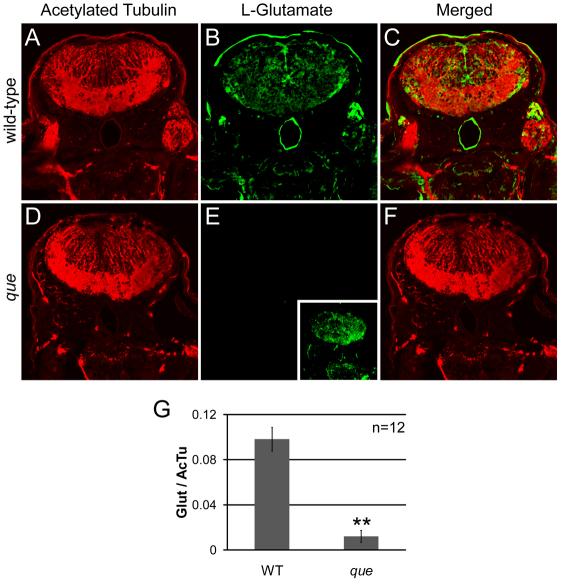
Analysis of zebrafish mutants that demonstrate abnormal locomotive behavior can elucidate the molecular requirements for neural network function and provide new models of human disease. Here, we show that zebrafish quetschkommode (que) mutant larvae exhibit a progressive locomotor defect that culminates in unusual nose-to-tail compressions and an inability to swim. Correspondingly, extracellular peripheral nerve recordings show that que mutants demonstrate abnormal locomotor output to the axial muscles used for swimming. Using positional cloning and candidate gene analysis, we reveal that a point mutation disrupts the gene encoding dihydrolipoamide branched-chain transacylase E2 (Dbt), a component of a mitochondrial enzyme complex, to generate the que phenotype. In humans, mutation of the DBT gene causes maple syrup urine disease (MSUD), a disorder of branched-chain amino acid metabolism that can result in mental retardation, severe dystonia, profound neurological damage and death. que mutants harbor abnormal amino acid levels, similar to MSUD patients and consistent with an error in branched-chain amino acid metabolism. que mutants also contain markedly reduced levels of the neurotransmitter glutamate within the brain and spinal cord, which probably contributes to their abnormal spinal cord locomotor output and aberrant motility behavior, a trait that probably represents severe dystonia in larval zebrafish. Taken together, these data illustrate how defects in branched-chain amino acid metabolism can disrupt nervous system development and/or function, and establish zebrafish que mutants as a model to better understand MSUD.
分析表现出异常运动行为的斑马鱼突变体可以阐明神经网络功能的分子要求,并提供人类疾病的新模型。在这里,我们显示斑马鱼 quetschkommode(que)突变体幼虫表现出进行性运动缺陷,最终导致异常的从头到尾压缩和无法游泳。相应地,细胞外周围神经记录显示 que 突变体表现出用于游泳的轴向肌肉的异常运动输出。通过定位克隆和候选基因分析,我们揭示了一个点突变破坏了编码二氢硫辛酸支链转酰基酶 E2(Dbt)的基因,Dbt 是一种线粒体酶复合物的组成部分,从而产生 que 表型。在人类中,DBT 基因突变导致枫糖尿症(MSUD),这是一种支链氨基酸代谢紊乱的疾病,可导致智力迟钝、严重的肌张力障碍、严重的神经损伤和死亡。que 突变体具有异常的氨基酸水平,类似于 MSUD 患者,与支链氨基酸代谢中的错误一致。que 突变体还在大脑和脊髓中含有明显减少的神经递质谷氨酸水平,这可能导致它们异常的脊髓运动输出和异常的运动行为,这一特征可能代表幼鱼中的严重肌张力障碍。总之,这些数据说明了支链氨基酸代谢缺陷如何破坏神经系统的发育和/或功能,并确立了斑马鱼 que 突变体作为更好地理解 MSUD 的模型。