Reynolds Mathew, Reynolds Michael, Adeeb Samer, El-Bialy Tarek
Department of Civil and Environmental Engineering, University of Alberta, Edmonton, AB, Canada.
Open Biomed Eng J. 2011;5:83-9. doi: 10.2174/1874120701105010083. Epub 2011 Oct 14.
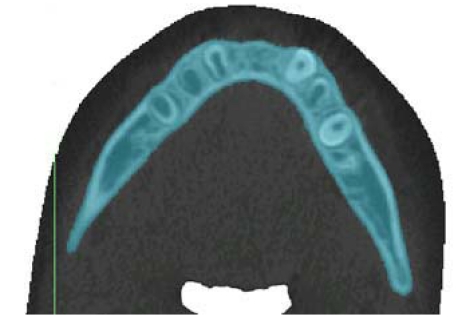
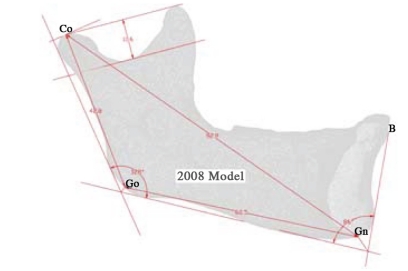
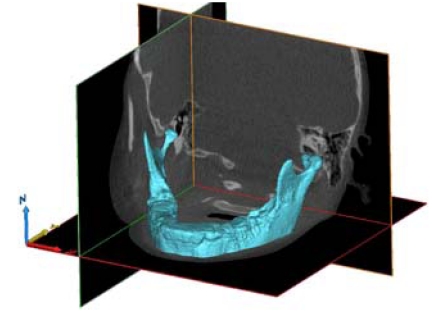
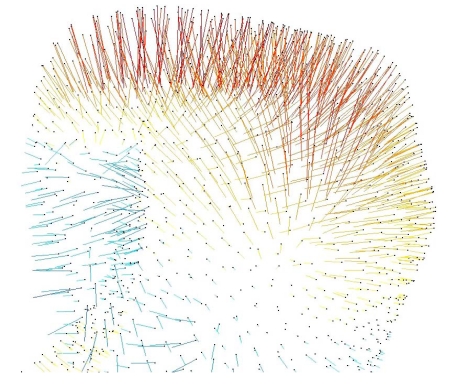
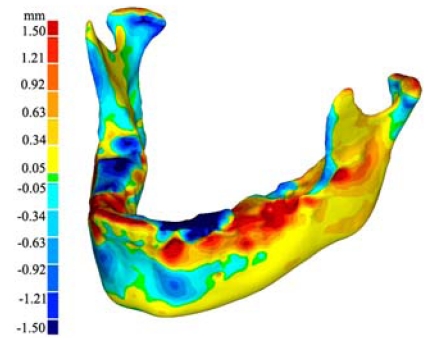
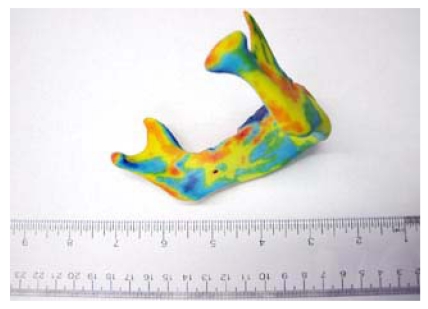
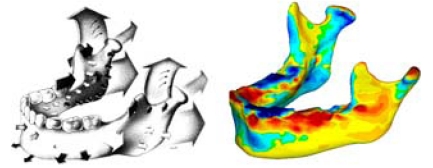
Bone growth is a complex process that is controlled by a multitude of mechanisms that are not fully understood.Most of the current methods employed to measure the growth of bones focus on either studying cadaveric bones from different individuals of different ages, or successive two-dimensional (2D) radiographs. Both techniques have their known limitations. The purpose of this study was to explore a technique for quantifying the three dimensional (3D) growth of an adolescent human mandible over the period of one year utilizing cone beam computed tomography (CBCT) scans taken for regular orthodontic records. Three -dimensional virtual models were created from the CBCT data using mainstream medical imaging software. A comparison between computer-generated surface meshes of successive 3-D virtual models illustrates the magnitude of relative mandible growth. The results of this work are in agreement with previously reported data from human cadaveric studies and implantable marker studies. The presented method provides a new relatively simple basis (utilizing commercially available software) to visualize and evaluate individualized 3D (mandibular) growth in vivo.
骨骼生长是一个复杂的过程,受多种尚未完全明确的机制控制。目前用于测量骨骼生长的大多数方法要么侧重于研究不同年龄个体的尸体骨骼,要么侧重于连续的二维(2D)X光片。这两种技术都有其已知的局限性。本研究的目的是探索一种技术,利用为常规正畸记录拍摄的锥形束计算机断层扫描(CBCT),对青少年人类下颌骨在一年时间内的三维(3D)生长进行量化。使用主流医学成像软件从CBCT数据创建三维虚拟模型。连续三维虚拟模型的计算机生成表面网格之间的比较说明了下颌骨相对生长的幅度。这项工作的结果与先前来自人体尸体研究和可植入标记物研究报告的数据一致。所提出的方法提供了一个新的相对简单的基础(利用商业软件),以在体内可视化和评估个性化的三维(下颌骨)生长。