Division of Experimental Diabetes and Aging, Department of Geriatrics and Palliative Medicine, Mount Sinai School of Medicine, New York, New York, United States of America.
PLoS One. 2011;6(10):e26991. doi: 10.1371/journal.pone.0026991. Epub 2011 Oct 28.
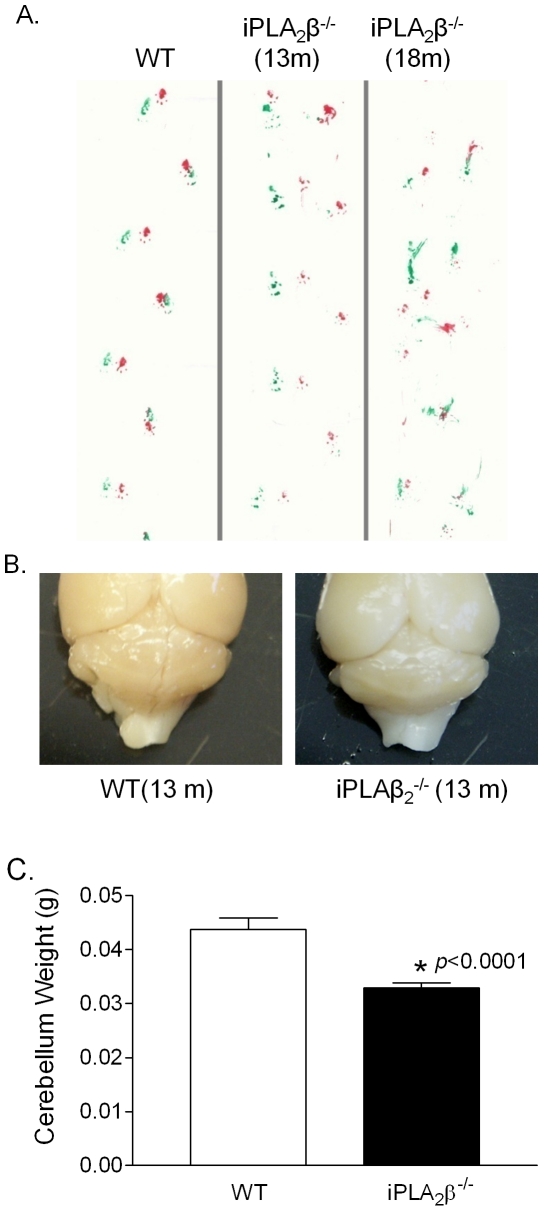
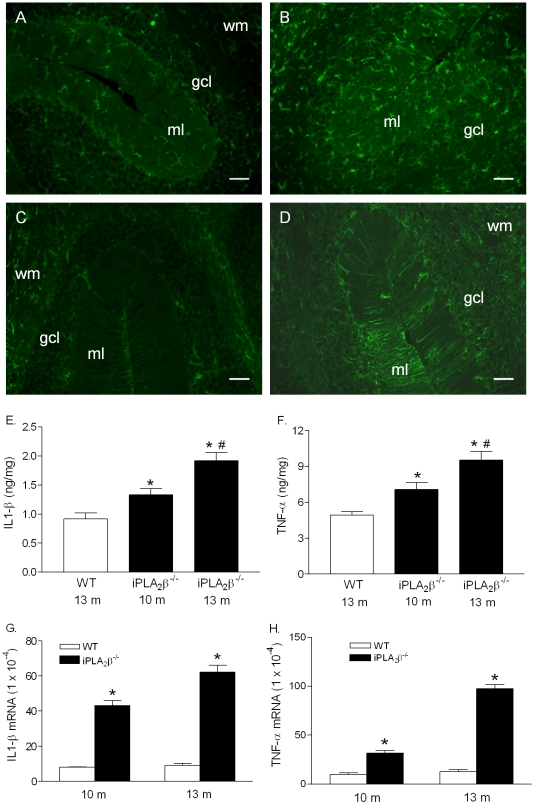
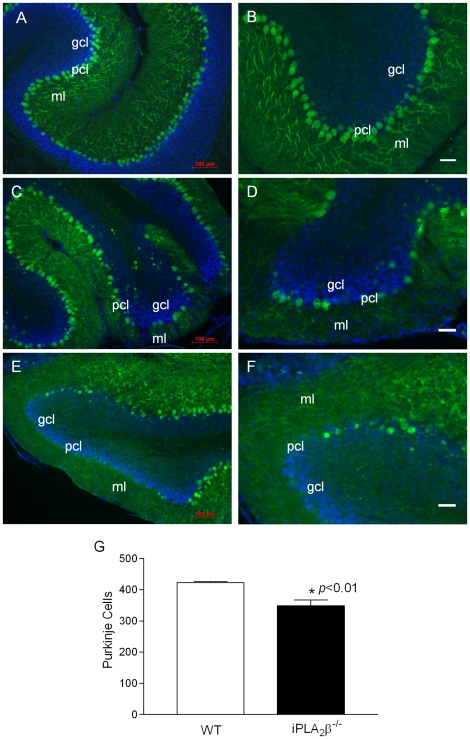
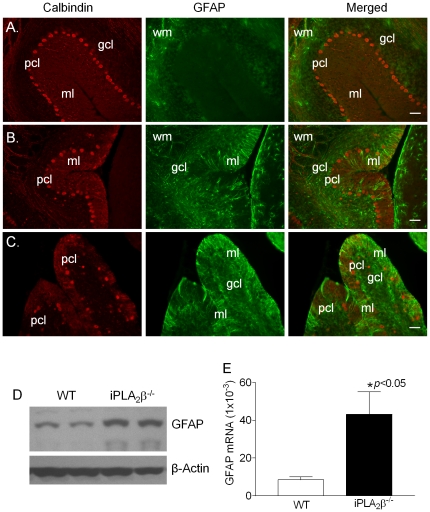
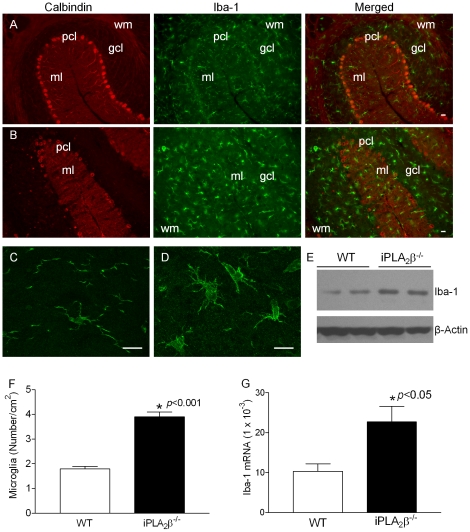
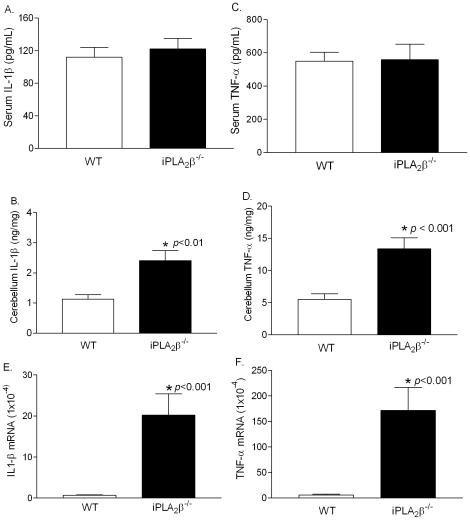
Infantile neuroaxonal dystrophy (INAD) is a progressive, autosomal recessive neurodegenerative disease characterized by axonal dystrophy, abnormal iron deposition and cerebellar atrophy. This disease was recently mapped to PLA2G6, which encodes group VI Ca(2+)-independent phospholipase A(2) (iPLA(2) or iPLA(2)β). Here we show that genetic ablation of PLA2G6 in mice (iPLA(2)β(-/-)) leads to the development of cerebellar atrophy by the age of 13 months. Atrophied cerebella exhibited significant loss of Purkinje cells, as well as reactive astrogliosis, the activation of microglial cells, and the pronounced up-regulation of the pro-inflammatory cytokines tumor necrosis factor-α (TNF-α) and interleukin-1β (IL-1β). Moreover, glial cell activation and the elevation in TNF-α and IL-1β expression occurred before apparent cerebellar atrophy. Our findings indicate that the absence of PLA2G6 causes neuroinflammation and Purkinje cell loss and ultimately leads to cerebellar atrophy. Our study suggests that iPLA(2)β(-/-) mice are a valuable model for cerebellar atrophy in INAD and that early anti-inflammatory therapy may help slow the progression of cerebellar atrophy in this deadly neurodegenerative disease.
婴儿神经轴突营养不良(INAD)是一种进行性、常染色体隐性神经退行性疾病,其特征为轴突营养不良、异常铁沉积和小脑萎缩。这种疾病最近被定位到 PLA2G6,该基因编码第六组 Ca(2+)-非依赖性磷脂酶 A2(iPLA(2)或 iPLA(2)β)。在这里,我们证明 PLA2G6 在小鼠中的基因缺失(iPLA(2)β(-/-))会导致小脑萎缩,到 13 个月大时出现小脑萎缩。萎缩的小脑表现出浦肯野细胞的显著丧失,以及反应性星形胶质细胞增生、小胶质细胞的激活,以及促炎细胞因子肿瘤坏死因子-α(TNF-α)和白细胞介素-1β(IL-1β)的显著上调。此外,神经胶质细胞的激活和 TNF-α 和 IL-1β 表达的升高发生在明显的小脑萎缩之前。我们的研究结果表明,PLA2G6 的缺失会导致神经炎症和浦肯野细胞的丧失,最终导致小脑萎缩。我们的研究表明,iPLA(2)β(-/-)小鼠是 INAD 小脑萎缩的一个有价值的模型,早期抗炎治疗可能有助于减缓这种致命神经退行性疾病的小脑萎缩进展。