Laboratory of Pharmacology and Chemistry, National Institute of Environmental Health Sciences, National Institutes of Health, Research Triangle Park, NC, 27709, USA,
Mol Neurobiol. 2010 Jun;41(2-3):232-41. doi: 10.1007/s12035-010-8098-4. Epub 2010 Feb 12.
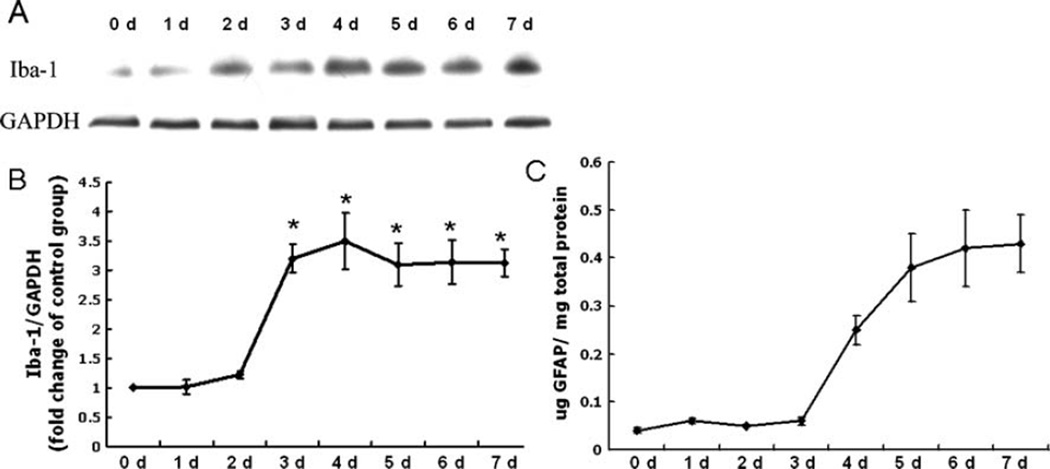
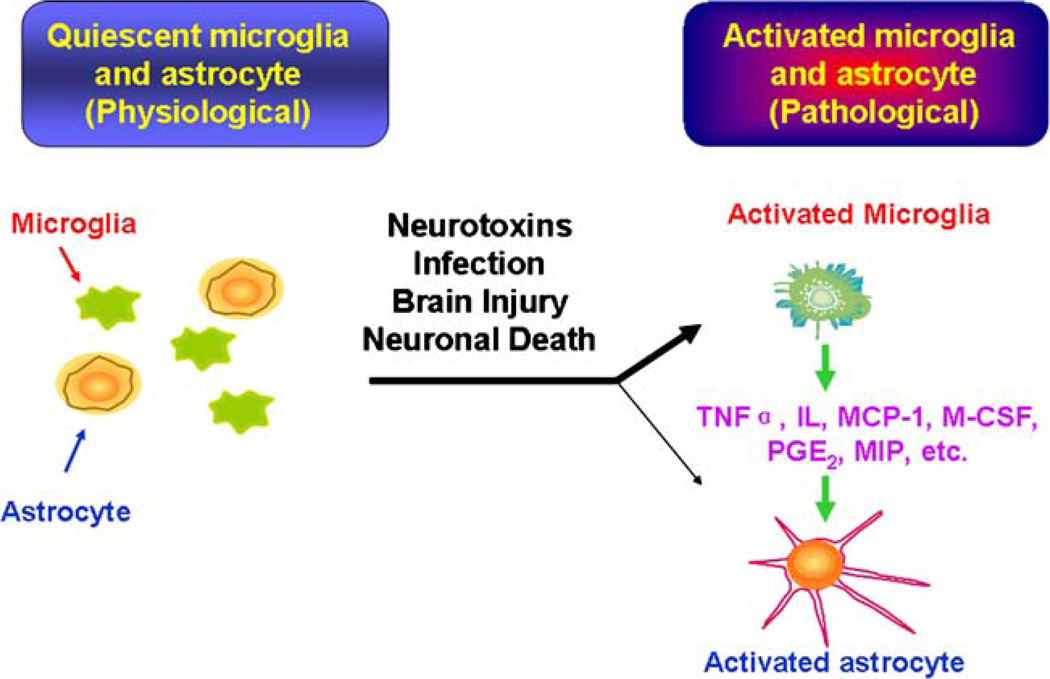
Astrogliosis, a cellular reaction with specific structural and functional characteristics, represents a remarkably homotypic response of astrocytes to all kinds of central nervous system (CNS) pathologies. Astrocytes play diverse functions in the brain, both harmful and beneficial. Mounting evidence indicates that astrogliosis is an underlying component of a diverse range of diseases and associated neuropathologies. The mechanisms that lead to astrogliosis are not fully understood, nevertheless, damaged neurons have long been reported to induce astrogliosis and astrogliosis has been used as an index for underlying neuronal damage. As the predominant source of proinflammatory factors in the CNS, microglia are readily activated under certain pathological conditions. An increasing body of evidence suggests that release of cytokines and other soluble products by activated microglia can significantly influence the subsequent development of astrogliosis and scar formation in CNS. It is well known that damaged neurons activate microglia very quickly, therefore, it is possible that activated microglia contribute factors/mediators through which damaged neuron induce astrogliosis. The hypothesis that activated microglia initiate and maintain astrogliosis suggests that suppression of microglial overactivation might effectively attenuate reactive astrogliosis. Development of targeted anti-microglial activation therapies might slow or halt the progression of astrogliosis and, therefore, help achieve a more beneficial environment in various CNS pathologies.
星形胶质细胞增生是一种具有特定结构和功能特征的细胞反应,代表了星形胶质细胞对各种中枢神经系统(CNS)疾病的显著同源反应。星形胶质细胞在大脑中具有多种功能,既有有益的也有有害的。越来越多的证据表明,星形胶质细胞增生是多种疾病和相关神经病理学的基础组成部分。导致星形胶质细胞增生的机制尚未完全阐明,但长期以来一直有报道称受损神经元会诱导星形胶质细胞增生,并且星形胶质细胞增生被用作潜在神经元损伤的指标。作为中枢神经系统中促炎因子的主要来源,小胶质细胞在某些病理条件下很容易被激活。越来越多的证据表明,激活的小胶质细胞释放的细胞因子和其他可溶性产物可以显著影响星形胶质细胞增生和 CNS 瘢痕形成的后续发展。众所周知,受损神经元会迅速激活小胶质细胞,因此,激活的小胶质细胞可能通过释放因子/介质来促进神经元损伤诱导星形胶质细胞增生。激活的小胶质细胞引发和维持星形胶质细胞增生的假说表明,抑制小胶质细胞过度激活可能有效减轻反应性星形胶质细胞增生。开发针对小胶质细胞激活的靶向治疗方法可能会减缓或阻止星形胶质细胞增生的进展,从而有助于在各种 CNS 疾病中实现更有益的环境。