Institute of Molecular Medicine and Genetics, Georgia Health Sciences University, Augusta, Georgia, United States of America.
PLoS One. 2011;6(10):e27039. doi: 10.1371/journal.pone.0027039. Epub 2011 Oct 26.
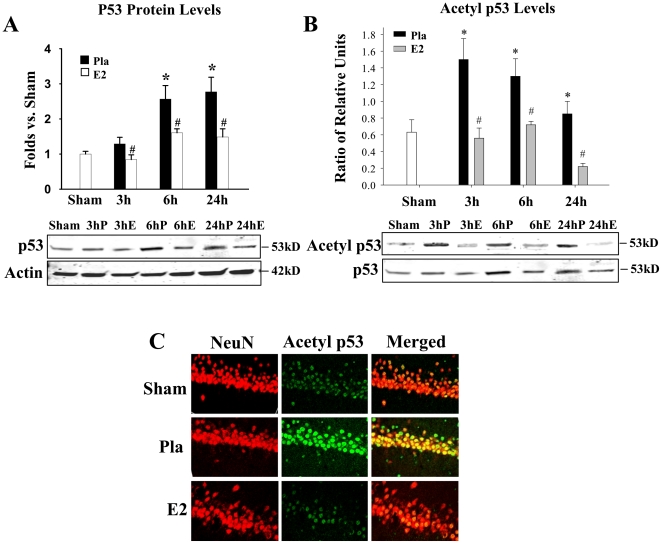
Recent studies demonstrate that acetylation of the transcription factor, p53 on lysine(373) leads to its enhanced stabilization/activity and increased susceptibility of cells to stress. However, it is not known whether acetylation of p53 is altered in the hippocampus following global cerebral ischemia (GCI) or is regulated by the hormone, 17β-estradiol (17β-E(2)), and thus, this study examined these issues.
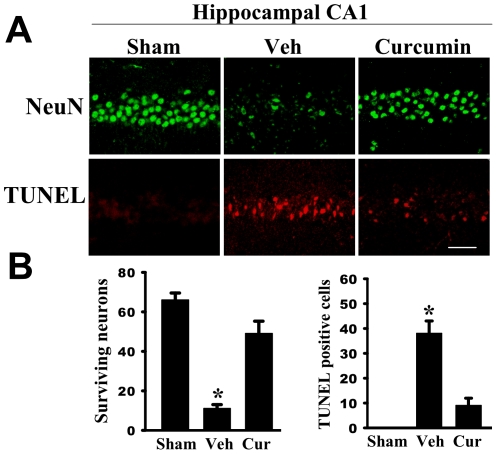
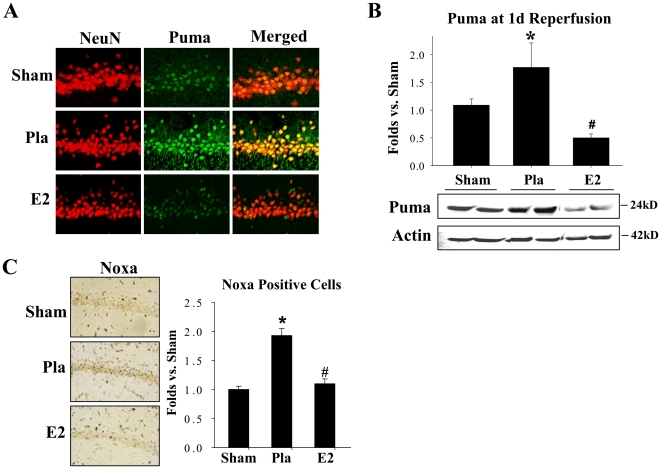
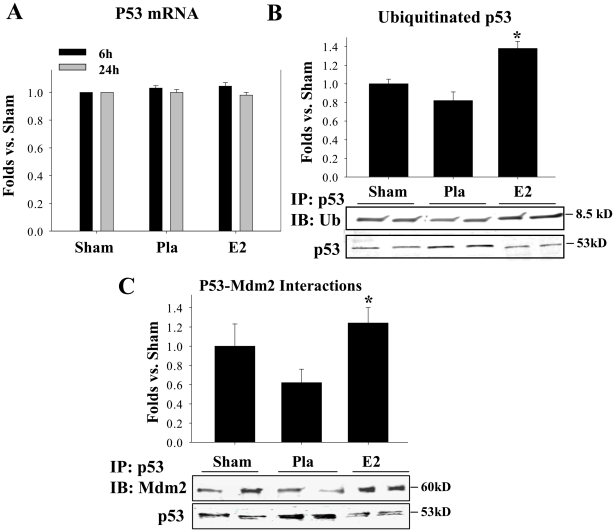
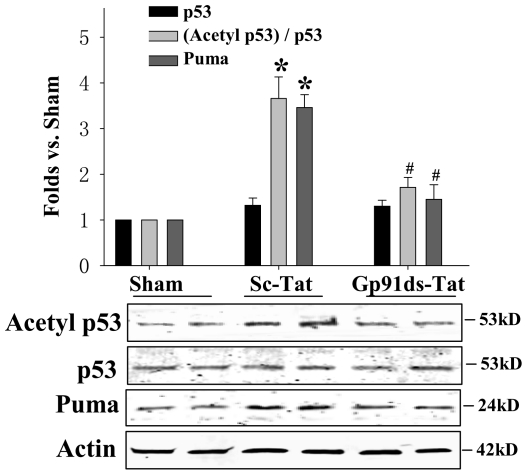
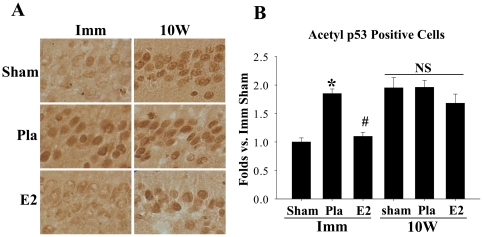
METHODOLOGY/PRINCIPAL FINDINGS: The study revealed that Acetyl p53-Lysine(373) levels were markedly increased in the hippocampal CA1 region after GCI at 3 h, 6 h and 24 h after reperfusion, an effect strongly attenuated by 17β-E(2). 17β-E(2) also enhanced interaction of p53 with the ubiquitin ligase, Mdm2, increased ubiquitination of p53, and induced its down-regulation, as well as attenuated elevation of the p53 transcriptional target, Puma. We also observed enhanced acetylation of p53 at a different lysine (Lys(382)) at 3 h after reperfusion, and 17β-E(2) also markedly attenuated this effect. Furthermore, administration of an inhibitor of CBP/p300 acetyltransferase, which acetylates p53, was strongly neuroprotective of the CA1 region following GCI. In long-term estrogen deprived (LTED) animals, the ability of 17β-E(2) to attenuate p53 acetylation was lost, and intriguingly, Acetyl p53-Lysine(373) levels were markedly elevated in sham (non-ischemic) LTED animals. Finally, intracerebroventricular injections of Gp91ds-Tat, a specific NADPH oxidase (NOX2) inhibitor, but not the scrambled tat peptide control (Sc-Tat), attenuated acetylation of p53 and reduced levels of Puma following GCI.
CONCLUSIONS/SIGNIFICANCE: The studies demonstrate that p53 undergoes enhanced acetylation in the hippocampal CA1 region following global cerebral ischemia, and that the neuroprotective agent, 17β-E(2), markedly attenuates the ischemia-induced p53 acetylation. Furthermore, following LTED, the suppressive effect of 17β-E(2) on p53 acetylation is lost, and p53 acetylation increases in the hippocampus, which may explain previous reports of increased sensitivity of the hippocampus to ischemic stress following LTED.
最近的研究表明,转录因子 p53 赖氨酸(373)上的乙酰化导致其稳定性/活性增强,并使细胞对应激的敏感性增加。然而,目前尚不清楚在全脑缺血(GCI)后,p53 是否在海马体中发生乙酰化改变,或者是否受激素 17β-雌二醇(17β-E(2))调节,因此,本研究探讨了这些问题。
方法/主要发现:研究表明,在再灌注后 3 h、6 h 和 24 h,GCI 后海马 CA1 区的乙酰化 p53-Lysine(373)水平明显升高,17β-E(2)强烈减弱了这种作用。17β-E(2)还增强了 p53 与泛素连接酶 Mdm2 的相互作用,增加了 p53 的泛素化,并诱导其下调,同时减弱了 p53 转录靶标 Puma 的升高。我们还观察到在再灌注后 3 h 时 p53 的另一个赖氨酸(Lys(382))的乙酰化增强,17β-E(2)也显著减弱了这种作用。此外,给予 CBP/p300 乙酰转移酶抑制剂,该酶可乙酰化 p53,对 GCI 后 CA1 区具有强烈的神经保护作用。在长期去雌激素(LTED)动物中,17β-E(2)减弱 p53 乙酰化的能力丧失,而有趣的是,在假手术(非缺血)LTED 动物中,乙酰化 p53-Lysine(373)水平明显升高。最后,脑室内注射特异性 NADPH 氧化酶(NOX2)抑制剂 Gp91ds-Tat,但不是随机肽对照(Sc-Tat),可减弱 GCI 后 p53 的乙酰化并降低 Puma 水平。
结论/意义:研究表明,在全脑缺血后,海马 CA1 区的 p53 发生增强的乙酰化,神经保护剂 17β-E(2)显著减弱了缺血诱导的 p53 乙酰化。此外,在 LTED 后,17β-E(2)对 p53 乙酰化的抑制作用丧失,p53 在海马体中的乙酰化增加,这可能解释了之前报道的 LTED 后海马体对缺血应激的敏感性增加。