Department of Parasitology, College of Veterinary Medicine, Sichuan Agricultural University, Ya'an, China.
PLoS One. 2011;6(10):e27066. doi: 10.1371/journal.pone.0027066. Epub 2011 Oct 28.
Baylisascaris procyonis (Nematoda: Ascaridida), an intestinal nematode of raccoons, is emerging as an important helminthic zoonosis due to serious or fatal larval migrans in animals and humans. Despite its significant veterinary and public health impact, the epidemiology, molecular ecology and population genetics of this parasite remain largely unexplored. Mitochondrial (mt) genomes can provide a foundation for investigations in these areas and assist in the diagnosis and control of B. procyonis. In this study, the first complete mt genome sequence of B. procyonis was determined using a polymerase chain reaction (PCR)-based primer-walking strategy.
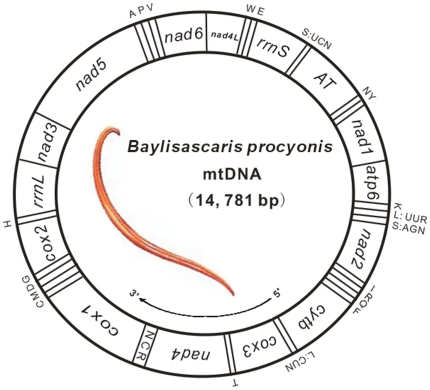
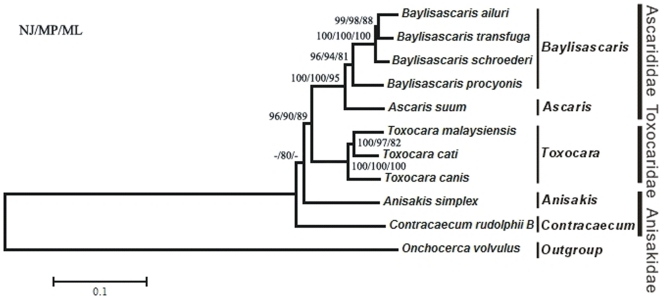
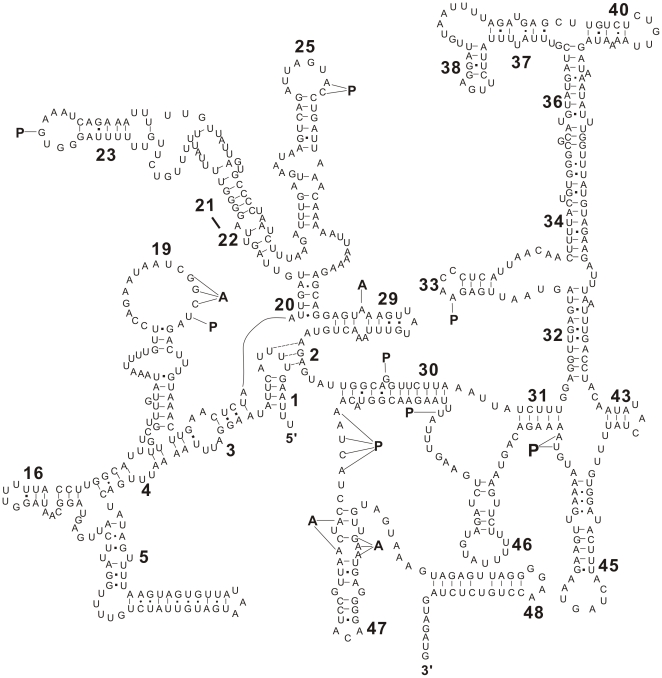
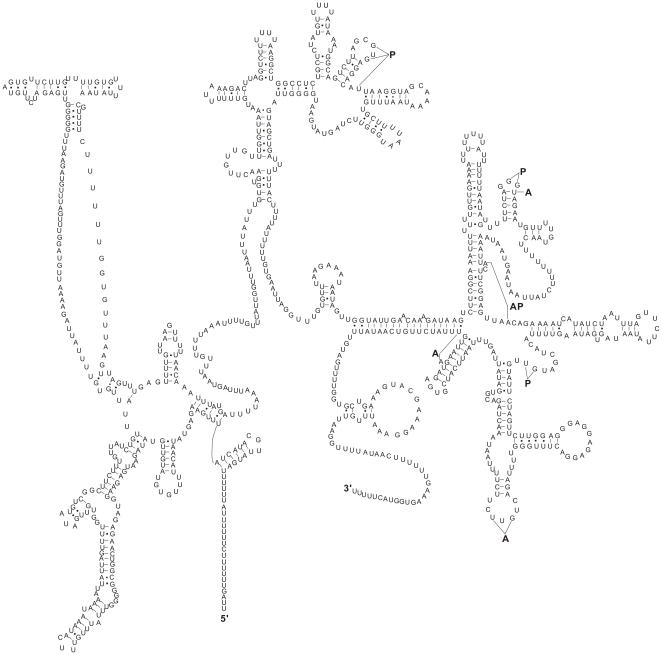
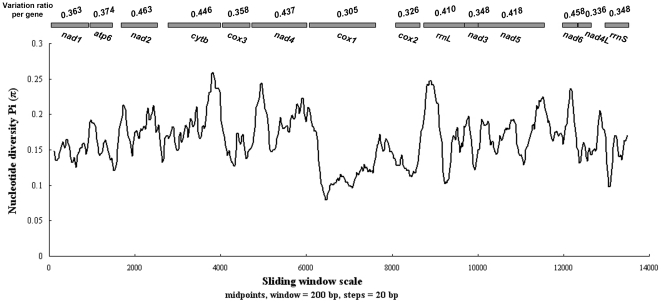
METHODOLOGY/PRINCIPAL FINDINGS: The circular mt genome (14781 bp) of B. procyonis contained 12 protein-coding, 22 transfer RNA and 2 ribosomal RNA genes congruent with other chromadorean nematodes. Interestingly, the B. procyonis mtDNA featured an extremely long AT-rich region (1375 bp) and a high number of intergenic spacers (17), making it unique compared with other secernentean nematodes characterized to date. Additionally, the entire genome displayed notable levels of AT skew and GC skew. Based on pairwise comparisons and sliding window analysis of mt genes among the available 11 Ascaridida mtDNAs, new primer pairs were designed to amplify specific short fragments of the genes cytb (548 bp fragment) and rrnL (200 bp fragment) in the B. procyonis mtDNA, and tested as possible alternatives to existing mt molecular beacons for Ascaridida. Finally, phylogenetic analysis of mtDNAs provided novel estimates of the interrelationships of Baylisasaris and Ascaridida.
CONCLUSIONS/SIGNIFICANCE: The complete mt genome sequence of B. procyonis sequenced here should contribute to molecular diagnostic methods, epidemiological investigations and ecological studies of B. procyonis and other related ascaridoids. The information will be important in refining the phylogenetic relationships within the order Ascaridida and enriching the resource of markers for systematic, population genetic and evolutionary biological studies of parasitic nematodes of socio-economic importance.
浣熊蛔虫(Nematoda:Ascaridida)是浣熊的一种肠道线虫,由于其在动物和人类中严重或致命的幼虫移行,已成为一种重要的寄生虫动物源性传染病。尽管它对兽医和公共卫生有重大影响,但该寄生虫的流行病学、分子生态学和种群遗传学在很大程度上仍未得到探索。线粒体(mt)基因组可以为这些领域的研究提供基础,并有助于诊断和控制 B. procyonis。在这项研究中,使用聚合酶链反应(PCR)-基于引物行走策略确定了 B. procyonis 的第一个完整 mt 基因组序列。
方法/主要发现:B. procyonis 的圆形 mt 基因组(14781 bp)包含 12 个蛋白编码、22 个转移 RNA 和 2 个核糖体 RNA 基因,与其他 Chromadorea 线虫一致。有趣的是,B. procyonis mtDNA 具有极其长的 AT 丰富区(1375 bp)和大量的基因间间隔区(17 个),与迄今为止特征描述的其他半尾线虫相比具有独特性。此外,整个基因组显示出显著的 AT 倾斜和 GC 倾斜。基于对现有 11 种 Ascaridida mtDNA 之间 mt 基因的成对比较和滑动窗口分析,设计了新的引物对,以扩增 B. procyonis mtDNA 中 cytb(548 bp 片段)和 rrnL(200 bp 片段)的特定短片段,并作为 Ascaridida 现有 mt 分子信标的替代物进行了测试。最后,mtDNA 的系统发育分析提供了 Baylisasaris 和 Ascaridida 相互关系的新估计。
结论/意义:本文测序的 B. procyonis 完整 mt 基因组序列应有助于 B. procyonis 及其它相关的蛔虫的分子诊断方法、流行病学研究和生态研究。该信息对于完善 Ascaridida 目内的系统发育关系以及丰富具有社会经济重要性的寄生线虫系统学、种群遗传学和进化生物学研究的标记资源将非常重要。