Shanghai Public Health Clinical Center, Institutes of Biomedical Sciences, Shanghai, China.
Clin Infect Dis. 2012 Jan 1;54(1):17-24. doi: 10.1093/cid/cir753. Epub 2011 Nov 3.
A mass vaccination has been implemented to prevent the spread of 2009 pandemic influenza virus in China. Highly limited information is available on whether this vaccine induces cross-reactive neutralization antibodies against other subtypes of influenza viruses.
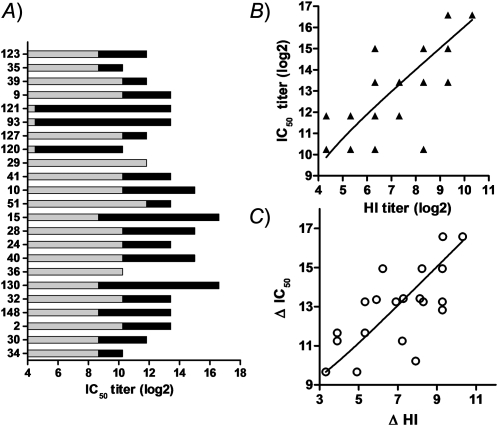
We employed pseudovirus-based assays to analyze heterosubtypic neutralization responses in serum samples of 23 recipients of 2009 pandemic influenza vaccine.
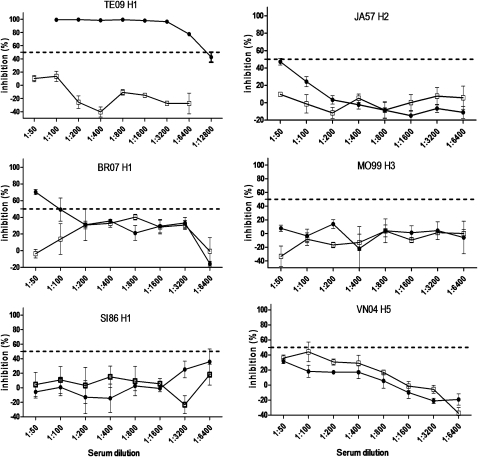
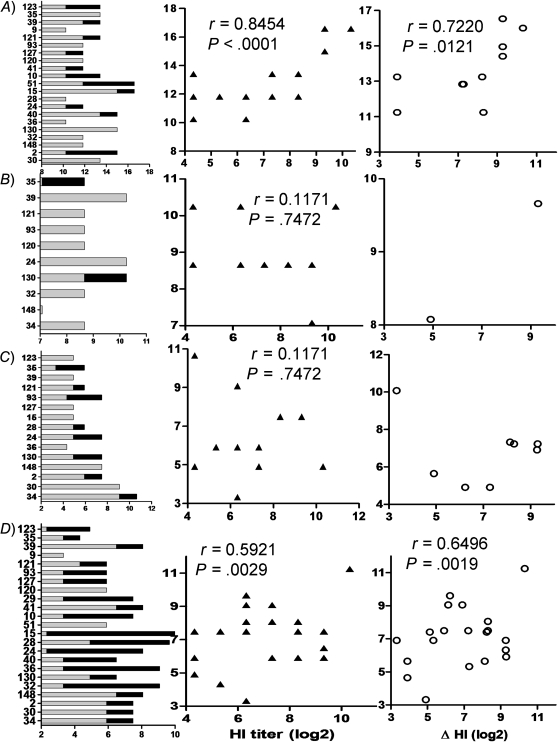
One dose of pandemic vaccine not only stimulated good neutralization antibodies against cognate influenza virus 2009 influenza A (H1N1), but also raised broad cross-reactive neutralization activities against seasonal H3N2 and highly pathogenic avian influenza virus H5N1 and lesser to H2N2. The cross-reactive neutralization activities were completely abolished after the removal of immunoglobin G (IgG). In contrast, H1N1 vaccination alone in influenza-naive mice elicited only vigorous homologous neutralizing activities but not cross-reactive neutralization activities.
Our data suggest that the cross-reactive neutralization epitopes do exist in this vaccine and could elicit significant cross-reactive neutralizing IgG antibodies in the presence of preexisting responses. The exposure to H1N1 vaccine is likely to modify the hierarchical order of preexisting immune responses to influenza viruses. These findings provide insights into the evolution of human immunity to influenza viruses after experiencing multiple influenza virus infections and vaccinations.
中国已实施大规模疫苗接种,以防止 2009 年流感大流行病毒的传播。目前关于该疫苗是否能诱导针对其他流感病毒亚型的交叉中和抗体的信息非常有限。
我们采用假病毒为基础的检测方法,分析了 23 名接种 2009 年流感大流行疫苗者血清样本中的异源中和反应。
一剂大流行疫苗不仅刺激了针对同源流感病毒 2009 年甲型(H1N1)的良好中和抗体,还引起了对季节性 H3N2 和高致病性禽流感病毒 H5N1 的广泛交叉中和活性,对 H2N2 的交叉中和活性则较低。免疫球蛋白 G(IgG)去除后,交叉中和活性完全消失。相比之下,在流感未感染的小鼠中单独接种 H1N1 疫苗只能引起强烈的同源中和活性,而没有交叉中和活性。
我们的数据表明,这种疫苗中确实存在交叉中和表位,并且在存在预先存在的反应的情况下,可以诱导出显著的交叉中和 IgG 抗体。接触 H1N1 疫苗可能会改变对流感病毒预先存在的免疫反应的层次顺序。这些发现为人类在经历多次流感病毒感染和接种疫苗后对流感病毒的免疫进化提供了深入的了解。