• 文献检索
  • 文档翻译
  • 深度研究
  • 学术资讯
  • Suppr Zotero 插件Zotero 插件
  • 邀请有礼
  • 套餐&价格
  • 历史记录
应用&插件
Suppr Zotero 插件Zotero 插件浏览器插件Mac 客户端Windows 客户端微信小程序
定价
高级版会员购买积分包购买API积分包
服务
文献检索文档翻译深度研究API 文档MCP 服务
关于我们
关于 Suppr公司介绍联系我们用户协议隐私条款
关注我们

Suppr 超能文献

核心技术专利:CN118964589B侵权必究
粤ICP备2023148730 号-1Suppr @ 2026

文献检索

告别复杂PubMed语法,用中文像聊天一样搜索,搜遍4000万医学文献。AI智能推荐,让科研检索更轻松。

立即免费搜索

文件翻译

保留排版,准确专业,支持PDF/Word/PPT等文件格式,支持 12+语言互译。

免费翻译文档

深度研究

AI帮你快速写综述,25分钟生成高质量综述,智能提取关键信息,辅助科研写作。

立即免费体验

针对特定膜分子的肿瘤细胞选择性体内近红外光免疫治疗。

Cancer cell-selective in vivo near infrared photoimmunotherapy targeting specific membrane molecules.

机构信息

Molecular Imaging Program, Center for Cancer Research, National Cancer Institute, US National Institutes of Health, Bethesda, Maryland, USA.

出版信息

Nat Med. 2011 Nov 6;17(12):1685-91. doi: 10.1038/nm.2554.

DOI:10.1038/nm.2554
PMID:22057348
原文链接:https://pmc.ncbi.nlm.nih.gov/articles/PMC3233641/
Abstract

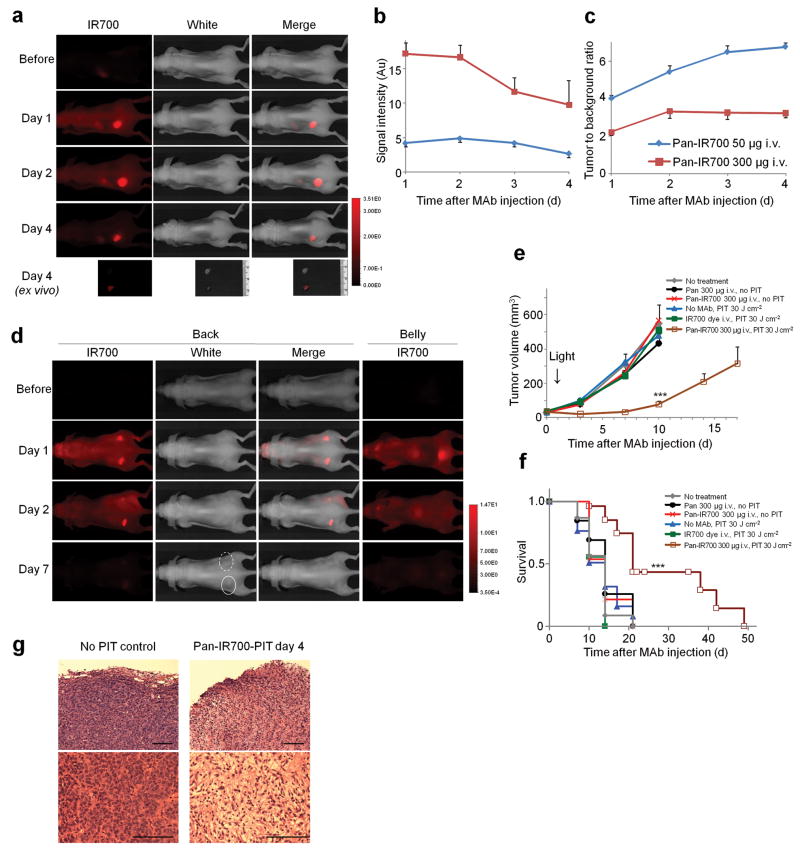
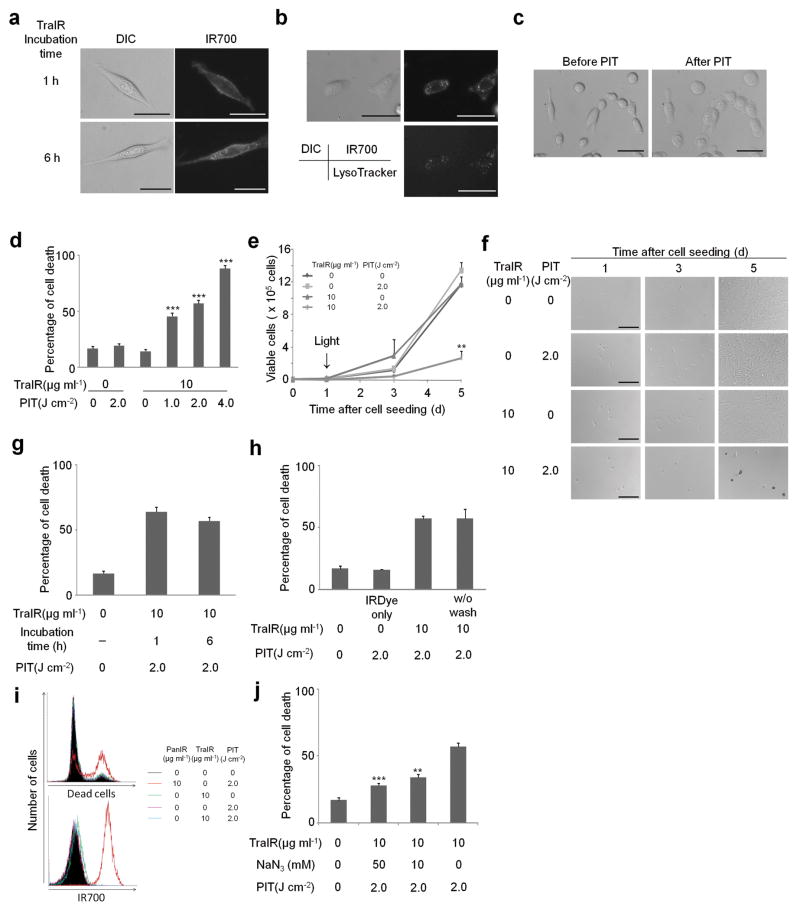
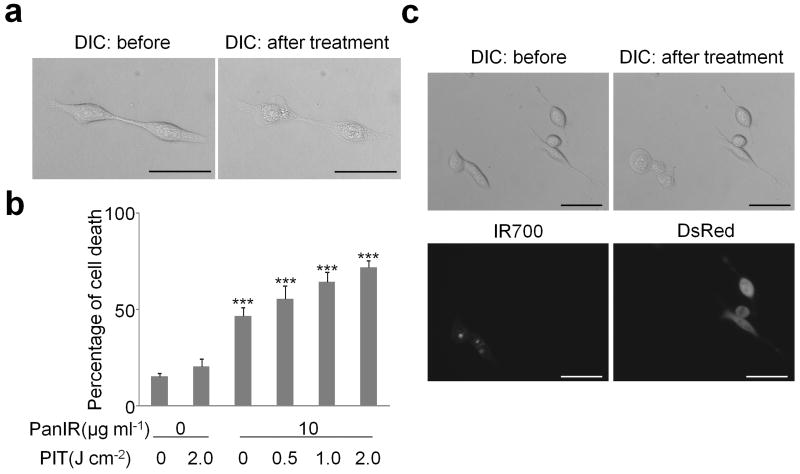
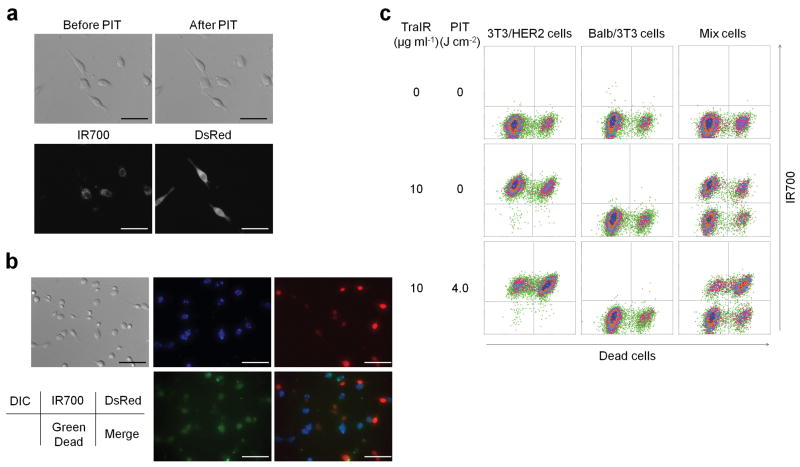
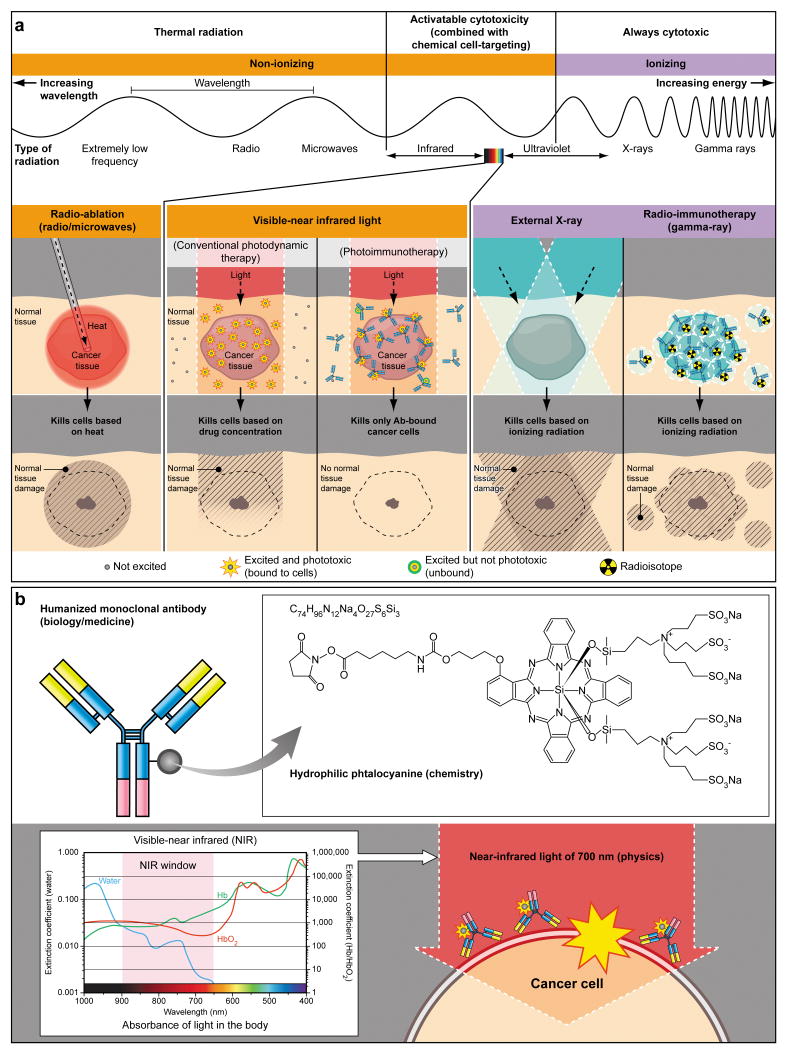
Three major modes of cancer therapy (surgery, radiation and chemotherapy) are the mainstay of modern oncologic therapy. To minimize the side effects of these therapies, molecular-targeted cancer therapies, including armed antibody therapy, have been developed with limited success. In this study, we have developed a new type of molecular-targeted cancer therapy, photoimmunotherapy (PIT), that uses a target-specific photosensitizer based on a near-infrared (NIR) phthalocyanine dye, IR700, conjugated to monoclonal antibodies (mAbs) targeting epidermal growth factor receptors. Cell death was induced immediately after irradiating mAb-IR700-bound target cells with NIR light. We observed in vivo tumor shrinkage after irradiation with NIR light in target cells expressing the epidermal growth factor receptor. The mAb-IR700 conjugates were most effective when bound to the cell membrane and produced no phototoxicity when not bound, suggesting a different mechanism for PIT as compared to conventional photodynamic therapies. Target-selective PIT enables treatment of cancer based on mAb binding to the cell membrane.

摘要

三种主要的癌症治疗方法(手术、放疗和化疗)是现代肿瘤治疗的主要方法。为了最大限度地减少这些治疗方法的副作用,已经开发了分子靶向癌症治疗方法,包括武装抗体治疗,但取得的成功有限。在这项研究中,我们开发了一种新型的分子靶向癌症治疗方法,即光免疫疗法(PIT),它使用基于近红外(NIR)酞菁染料 IR700 的靶向特异性光敏剂,与针对表皮生长因子受体的单克隆抗体(mAb)结合。用近红外光照射结合 mAb-IR700 的靶细胞后,会立即诱导细胞死亡。我们观察到在表达表皮生长因子受体的靶细胞中用近红外光照射后肿瘤缩小。当 mAb-IR700 缀合物与细胞膜结合时,效果最佳,而当不结合时则没有光毒性,这表明与传统光动力疗法相比,PIT 的机制不同。基于 mAb 与细胞膜结合的靶选择性 PIT 可用于癌症治疗。
https://cdn.ncbi.nlm.nih.gov/pmc/blobs/24f6/3233641/f98209fffc7d/nihms282847f5.jpg
https://cdn.ncbi.nlm.nih.gov/pmc/blobs/24f6/3233641/bdcad8c9710d/nihms282847f1.jpg
https://cdn.ncbi.nlm.nih.gov/pmc/blobs/24f6/3233641/291f20581526/nihms282847f2.jpg
https://cdn.ncbi.nlm.nih.gov/pmc/blobs/24f6/3233641/479417729240/nihms282847f3.jpg
https://cdn.ncbi.nlm.nih.gov/pmc/blobs/24f6/3233641/6d44811856c2/nihms282847f4.jpg
https://cdn.ncbi.nlm.nih.gov/pmc/blobs/24f6/3233641/f98209fffc7d/nihms282847f5.jpg
https://cdn.ncbi.nlm.nih.gov/pmc/blobs/24f6/3233641/bdcad8c9710d/nihms282847f1.jpg
https://cdn.ncbi.nlm.nih.gov/pmc/blobs/24f6/3233641/291f20581526/nihms282847f2.jpg
https://cdn.ncbi.nlm.nih.gov/pmc/blobs/24f6/3233641/479417729240/nihms282847f3.jpg
https://cdn.ncbi.nlm.nih.gov/pmc/blobs/24f6/3233641/6d44811856c2/nihms282847f4.jpg
https://cdn.ncbi.nlm.nih.gov/pmc/blobs/24f6/3233641/f98209fffc7d/nihms282847f5.jpg

相似文献

1
Cancer cell-selective in vivo near infrared photoimmunotherapy targeting specific membrane molecules.针对特定膜分子的肿瘤细胞选择性体内近红外光免疫治疗。
Nat Med. 2011 Nov 6;17(12):1685-91. doi: 10.1038/nm.2554.
2
Combination photoimmunotherapy with monoclonal antibodies recognizing different epitopes of human epidermal growth factor receptor 2: an assessment of phototherapeutic effect based on fluorescence molecular imaging.联合使用识别人类表皮生长因子受体2不同表位的单克隆抗体进行光免疫治疗:基于荧光分子成像的光治疗效果评估
Oncotarget. 2016 Mar 22;7(12):14143-52. doi: 10.18632/oncotarget.7490.
3
Photoimmunotherapy: comparative effectiveness of two monoclonal antibodies targeting the epidermal growth factor receptor.光免疫疗法:两种靶向表皮生长因子受体的单克隆抗体的比较疗效
Mol Oncol. 2014 May;8(3):620-32. doi: 10.1016/j.molonc.2014.01.006. Epub 2014 Jan 22.
4
Immediate in vivo target-specific cancer cell death after near infrared photoimmunotherapy.近红外光免疫治疗后即刻的体内靶向性肿瘤细胞死亡。
BMC Cancer. 2012 Aug 8;12:345. doi: 10.1186/1471-2407-12-345.
5
Improved micro-distribution of antibody-photon absorber conjugates after initial near infrared photoimmunotherapy (NIR-PIT).初次近红外光免疫疗法(NIR-PIT)后抗体-光子吸收剂偶联物的微分布得到改善。
J Control Release. 2016 Jun 28;232:1-8. doi: 10.1016/j.jconrel.2016.04.003. Epub 2016 Apr 5.
6
Near-Infrared Photochemoimmunotherapy by Photoactivatable Bifunctional Antibody-Drug Conjugates Targeting Human Epidermal Growth Factor Receptor 2 Positive Cancer.通过靶向人表皮生长因子受体2阳性癌症的光活化双功能抗体-药物偶联物进行近红外光化学免疫疗法
Bioconjug Chem. 2017 May 17;28(5):1458-1469. doi: 10.1021/acs.bioconjchem.7b00144. Epub 2017 Apr 26.
7
Near-infrared photoimmunotherapy targeting human-EGFR in a mouse tumor model simulating current and future clinical trials.针对模拟当前和未来临床试验的人表皮生长因子受体的近红外光免疫治疗在小鼠肿瘤模型中的应用。
EBioMedicine. 2021 May;67:103345. doi: 10.1016/j.ebiom.2021.103345. Epub 2021 Apr 29.
8
Cancer neovasculature-targeted near-infrared photoimmunotherapy (NIR-PIT) for gastric cancer: different mechanisms of phototoxicity compared to cell membrane-targeted NIR-PIT.胃癌的肿瘤新生血管靶向近红外光免疫治疗(NIR-PIT):与细胞膜靶向 NIR-PIT 相比的不同光毒性机制。
Gastric Cancer. 2020 Jan;23(1):82-94. doi: 10.1007/s10120-019-00988-y. Epub 2019 Jul 13.
9
The effect of photoimmunotherapy followed by liposomal daunorubicin in a mixed tumor model: a demonstration of the super-enhanced permeability and retention effect after photoimmunotherapy.光免疫疗法联合脂质体柔红霉素在混合肿瘤模型中的作用:光免疫疗法后超增强渗透和滞留效应的证明
Mol Cancer Ther. 2014 Feb;13(2):426-32. doi: 10.1158/1535-7163.MCT-13-0633. Epub 2013 Dec 19.
10
Photoimmunotherapy Inhibits Tumor Recurrence After Surgical Resection on a Pancreatic Cancer Patient-Derived Orthotopic Xenograft (PDOX) Nude Mouse Model.光免疫疗法可抑制胰腺癌患者源原位异种移植(PDOX)裸鼠模型手术切除后的肿瘤复发。
Ann Surg Oncol. 2015 Dec;22 Suppl 3(Suppl 3):S1469-74. doi: 10.1245/s10434-015-4553-9. Epub 2015 Apr 17.

引用本文的文献

1
Interleukin 15 (IL15)-based near-infrared photoimmunotherapy.基于白细胞介素15(IL15)的近红外光免疫疗法。
Cancer Immunol Immunother. 2025 Aug 31;74(9):295. doi: 10.1007/s00262-025-04151-8.
2
Real-World Effectiveness and Safety of Photoimmunotherapy for Head and Neck Cancer: A Multicenter Retrospective Study.光免疫疗法治疗头颈癌的真实世界有效性和安全性:一项多中心回顾性研究
Cancers (Basel). 2025 Aug 16;17(16):2671. doi: 10.3390/cancers17162671.
3
Development of a silicon phthalocyanine analogue for near-infrared photoimmunotherapy and its application to HTLV-1-infected leukemic cells.

本文引用的文献

1
Semiquantitative assessment of the microdistribution of fluorescence-labeled monoclonal antibody in small peritoneal disseminations of ovarian cancer.半定量评估卵巢癌小腹膜转移灶中荧光标记单克隆抗体的微分布。
Cancer Sci. 2010 Mar;101(3):820-5. doi: 10.1111/j.1349-7006.2009.01423.x. Epub 2009 Oct 31.
2
In vivo high-resolution fluorescence microendoscopy for ovarian cancer detection and treatment monitoring.体内高分辨率荧光显微内镜用于卵巢癌的检测和治疗监测。
Br J Cancer. 2009 Dec 15;101(12):2015-22. doi: 10.1038/sj.bjc.6605436. Epub 2009 Nov 17.
3
Dual-modality molecular imaging using antibodies labeled with activatable fluorescence and a radionuclide for specific and quantitative targeted cancer detection.
用于近红外光免疫疗法的硅酞菁类似物的研发及其在人嗜T淋巴细胞病毒1型感染的白血病细胞中的应用。
RSC Chem Biol. 2025 Aug 5. doi: 10.1039/d5cb00150a.
4
Effect of Fluence Rate on Tumor Tissue Damage in IRDye700DX-Based Photoimmunotherapy.光通量率对基于IRDye700DX的光免疫疗法中肿瘤组织损伤的影响。
Cancer Med. 2025 Aug;14(16):e71143. doi: 10.1002/cam4.71143.
5
Synergistic strategies in photodynamic combination therapy for cancer: mechanisms, nanotechnology, and clinical translation.癌症光动力联合治疗中的协同策略:作用机制、纳米技术及临床转化
Front Oncol. 2025 Jul 30;15:1607259. doi: 10.3389/fonc.2025.1607259. eCollection 2025.
6
Overcoming resistant cancerous tumors through combined photodynamic and immunotherapy (photoimmunotherapy).通过联合光动力疗法和免疫疗法(光免疫疗法)攻克耐药性癌性肿瘤。
Front Immunol. 2025 Jul 17;16:1633953. doi: 10.3389/fimmu.2025.1633953. eCollection 2025.
7
Recent advances in phototherapy-based nanomedicine of lymphoma.基于光疗法的淋巴瘤纳米医学的最新进展。
Mater Today Bio. 2025 Jul 3;33:102047. doi: 10.1016/j.mtbio.2025.102047. eCollection 2025 Aug.
8
Preserved host immunity with intercellular adhesion molecule-1 (ICAM-1)-targeted near-infrared photoimmunotherapy (NIR-PIT) in the treatment of triple-negative breast cancer and other malignancies.在三阴性乳腺癌和其他恶性肿瘤治疗中,通过靶向细胞间黏附分子-1(ICAM-1)的近红外光免疫疗法(NIR-PIT)保留宿主免疫。
Cancer Lett. 2025 Jul 7;630:217906. doi: 10.1016/j.canlet.2025.217906.
9
N‑Terminal Conjugation of a Near-Infrared Photosensitizer to an Antibody for Cancer Diagnosis and Treatment.用于癌症诊断与治疗的近红外光敏剂与抗体的N端共轭
ACS Omega. 2025 Jun 11;10(24):25596-25604. doi: 10.1021/acsomega.5c01083. eCollection 2025 Jun 24.
10
Next-Generation Cancer Treatment: Photoimmunotherapy's Promise for Unresectable Head and Neck Cancers.下一代癌症治疗:光免疫疗法对不可切除头颈癌的前景
Pharmaceutics. 2025 May 29;17(6):716. doi: 10.3390/pharmaceutics17060716.
使用标记有活化荧光和放射性核素的抗体进行双模态分子成像,用于特异性和定量的靶向癌症检测。
Bioconjug Chem. 2009 Nov;20(11):2177-84. doi: 10.1021/bc900362k.
4
In vivo target-specific activatable near-infrared optical labeling of humanized monoclonal antibodies.人源化单克隆抗体的体内靶点特异性可激活近红外光学标记
Mol Cancer Ther. 2009 Jan;8(1):232-9. doi: 10.1158/1535-7163.MCT-08-0862.
5
Immunotoxin therapy of cancer.癌症的免疫毒素疗法。
Nat Rev Cancer. 2006 Jul;6(7):559-65. doi: 10.1038/nrc1891.
6
Antibody pretargeting advances cancer radioimmunodetection and radioimmunotherapy.抗体预靶向技术推动了癌症放射免疫检测和放射免疫治疗的发展。
J Clin Oncol. 2006 Feb 10;24(5):823-34. doi: 10.1200/JCO.2005.03.8471. Epub 2005 Dec 27.
7
Monoclonal antibody successes in the clinic.单克隆抗体在临床应用中取得成功。
Nat Biotechnol. 2005 Sep;23(9):1073-8. doi: 10.1038/nbt0905-1073.
8
Current clinical and preclinical photosensitizers for use in photodynamic therapy.目前用于光动力疗法的临床和临床前光敏剂。
J Med Chem. 2004 Jul 29;47(16):3897-915. doi: 10.1021/jm040074b.
9
Herceptin-geldanamycin immunoconjugates: pharmacokinetics, biodistribution, and enhanced antitumor activity.赫赛汀-格尔德霉素免疫偶联物:药代动力学、生物分布及增强的抗肿瘤活性。
Cancer Res. 2004 Feb 15;64(4):1460-7. doi: 10.1158/0008-5472.can-03-2485.
10
Photosensitizer-antibody conjugates for detection and therapy of cancer.用于癌症检测与治疗的光敏剂-抗体偶联物。
Adv Drug Deliv Rev. 2004 Jan 13;56(1):31-52. doi: 10.1016/j.addr.2003.09.003.