Department of Internal Medicine, Division of Pulmonary, Allergy, Critical Care & Sleep Medicine, 201 DHLRI, 473 W. 12th Avenue, Columbus, OH 43210, USA.
Toxins (Basel). 2010 Jun;2(6):1357-80. doi: 10.3390/toxins2061357. Epub 2010 Jun 9.
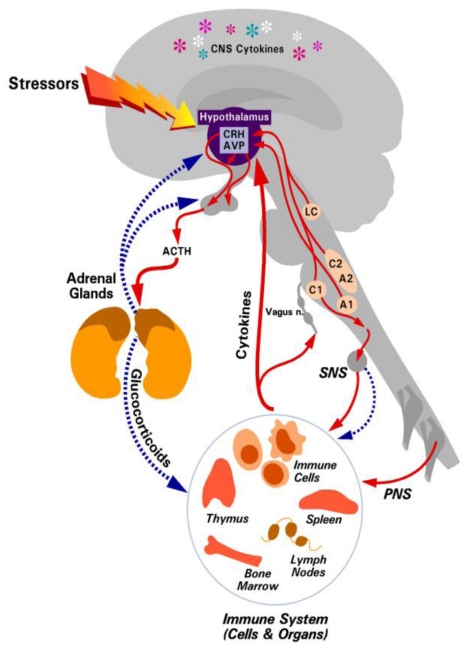
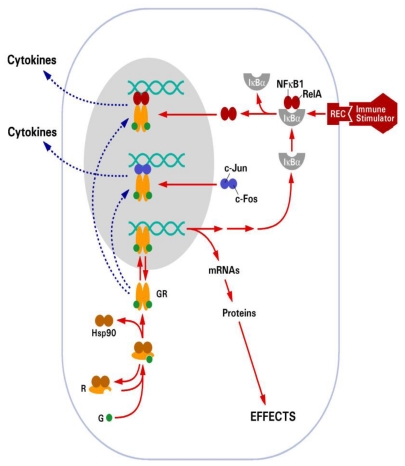
The hypothalamic-pituitary-adrenal (HPA) axis activation and glucocorticoid responses are critical for survival from a number of bacterial, viral and toxic insults, demonstrated by the fact that removal of the HPA axis or GR blockade enhances mortality rates. Replacement with synthetic glucocorticoids reverses these effects by providing protection against lethal effects. Glucocorticoid resistance/insensitivity is a common problem in the treatment of many diseases. Much research has focused on the molecular mechanism behind this resistance, but an area that has been neglected is the role of infectious agents and toxins. We have recently shown that the anthrax lethal toxin is able to repress glucocorticoid receptor function. Data suggesting that the glucocorticoid receptor may be a target for a variety of toxins is reviewed here. These studies have important implications for glucocorticoid therapy.
下丘脑-垂体-肾上腺 (HPA) 轴激活和糖皮质激素反应对于从许多细菌、病毒和毒性损伤中存活至关重要,这一事实表明,去除 HPA 轴或 GR 阻断会增加死亡率。用合成糖皮质激素替代可通过提供对抗致命作用的保护来逆转这些影响。糖皮质激素抵抗/不敏感是许多疾病治疗中的常见问题。许多研究都集中在这种抵抗的分子机制上,但被忽视的一个领域是传染病原体和毒素的作用。我们最近表明,炭疽致死毒素能够抑制糖皮质激素受体功能。本文回顾了提示糖皮质激素受体可能是多种毒素靶标的数据。这些研究对糖皮质激素治疗具有重要意义。