Department of Medicine, University of Chicago, Chicago, IL 60637, USA.
BMC Complement Altern Med. 2011 Nov 9;11:111. doi: 10.1186/1472-6882-11-111.
Western diets increase colon cancer risk. Epidemiological evidence and experimental studies suggest that ginseng can inhibit colon cancer development. In this study we asked if ginseng could inhibit Western diet (20% fat) promoted colonic tumorigenesis and if compound K, a microbial metabolite of ginseng could suppress colon cancer xenograft growth.
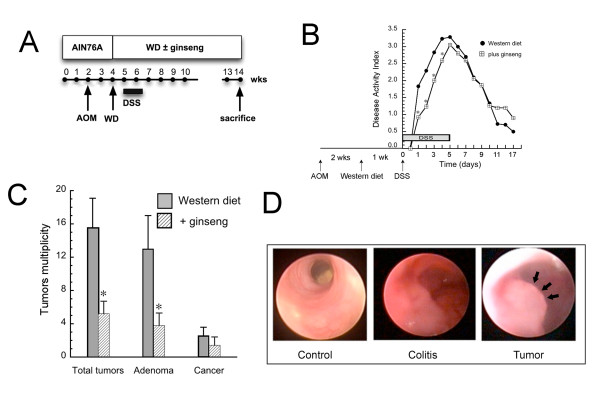
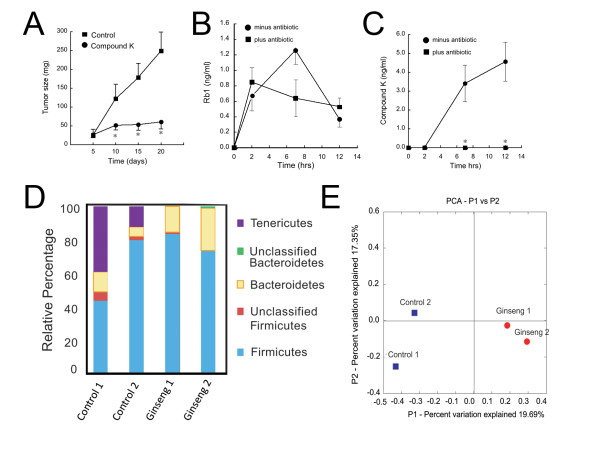
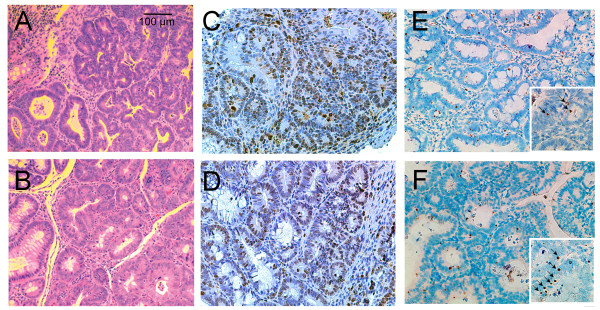
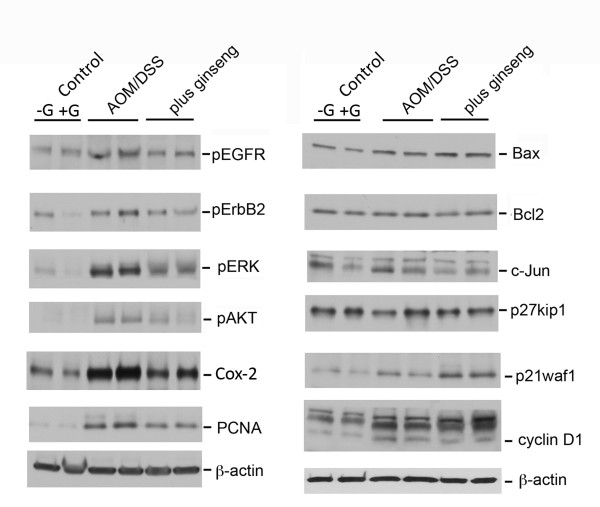
Mice were initiated with azoxymethane (AOM) and, two weeks later fed a Western diet (WD, 20% fat) alone, or WD supplemented with 250-ppm ginseng. After 1 wk, mice received 2.5% dextran sulfate sodium (DSS) for 5 days and were sacrificed 12 wks after AOM. Tumors were harvested and cell proliferation measured by Ki67 staining and apoptosis by TUNEL assay. Levels of EGF-related signaling molecules and apoptosis regulators were determined by Western blotting. Anti-tumor effects of intraperitoneal compound K were examined using a tumor xenograft model and compound K absorption measured following oral ginseng gavage by UPLC-mass spectrometry. Effects of dietary ginseng on microbial diversity were measured by analysis of bacterial 16S rRNA.
Ginseng significantly inhibited colonic inflammation and tumorigenesis and concomitantly reduced proliferation and increased apoptosis. The EGFR cascade was up-regulated in colonic tumors and ginseng significantly reduced EGFR and ErbB2 activation and Cox-2 expression. Dietary ginseng altered colonic microbial diversity, and bacterial suppression with metronidazole reduced serum compound K following ginseng gavage. Furthermore, compound K significantly inhibited tumor xenograft growth.
Ginseng inhibited colonic inflammation and tumorigenesis promoted by Western diet. We speculate that the ginseng metabolite compound K contributes to the chemopreventive effects of this agent in colonic tumorigenesis.
西方饮食会增加结肠癌的风险。流行病学证据和实验研究表明,人参可以抑制结肠癌的发展。在这项研究中,我们想知道人参是否可以抑制西方饮食(20%脂肪)促进的结肠肿瘤发生,以及人参的微生物代谢产物化合物 K 是否可以抑制结肠癌异种移植的生长。
小鼠先用偶氮甲烷(AOM)诱导,两周后单独给予西方饮食(WD,20%脂肪),或 WD 补充 250-ppm 人参。一周后,小鼠接受 2.5%葡聚糖硫酸钠(DSS)5 天,然后在 AOM 后 12 周处死。采集肿瘤,通过 Ki67 染色测量细胞增殖,通过 TUNEL 测定测量细胞凋亡。通过 Western blot 测定测定 EGF 相关信号分子和凋亡调节剂的水平。通过肿瘤异种移植模型研究腹腔注射化合物 K 的抗肿瘤作用,并通过 UPLC-质谱法测量口服人参灌胃后化合物 K 的吸收。通过分析细菌 16S rRNA 测量饮食中人参对微生物多样性的影响。
人参显著抑制结肠炎症和肿瘤发生,同时降低增殖,增加凋亡。EGFR 级联在结肠肿瘤中上调,人参显著降低 EGFR 和 ErbB2 激活和 Cox-2 表达。饮食中的人参改变了结肠微生物多样性,用甲硝唑抑制细菌会减少人参灌胃后的血清化合物 K。此外,化合物 K 显著抑制肿瘤异种移植的生长。
人参抑制了西方饮食促进的结肠炎症和肿瘤发生。我们推测,人参的代谢产物化合物 K 有助于该药物在结肠肿瘤发生中的化学预防作用。