Departamento de Química Biológica, Facultad de Ciencias Exactas y Naturales, Universidad de Buenos Aires, Intendente Güiraldes 2160, Pabellón 2, Buenos Aires 1428, Argentina; E-Mails:
Int J Mol Sci. 2011;12(10):6936-51. doi: 10.3390/ijms12106936. Epub 2011 Oct 19.
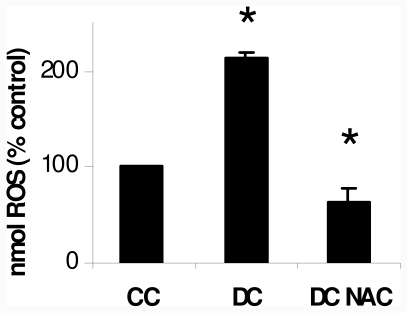
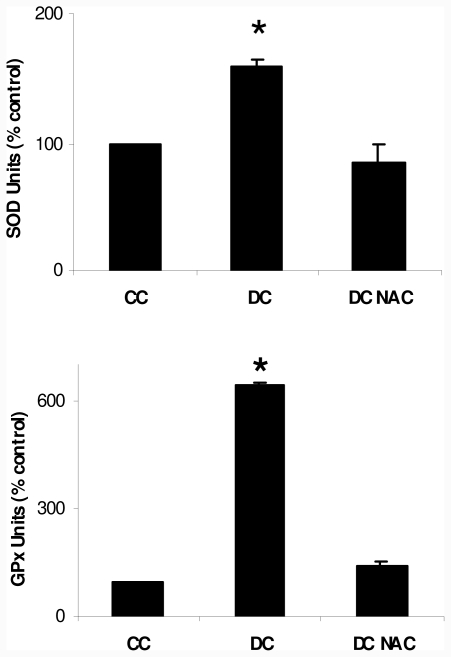
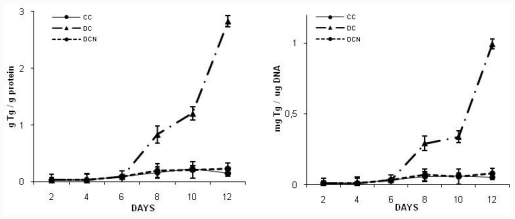
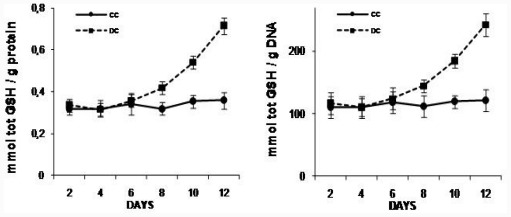
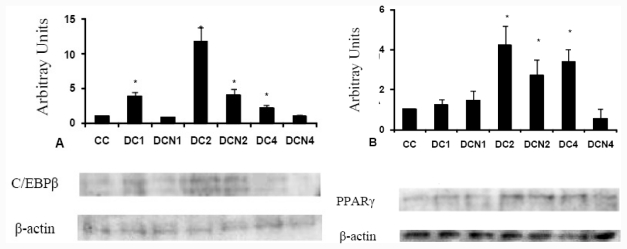
Oxidative stress plays a critical role in the pathogenesis of diabetes, hypertension and atherosclerosis. Some authors reported that fat accumulation correlates to systemic oxidative stress in humans and mice, but the relationship of lipid production and oxidative metabolism is still unclear. In our laboratory we used 3T3-L1 preadipocytes, which are able to differentiate into mature adipocytes and accumulate lipids, as obesity model. We showed that intracellular reactive oxygen species (ROS) and antioxidant enzymes superoxide dismutase (SOD) and glutathione peroxidase (GPx) activities increased in parallel with fat accumulation. Meanwhile N-acetylcysteine (NAC), a well known antioxidant and Glutathione (GSH) precursor, inhibited ROS levels as well as fat accumulation in a concentration-dependent manner. NAC also inhibited both adipogenic transcription factors CCAAT/enhancer binding protein beta (C/EBP β) and peroxisomal proliferator activated receptor gamma (PPAR γ) expression; we suggested that intracellular GSH content could be responsible for these effects.
氧化应激在糖尿病、高血压和动脉粥样硬化的发病机制中起着关键作用。一些作者报道说,脂肪堆积与人类和小鼠的全身氧化应激有关,但脂质生成和氧化代谢之间的关系尚不清楚。在我们的实验室中,我们使用了能够分化为成熟脂肪细胞并积累脂肪的 3T3-L1 前脂肪细胞作为肥胖模型。我们发现,随着脂肪堆积,细胞内活性氧(ROS)和抗氧化酶超氧化物歧化酶(SOD)和谷胱甘肽过氧化物酶(GPx)的活性也随之增加。同时,N-乙酰半胱氨酸(NAC),一种众所周知的抗氧化剂和谷胱甘肽(GSH)前体,以浓度依赖的方式抑制 ROS 水平和脂肪堆积。NAC 还抑制了脂肪生成转录因子 CCAAT/增强子结合蛋白-β(C/EBPβ)和过氧化物酶体增殖物激活受体γ(PPARγ)的表达;我们认为细胞内 GSH 含量可能是这些作用的原因。