Department of Pathology, University of Michigan Medical School, Ann Arbor, Michigan, United States of America.
PLoS Pathog. 2011 Nov;7(11):e1002341. doi: 10.1371/journal.ppat.1002341. Epub 2011 Nov 3.
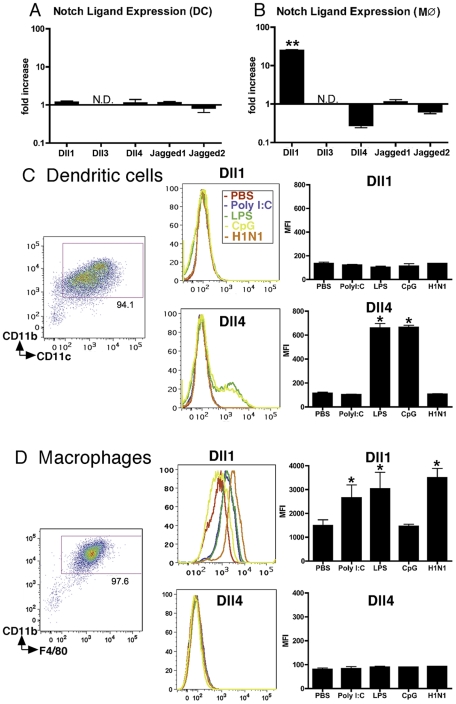
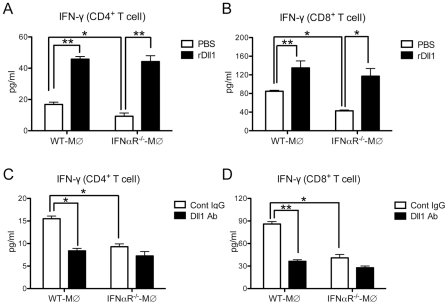
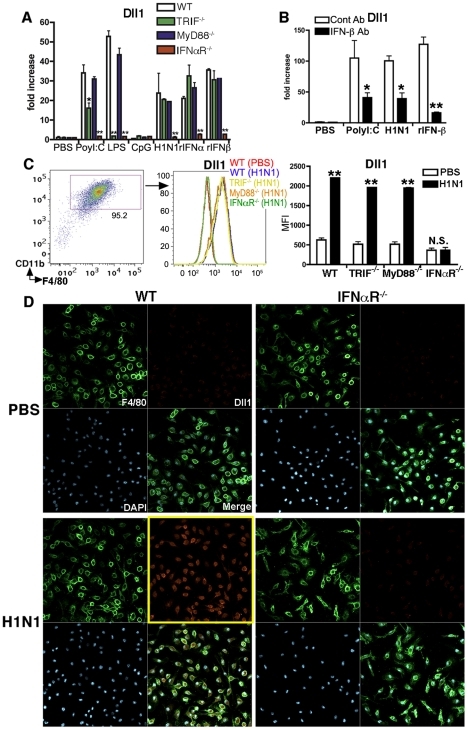
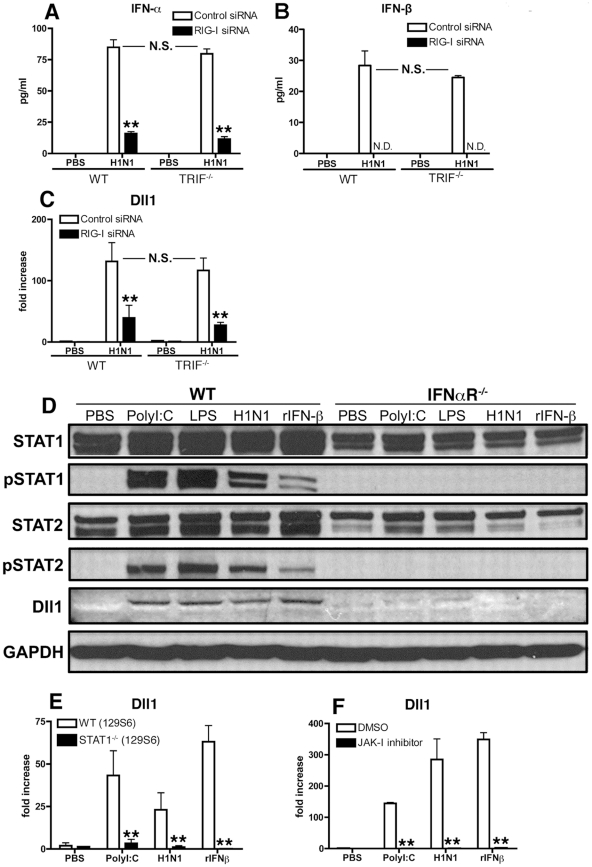
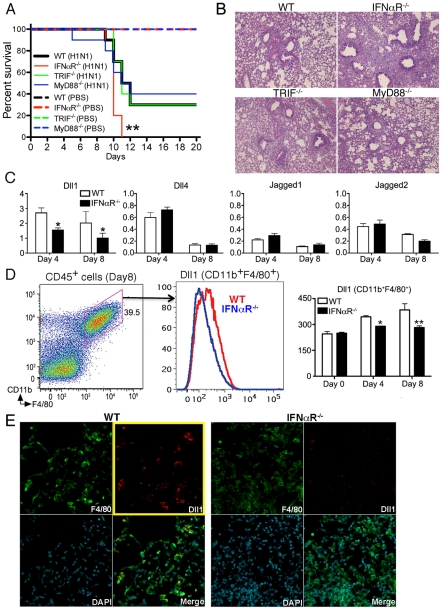
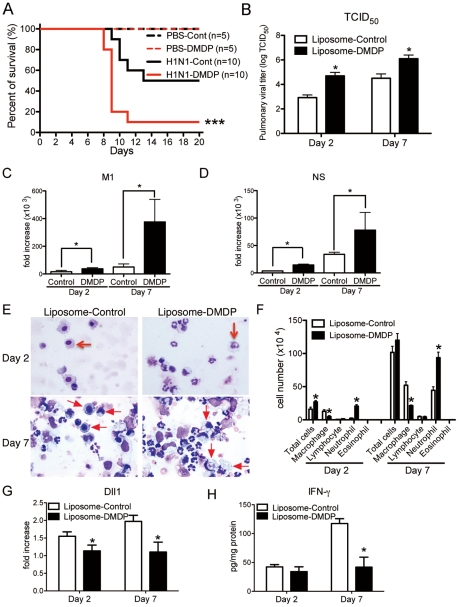
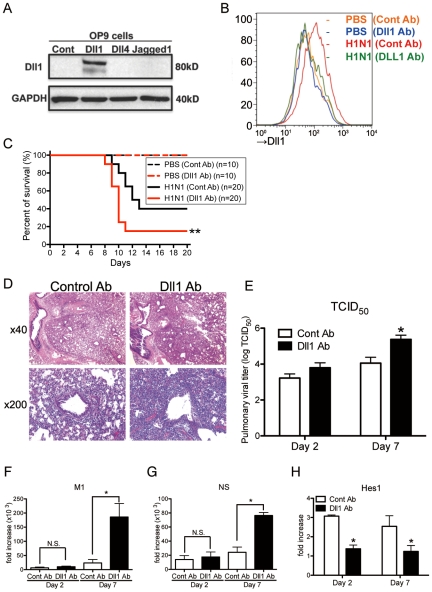
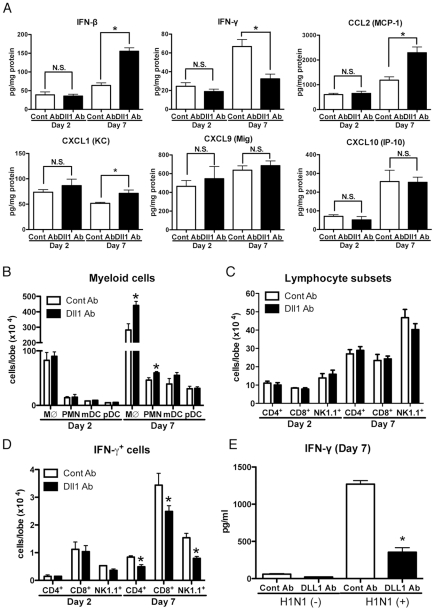
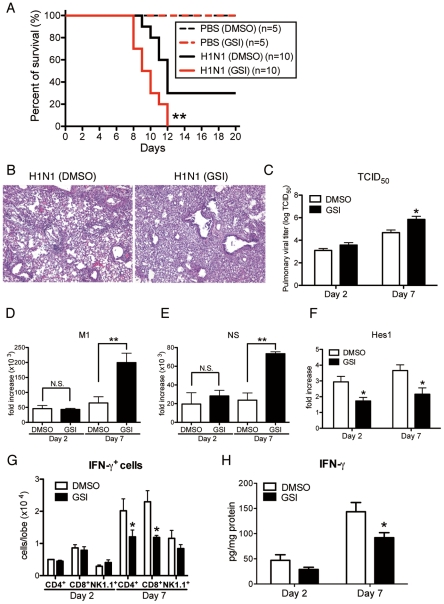
Influenza A viral infections have been identified as the etiologic agents for historic pandemics, and contribute to the annual mortality associated with acute viral pneumonia. While both innate and acquired immunity are important in combating influenza virus infection, the mechanism connecting these arms of the immune system remains unknown. Recent data have indicated that the Notch system is an important bridge between antigen-presenting cells (APCs) and T cell communication circuits and plays a central role in driving the immune system to overcome disease. In the present study, we examine the role of Notch signaling during influenza H1N1 virus infection, focusing on APCs. We demonstrate here that macrophages, but not dendritic cells (DCs), increased Notch ligand Delta-like 1 (Dll1) expression following influenza virus challenge. Dll1 expression on macrophages was dependent on retinoic acid-inducible gene-I (RIG-I) induced type-I IFN pathway, and not on the TLR3-TRIF pathway. We also found that IFNα-Receptor knockout mice failed to induce Dll1 expression on lung macrophages and had enhanced mortality during influenza virus infection. Our results further showed that specific neutralization of Dll1 during influenza virus challenge induced higher mortality, impaired viral clearance, and decreased levels of IFN-γ. In addition, we blocked Notch signaling by using γ-secretase inhibitor (GSI), a Notch signaling inhibitor. Intranasal administration of GSI during influenza infection also led to higher mortality, and higher virus load with excessive inflammation and an impaired production of IFN-γ in lungs. Moreover, Dll1 expression on macrophages specifically regulates IFN-γ levels from CD4(+)and CD8(+)T cells, which are important for anti-viral immunity. Together, the results of this study show that Dll1 positively influences the development of anti-viral immunity, and may provide mechanistic approaches for modifying and controlling the immune response against influenza H1N1 virus infection.
甲型流感病毒感染已被确定为历史大流行的病原体,并导致与急性病毒性肺炎相关的年度死亡率。虽然固有免疫和获得性免疫在对抗流感病毒感染方面都很重要,但连接这两个免疫系统的机制仍不清楚。最近的数据表明,Notch 系统是连接抗原呈递细胞(APC)和 T 细胞通讯回路的重要桥梁,在驱动免疫系统克服疾病方面发挥着核心作用。在本研究中,我们研究了 Notch 信号在甲型 H1N1 流感病毒感染期间的作用,重点是 APC。我们在这里证明,流感病毒攻击后,巨噬细胞(而非树突状细胞(DC))增加了 Notch 配体 Delta-like 1(Dll1)的表达。巨噬细胞上的 Dll1 表达依赖于视黄酸诱导基因-I(RIG-I)诱导的 I 型 IFN 途径,而不依赖于 TLR3-TRIF 途径。我们还发现,IFNα-受体敲除小鼠未能诱导肺巨噬细胞上的 Dll1 表达,并且在流感病毒感染期间死亡率增加。我们的结果还表明,在流感病毒攻击期间特异性中和 Dll1 会导致更高的死亡率,病毒清除能力降低,以及 IFN-γ水平降低。此外,我们通过使用 Notch 信号抑制剂(GSI)γ-分泌酶抑制剂来阻断 Notch 信号。流感感染期间鼻内给予 GSI 也导致更高的死亡率,以及更高的病毒载量,伴有过度炎症和 IFN-γ在肺部的产生受损。此外,巨噬细胞上的 Dll1 特异性调节 CD4(+)和 CD8(+)T 细胞中的 IFN-γ水平,这对于抗病毒免疫很重要。总之,这项研究的结果表明,Dll1 积极影响抗病毒免疫的发展,并可能为修饰和控制针对甲型 H1N1 流感病毒感染的免疫反应提供机制方法。