Department of Surgery, Keck School of Medicine of the University of Southern California, Los Angeles, California, United States of America.
PLoS One. 2011;6(11):e26644. doi: 10.1371/journal.pone.0026644. Epub 2011 Nov 4.
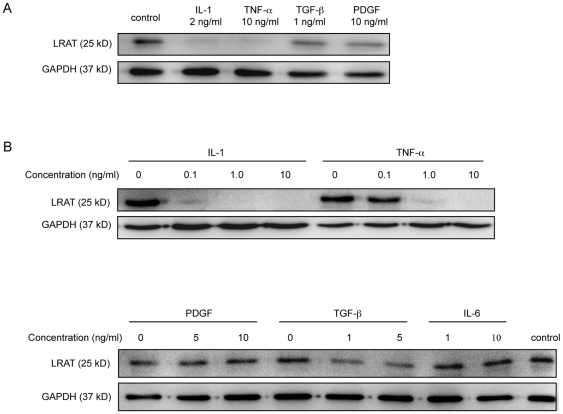
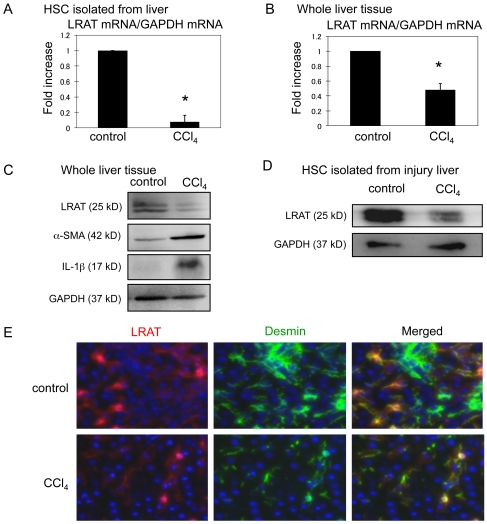
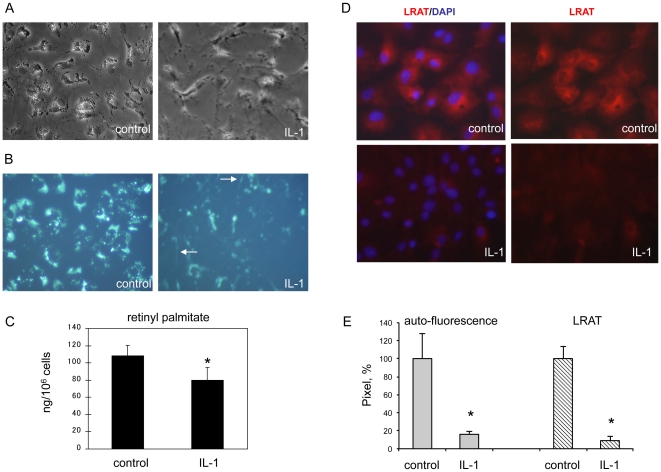
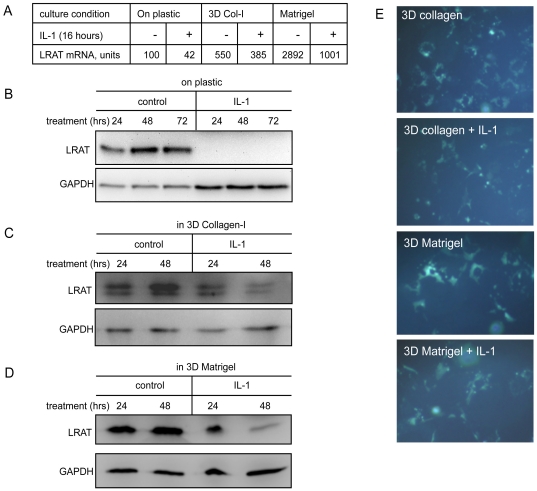
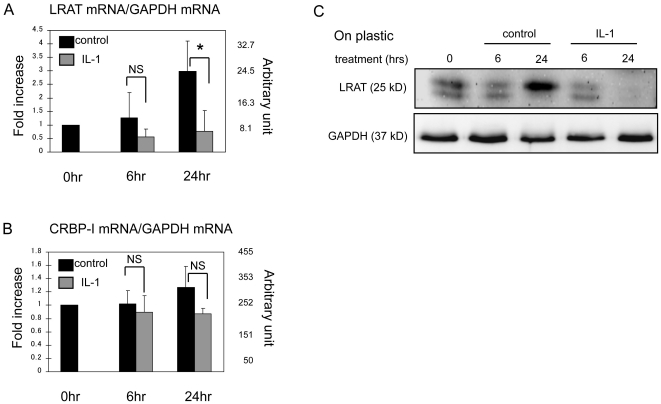
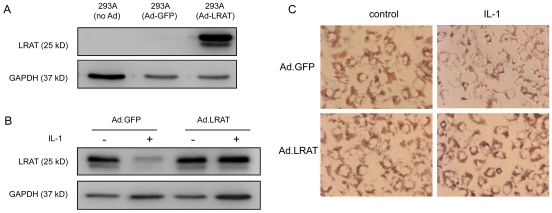
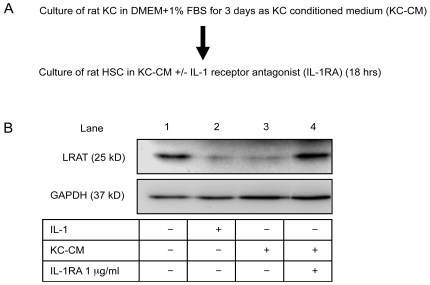
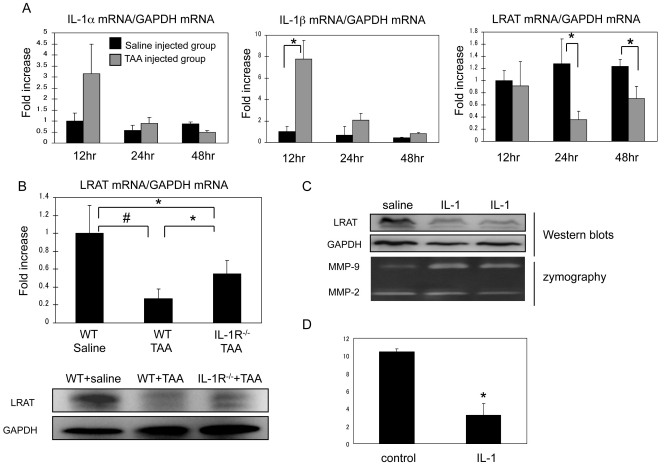
Retinoids are mostly stored as retinyl esters in hepatic stellate cells (HSCs) through esterification of retinol and fatty acid, catalyzed by lecithin-retinol acyltransferase (LRAT). This study is designated to address how retinyl esters are mobilized in liver injury for tissue repair and wound healing. Initially, we speculated that acute inflammatory cytokines may act as injury signal to mobilize retinyl esters by down-regulation of LRAT in HSCs. By examining a panel of cytokines we found interleukin-1 (IL-1) can potently down-regulate mRNA and protein levels of LRAT, resulting in mobilization of retinyl esters in primary rat HSCs. To simulate the microenvironment in the space of Disse, HSCs were embedded in three-dimensional extracellular matrix, by which HSCs retaine quiescent phenotypes, indicated by up-regulation of LRAT and accumulation of lipid droplets. Upon IL-1 stimulation, LRAT expression went down together with mobilization of lipid droplets. Secreted factors from Kupffer cells were able to suppress LRAT expression in HSCs, which was neutralized by IL-1 receptor antagonist. To explore the underlying mechanism we noted that the stability of LRAT protein is not significantly regulated by IL-1, indicating the regulation is likely at transcriptional level. Indeed, we found that IL-1 failed to down-regulate recombinant LRAT protein expressed in HSCs by adenovirus, while transcription of endogenous LRAT was promptly decreased. Following liver damage, IL-1 was promptly elevated in a close pace with down-regulation of LRAT transcription, implying their causative relationship. After administration of IL-1, retinyl ester levels in the liver, as measured by LC/MS/MS, decreased in association with down-regulation of LRAT. Likewise, IL-1 receptor knockout mice were protected from injury-induced down-regulation of LRAT. In summary, we identified IL-1 as an injury signal to mobilize retinyl ester in HSCs through down-regulation of LRAT, implying a mechanism governing transition from hepatic injury to wound healing.
类视黄醇主要通过视黄醇和脂肪酸与溶血磷脂酰基转移酶(LRAT)的酯化反应,以视黄基酯的形式储存在肝星状细胞(HSCs)中。本研究旨在探讨肝损伤时类视黄醇酯如何通过下调 HSCs 中的 LRAT 来动员,以进行组织修复和伤口愈合。最初,我们推测急性炎症细胞因子可能作为损伤信号,通过下调 HSCs 中的 LRAT 来动员类视黄醇酯。通过检查一组细胞因子,我们发现白细胞介素-1(IL-1)可以强有力地下调 LRAT 的 mRNA 和蛋白水平,导致原代大鼠 HSCs 中的类视黄醇酯动员。为了模拟 Disse 间隙中的微环境,将 HSCs 嵌入三维细胞外基质中,通过这种方式 HSCs 保持静止表型,表现为 LRAT 上调和脂滴积累。在受到 IL-1 刺激后,LRAT 表达下降,同时脂滴动员。来自库普弗细胞的分泌因子能够抑制 HSCs 中的 LRAT 表达,而这种抑制作用可以被白细胞介素-1 受体拮抗剂中和。为了探讨潜在的机制,我们注意到 LRAT 蛋白的稳定性并没有受到 IL-1 的显著调控,这表明调控可能发生在转录水平。事实上,我们发现 IL-1 未能下调 HSCs 中通过腺病毒表达的重组 LRAT 蛋白,而内源性 LRAT 的转录则迅速下降。肝损伤后,IL-1 的水平迅速升高,与 LRAT 转录的下调密切相关,表明它们之间存在因果关系。给予 IL-1 后,通过 LC/MS/MS 测量,肝脏中的视黄基酯水平下降,与 LRAT 的下调相关。同样,IL-1 受体敲除小鼠对损伤诱导的 LRAT 下调具有保护作用。总之,我们确定 IL-1 是一种损伤信号,可以通过下调 LRAT 来动员 HSCs 中的视黄醇酯,这表明了一种控制肝损伤向伤口愈合转变的机制。