Department of Physics and Astronomy, College of Science, King Saud University, PO 2455, Riyadth 11451, Saudi Arabia.
Lipids Health Dis. 2011 Nov 11;10:208. doi: 10.1186/1476-511X-10-208.
Gold nanoparticles (GNPs) have found themselves useful for diagnostic, drug delivery and biomedicine applications, but one of the important concerns is about their safety in clinical applications. Nanoparticle size has been shown to be an extremely important parameter affecting the nanoparticle uptake and cellular internalization. The rheological properties assume to be very important as it affects the pressure drop and hence the pumping power when nano-fluids are circulated in a closed loop. The rheological and dielectric properties have not been documented and identified before. The aim of the present study was to investigate the rheology and the dielectric properties of different GNPs sizes in aqueous solution.
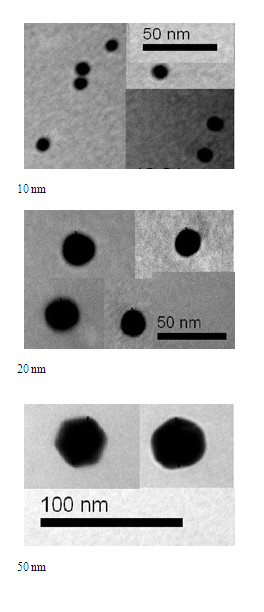
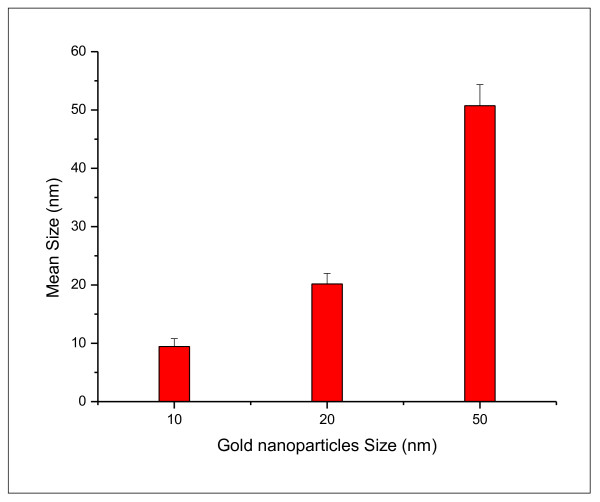
10, 20 and 50 nm GNPs (Product MKN-Au, CANADA) was used in this study. The rheological parameters were viscosity, torque, shear stress, shear rate, plastic viscosity, yield stress, consistency index, and activation energy. These rheological parameters were measured using Brookfield LVDV-III Programmable rheometer supplied with temperature bath and controlled by a computer.
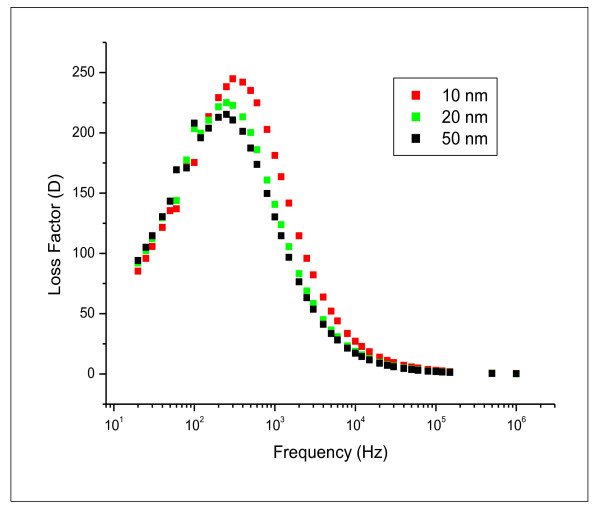
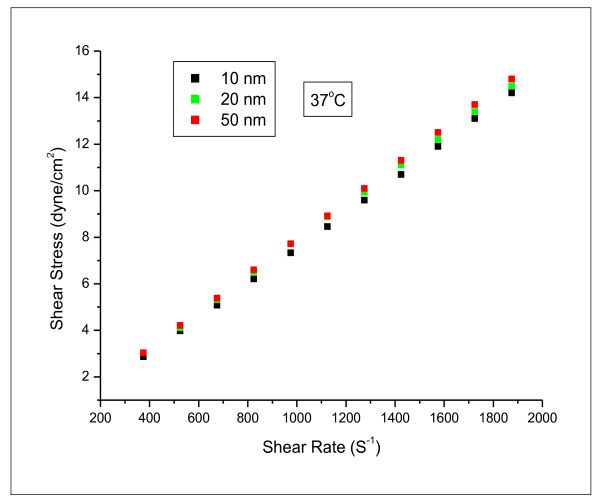
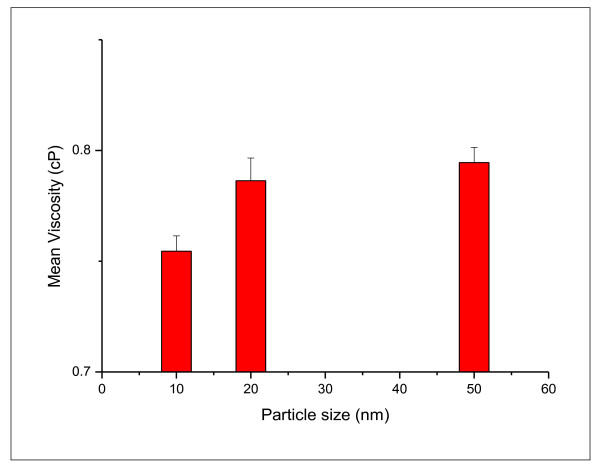
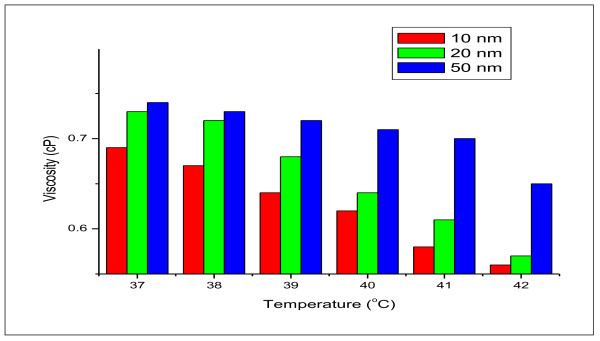
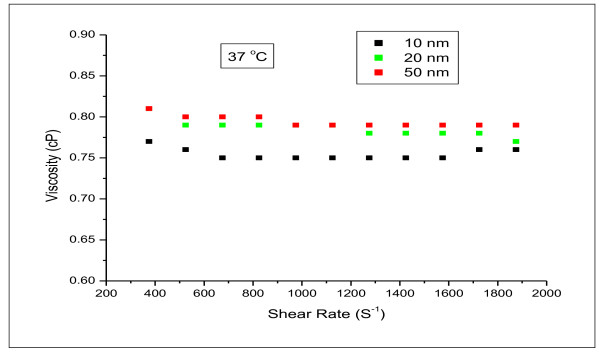
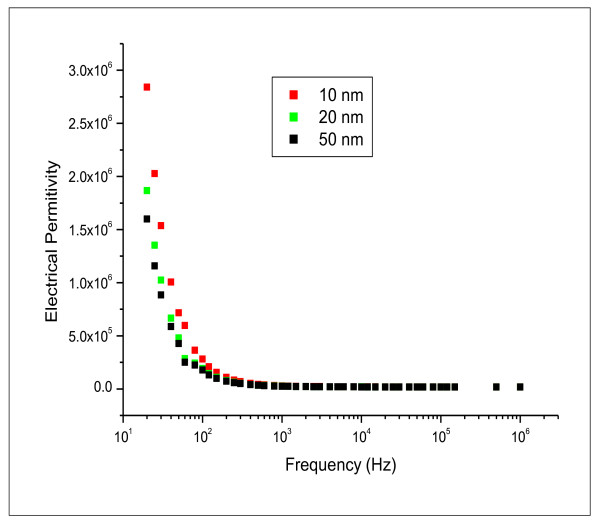
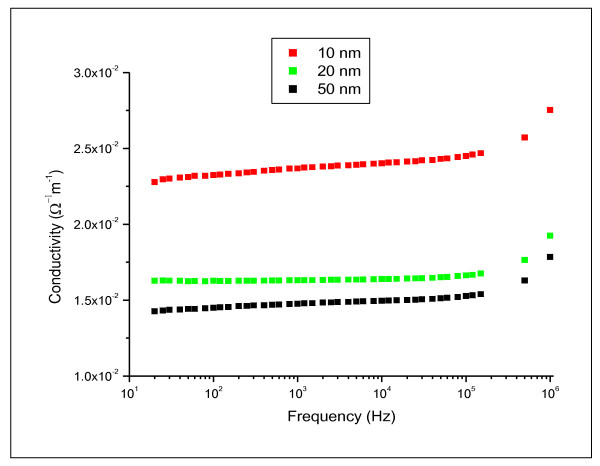
The shear stress and shear rate of GNPs have shown a linear relationship and GNPs exhibited Newtonian behaviour. The GNPs with larger particle size (50 nm) exhibited more viscosity than those with smaller particle sizes (10 and 20 nm). Viscosity decreased with increasing the temperature for all the examined GNP sizes. The flow behaviour index (n) values were nearly ≤ 1 for all examined GNP sizes. Dielectric data indicated that the GNPs have strong dielectric dispersion in the frequency range of 20-100 kHz. The conductivity and relaxation time decreased with increasing the GNP size.
This study indicates that the GNP size has considerable influence on the viscosity of GNPs. The strong dielectric dispersion was GNP size dependent. The decrease in relaxation time might be attributed to increase in the localized charges distribution within the medium confirmed by the conductivity data. This study suggests that further experiments are required to be done after the administration of GNPs through different routes in rats in vivo.
金纳米粒子(GNPs)在诊断、药物输送和生物医学应用中具有重要作用,但其中一个重要的关注点是其在临床应用中的安全性。纳米粒子的尺寸已被证明是一个极其重要的参数,影响着纳米粒子的摄取和细胞内化。流变性能假设非常重要,因为它会影响纳米流体在闭环中循环时的压降和因此的泵送功率。流变学和介电性能以前没有被记录和确定。本研究的目的是研究不同尺寸的 GNPs 在水溶液中的流变学和介电特性。
本研究使用了 10、20 和 50nm 的 GNPs(产品 MKN-Au,加拿大)。流变学参数包括粘度、扭矩、剪切应力、剪切速率、塑性粘度、屈服应力、稠度指数和活化能。这些流变学参数使用 Brookfield LVDV-III 程控流变仪进行测量,该流变仪配有温度浴,并由计算机控制。
GNPs 的剪切应力和剪切速率呈线性关系,GNPs 表现出牛顿行为。粒径较大(50nm)的 GNPs 的粘度大于粒径较小(10nm 和 20nm)的 GNPs。所有检查的 GNPs 尺寸的粘度都随温度升高而降低。所有检查的 GNPs 尺寸的流动行为指数(n)值均接近≤1。介电数据表明,GNPs 在 20-100kHz 的频率范围内具有强烈的介电色散。电导率和弛豫时间随 GNPs 尺寸的增加而减小。
本研究表明,GNPs 的尺寸对 GNPs 的粘度有很大的影响。强烈的介电色散与 GNPs 的尺寸有关。弛豫时间的减少可能归因于介质中局部电荷分布的增加,这一点通过电导率数据得到了证实。本研究表明,需要在大鼠体内通过不同途径给予 GNPs 后进行进一步的实验。