Retinal Disease Research, Department of Biological Sciences, Allergan, Inc., Irvine, CA, USA.
J Inflamm Res. 2008;1:49-65. doi: 10.2147/jir.s4354. Epub 2008 Dec 2.
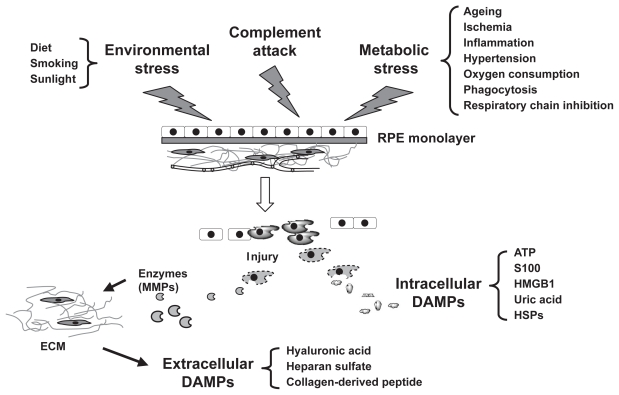
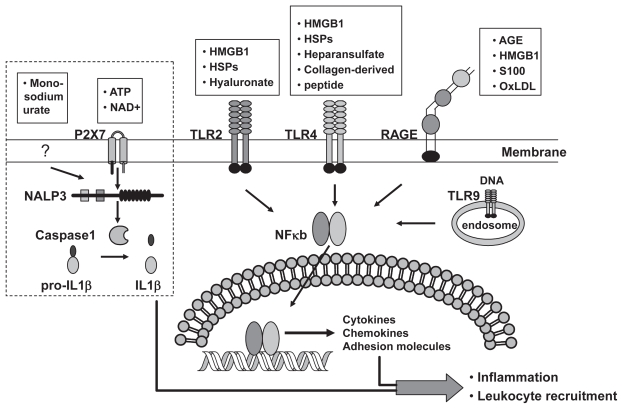
Age-related macular degeneration (AMD) is the leading cause of blindness in developed countries. The etiology of AMD remains poorly understood and no treatment is currently available for the atrophic form of AMD. Atrophic AMD has been proposed to involve abnormalities of the retinal pigment epithelium (RPE), which lies beneath the photoreceptor cells and normally provides critical metabolic support to these light-sensing cells. Cumulative oxidative stress and local inflammation are thought to represent pathological processes involved in the etiology of atrophic AMD. Studies of tissue culture and animal models reveal that oxidative stress-induced injury to the RPE results in a chronic inflammatory response, drusen formation, and RPE atrophy. RPE degeneration in turn causes a progressive degeneration of photoreceptors, leading to the irreversible loss of vision. This review describes some of the potential major molecular and cellular events contributing to RPE death and inflammatory responses. In addition, potential target areas for therapeutic intervention will be discussed and new experimental therapeutic strategies for atrophic AMD will be presented.
年龄相关性黄斑变性(AMD)是发达国家致盲的主要原因。AMD 的病因仍不清楚,目前尚无针对 AMD 萎缩型的治疗方法。萎缩型 AMD 被认为涉及视网膜色素上皮(RPE)的异常,RPE 位于光感受器细胞下方,通常为这些感光细胞提供关键的代谢支持。累积的氧化应激和局部炎症被认为是涉及萎缩型 AMD 病因的病理过程。组织培养和动物模型的研究表明,氧化应激引起的 RPE 损伤导致慢性炎症反应、玻璃膜疣形成和 RPE 萎缩。RPE 的退化反过来又导致光感受器的进行性退化,导致视力不可逆转的丧失。本文描述了一些可能导致 RPE 死亡和炎症反应的主要分子和细胞事件。此外,还将讨论潜在的治疗干预靶点,并介绍针对萎缩型 AMD 的新实验治疗策略。