Tufts University, Center for Regenerative & Developmental Biology and Department of Biology, Medford, MA 02155, USA.
Differentiation. 2012 Jan;83(1):26-37. doi: 10.1016/j.diff.2011.08.004. Epub 2011 Oct 4.
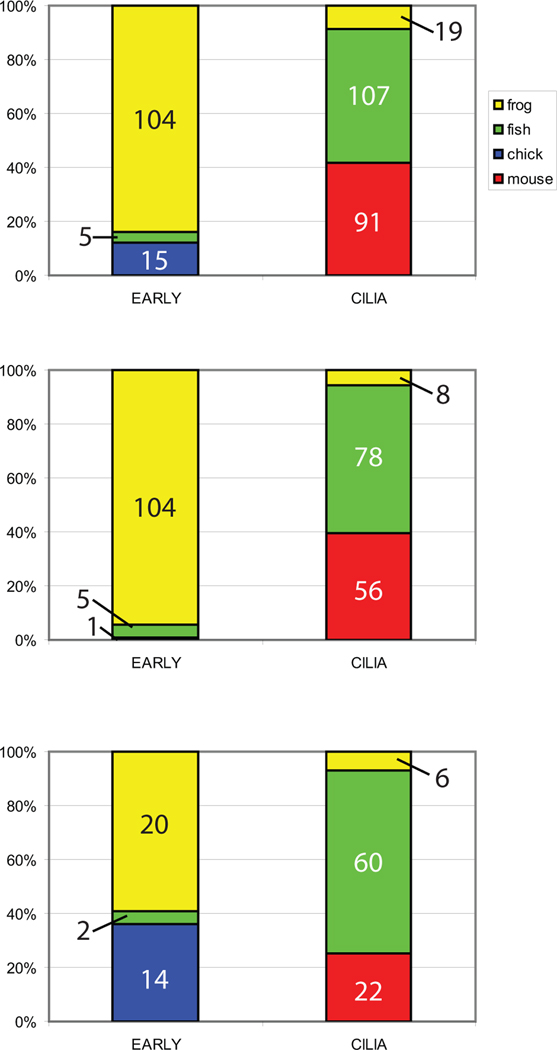
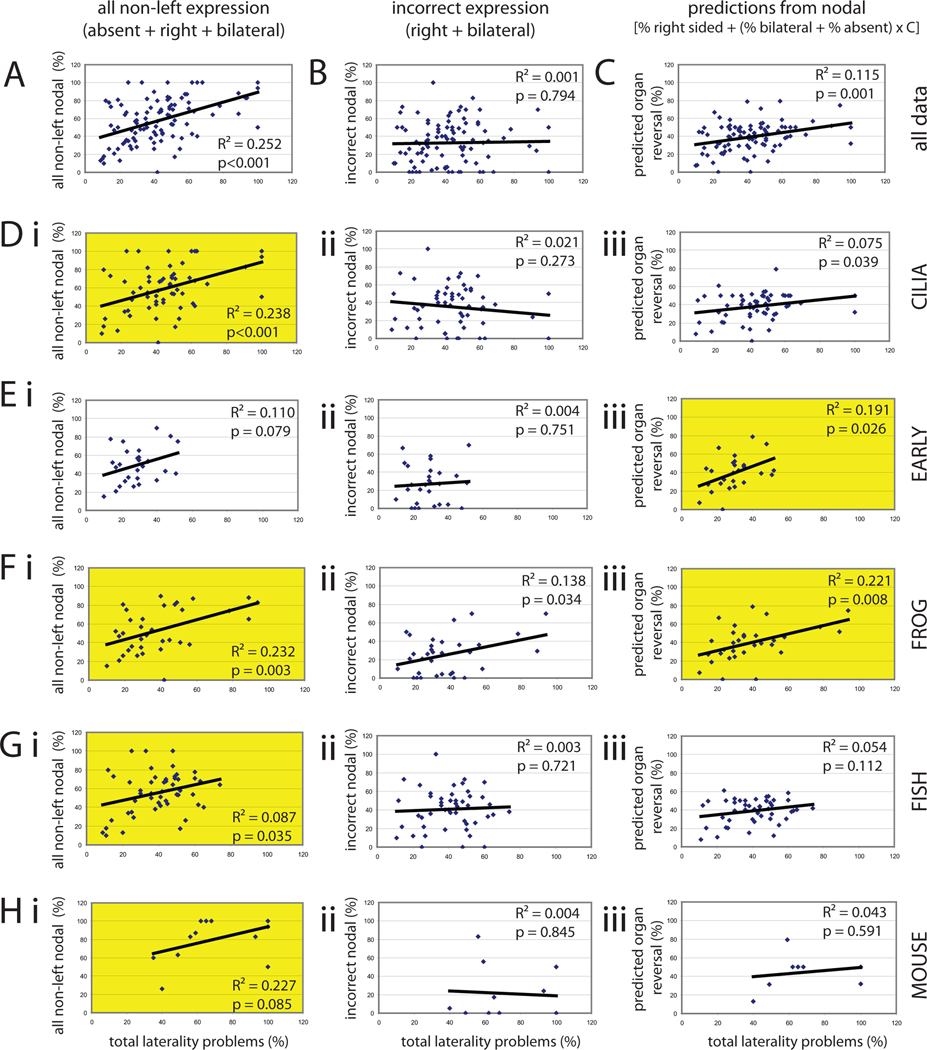
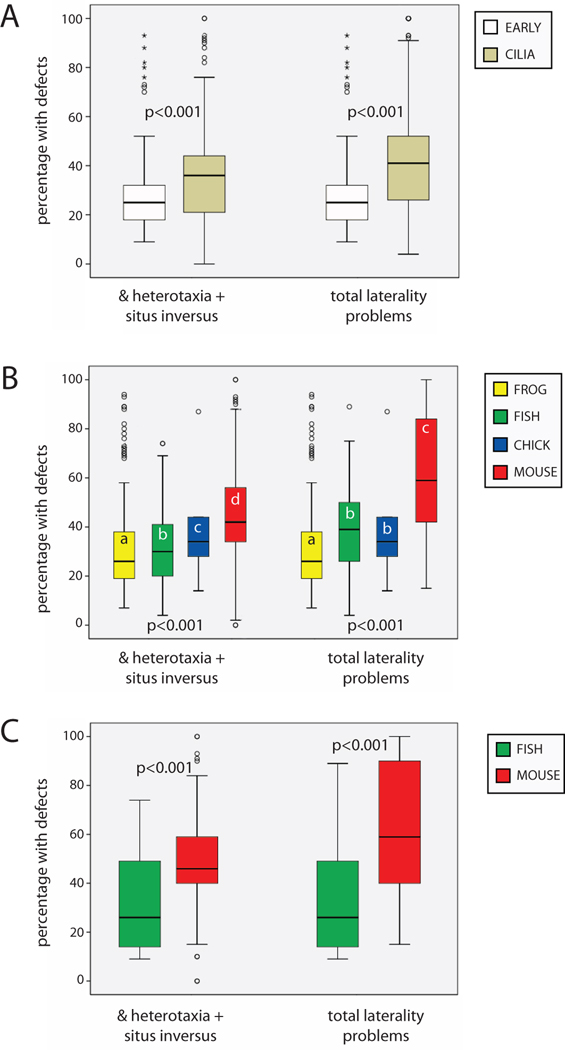
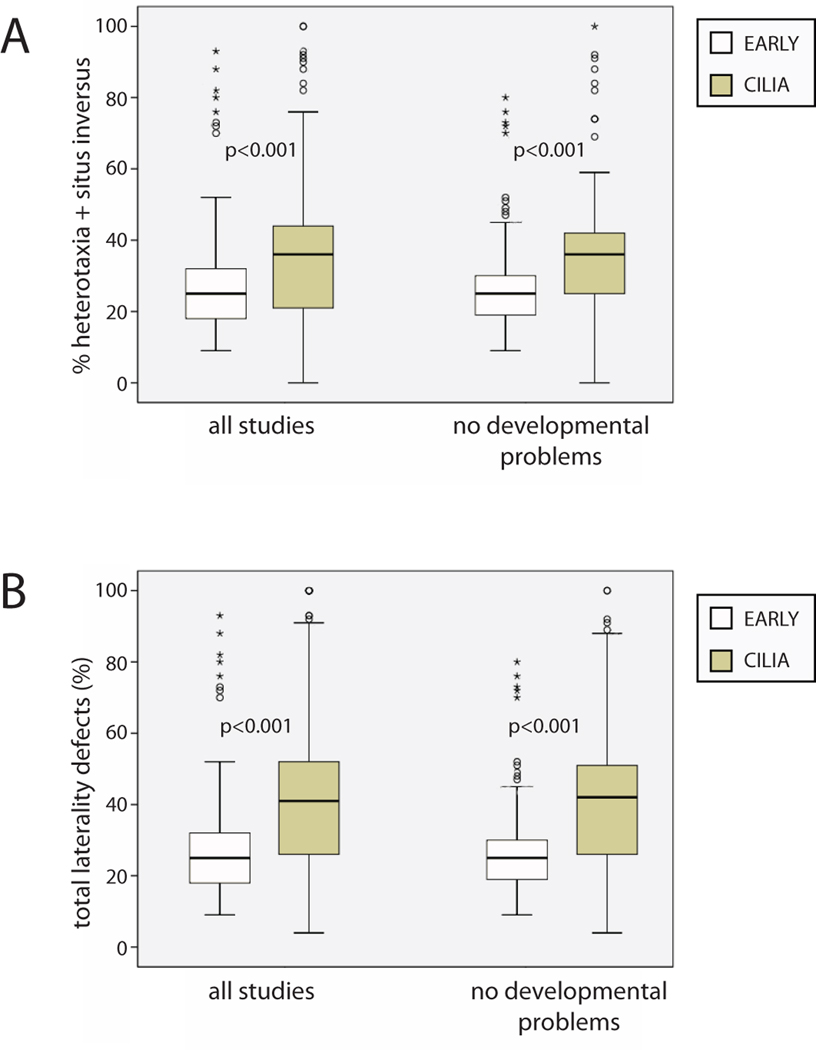
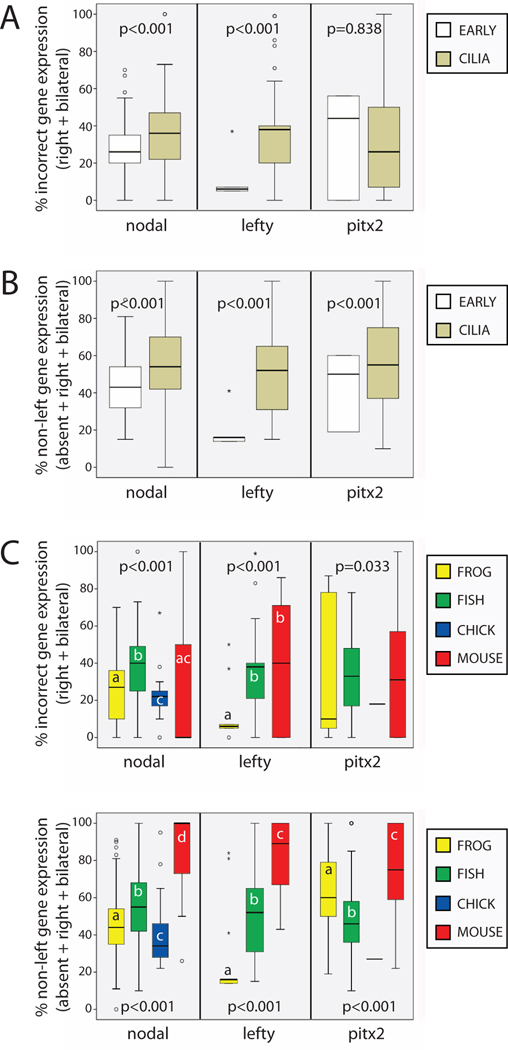
The timing of when the embryonic left-right (LR) axis is first established and the mechanisms driving this process are subjects of strong debate. While groups have focused on the role of cilia in establishing the LR axis during gastrula and neurula stages, many animals appear to orient the LR axis prior to the appearance of, or without the benefit of, motile cilia. Because of the large amount of data available in the published literature and the similarities in the type of data collected across laboratories, I have examined relationships between the studies that do and do not implicate cilia, the choice of animal model, the kinds of LR patterning defects observed, and the penetrance of LR phenotypes. I found that treatments affecting cilia structure and motility had a higher penetrance for both altered gene expression and improper organ placement compared to treatments that affect processes in early cleavage stage embryos. I also found differences in penetrance that could be attributed to the animal models used; the mouse is highly prone to LR randomization. Additionally, the data were examined to address whether gene expression can be used to predict randomized organ placement. Using regression analysis, gene expression was found to be predictive of organ placement in frogs, but much less so in the other animals examined. Together, these results challenge previous ideas about the conservation of LR mechanisms, with the mouse model being significantly different from fish, frogs, and chick in almost every aspect examined. Additionally, this analysis indicates that there may be missing pieces in the molecular pathways that dictate how genetic information becomes organ positional information in vertebrates; these gaps will be important for future studies to identify, as LR asymmetry is not only a fundamentally fascinating aspect of development but also of considerable biomedical importance.
胚胎左右(LR)轴何时首次建立以及驱动这一过程的机制是激烈争论的主题。虽然有研究小组专注于纤毛在原肠胚和神经胚阶段建立 LR 轴中的作用,但许多动物似乎在出现纤毛之前或没有纤毛的情况下就确定了 LR 轴的方向。由于发表文献中有大量数据,并且各个实验室收集的数据类型相似,因此我检查了那些确实或不确实暗示纤毛参与的研究之间的关系、动物模型的选择、观察到的 LR 模式缺陷的种类以及 LR 表型的外显率。我发现,与影响早期卵裂胚胎过程的处理相比,影响纤毛结构和运动的处理对改变基因表达和器官位置不当的影响更大。我还发现,由于使用的动物模型不同,外显率也存在差异;老鼠非常容易出现 LR 随机化。此外,还检查了数据以确定基因表达是否可用于预测随机化的器官位置。通过回归分析,发现基因表达可预测青蛙的器官位置,但在其他检查的动物中则不然。这些结果共同挑战了关于 LR 机制保守性的先前观念,即与鱼类、青蛙和小鸡相比,老鼠模型在几乎所有检查方面都有很大不同。此外,该分析表明,在决定遗传信息如何成为脊椎动物器官位置信息的分子途径中可能存在缺失的部分;这些空白对于未来的研究很重要,因为 LR 不对称不仅是发育的一个非常有趣的方面,而且具有相当重要的医学意义。