Department of Microbiology and Immunology, University of Louisville, Louisville, Kentucky, United States of America.
PLoS One. 2011;6(11):e27386. doi: 10.1371/journal.pone.0027386. Epub 2011 Nov 14.
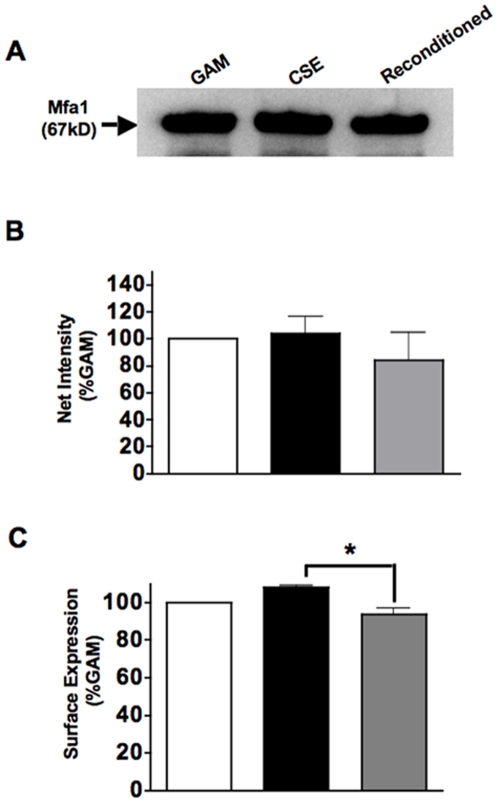
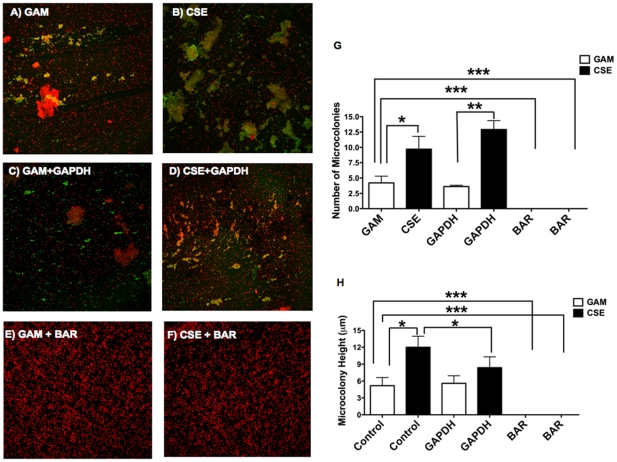
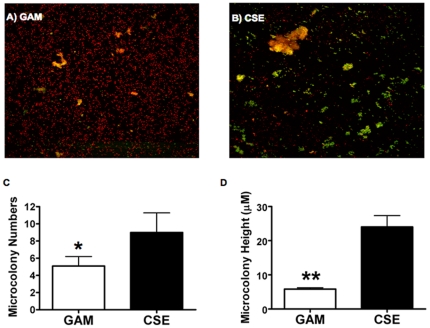
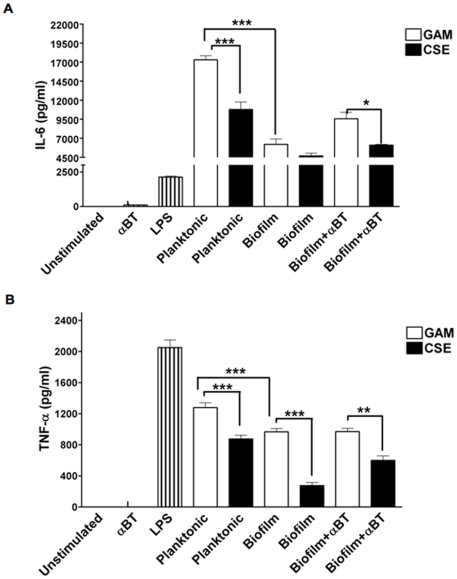
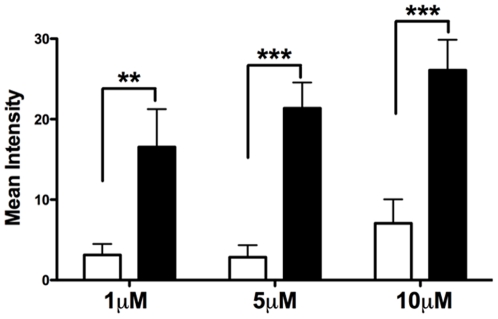
Smoking is responsible for the majority of periodontitis cases in the US and smokers are more susceptible than non-smokers to infection by the periodontal pathogen Porphyromonas gingivalis. P. gingivalis colonization of the oral cavity is dependent upon its interaction with other plaque bacteria, including Streptococcus gordonii. Microarray analysis suggested that exposure of P. gingivalis to cigarette smoke extract (CSE) increased the expression of the major fimbrial antigen (FimA), but not the minor fimbrial antigen (Mfa1). Therefore, we hypothesized that CSE promotes P. gingivalis-S. gordonii biofilm formation in a FimA-dependent manner. FimA total protein and cell surface expression were increased upon exposure to CSE whereas Mfa1 was unaffected. CSE exposure did not induce P. gingivalis auto-aggregation but did promote dual species biofilm formation, monitored by microcolony numbers and depth (both, p<0.05). Interestingly, P. gingivalis biofilms grown in the presence of CSE exhibited a lower pro-inflammatory capacity (TNF-α, IL-6) than control biofilms (both, p<0.01). CSE-exposed P. gingivalis bound more strongly to immobilized rGAPDH, the cognate FimA ligand on S. gordonii, than control biofilms (p<0.001) and did so in a dose-dependent manner. Nevertheless, a peptide representing the Mfa1 binding site on S. gordonii, SspB, completely inhibited dual species biofilm formation. Thus, CSE likely augments P. gingivalis biofilm formation by increasing FimA avidity which, in turn, supports initial interspecies interactions and promotes subsequent high affinity Mfa1-SspB interactions driving biofilm growth. CSE induction of P. gingivalis biofilms of limited pro-inflammatory potential may explain the increased persistence of this pathogen in smokers. These findings may also be relevant to other biofilm-induced infectious diseases and conditions.
吸烟是导致美国大多数牙周炎病例的主要原因,吸烟者比非吸烟者更容易感染牙周病原体牙龈卟啉单胞菌。牙龈卟啉单胞菌在口腔中的定植依赖于其与其他菌斑细菌(包括戈登链球菌)的相互作用。微阵列分析表明,暴露于香烟烟雾提取物(CSE)增加了主要菌毛抗原(FimA)的表达,但不增加次要菌毛抗原(Mfa1)的表达。因此,我们假设 CSE 以 FimA 依赖的方式促进牙龈卟啉单胞菌-戈登链球菌生物膜的形成。暴露于 CSE 后,FimA 总蛋白和细胞表面表达增加,而 Mfa1 不受影响。CSE 暴露不会诱导牙龈卟啉单胞菌自动聚集,但会促进双物种生物膜的形成,通过微菌落数量和深度来监测(均,p<0.05)。有趣的是,与对照生物膜相比,在 CSE 存在下生长的牙龈卟啉单胞菌生物膜表现出较低的促炎能力(TNF-α,IL-6)(均,p<0.01)。暴露于 CSE 的牙龈卟啉单胞菌与固定化 rGAPDH 的结合能力比对照生物膜更强,rGAPDH 是戈登链球菌上 FimA 的配体(p<0.001),且呈剂量依赖性。然而,代表戈登链球菌上 Mfa1 结合位点的肽,SspB,完全抑制了双物种生物膜的形成。因此,CSE 可能通过增加 FimA 的亲和力来增强牙龈卟啉单胞菌生物膜的形成,这反过来又支持初始种间相互作用,并促进随后高亲和力的 Mfa1-SspB 相互作用,从而推动生物膜的生长。CSE 诱导的具有有限促炎潜力的牙龈卟啉单胞菌生物膜可能解释了该病原体在吸烟者中持续存在的原因。这些发现可能也与其他生物膜诱导的传染病和病症有关。