Eukaryotic Gene Expression Laboratory, National Institute of Immunology, New Delhi, India.
PLoS One. 2011;6(11):e26674. doi: 10.1371/journal.pone.0026674. Epub 2011 Nov 17.
Suppressors of cytokine signalling (SOCS) protein family are key regulators of cellular responses to cytokines and play an important role in the nervous system. The SOCS6 protein, a less extensively studied SOCS family member, has been shown to induce insulin resistance in the retina and promote survival of the retinal neurons. But no reports are available about the role of SOCS6 in neuritogenesis. In this study, we examined the role of SOCS6 in neurite outgrowth and neuronal cell signalling.
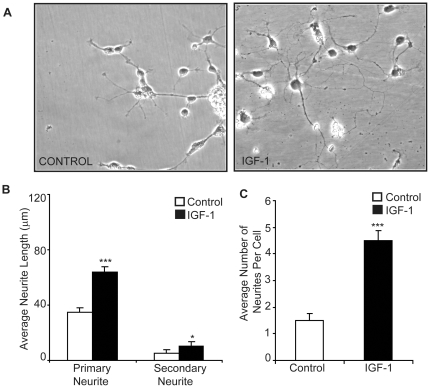
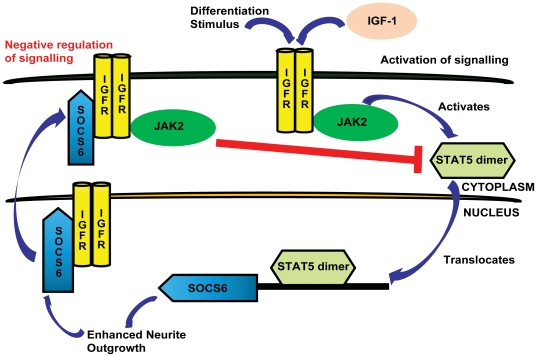
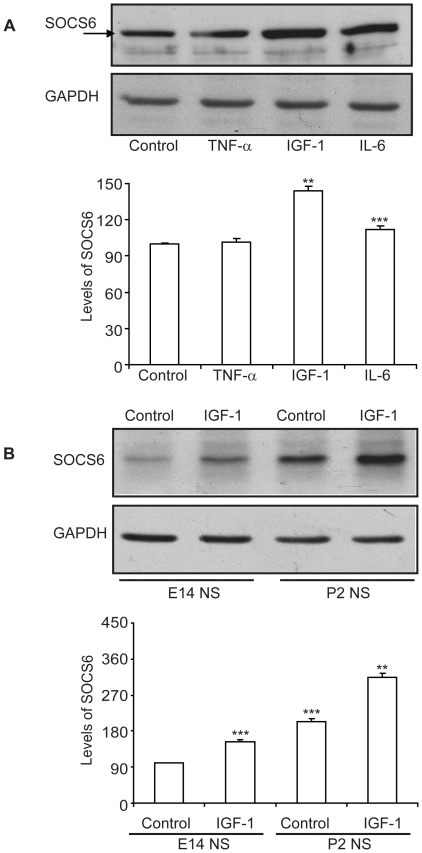
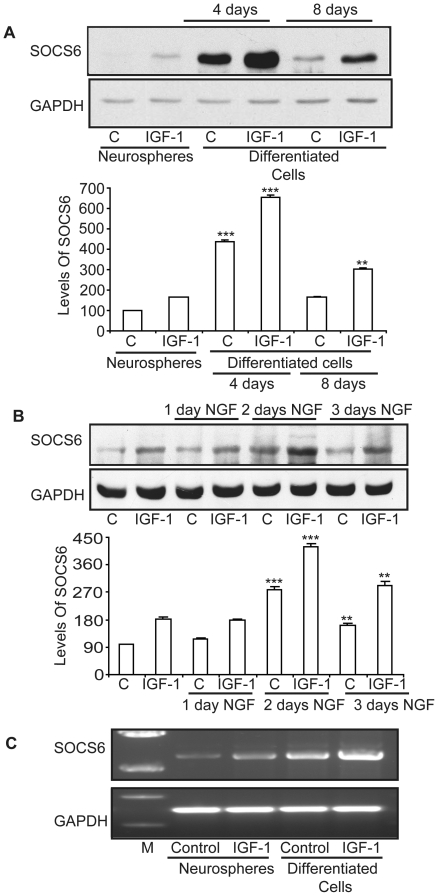
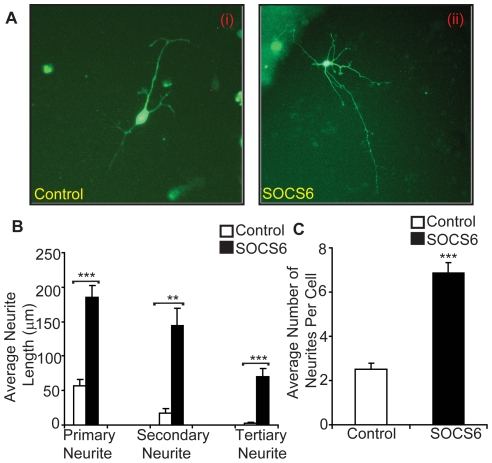
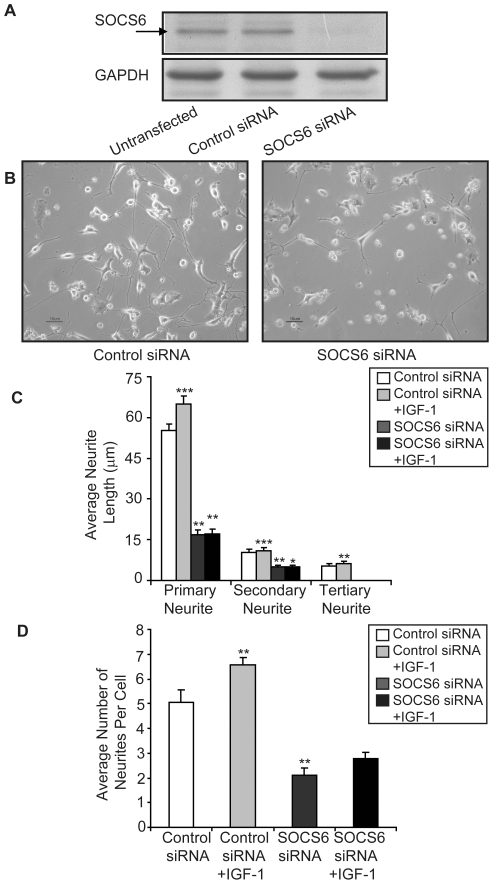
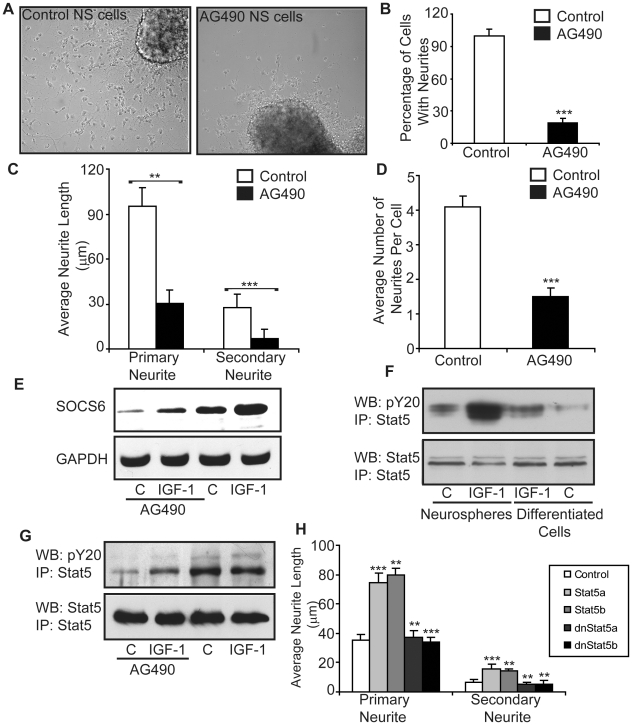
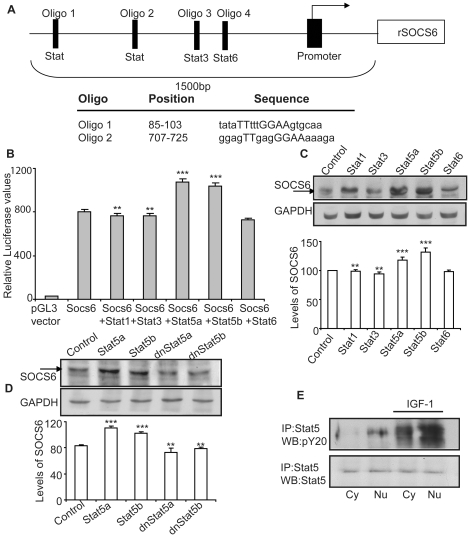
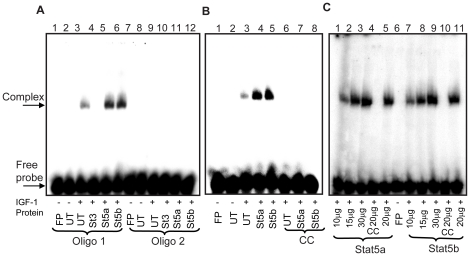
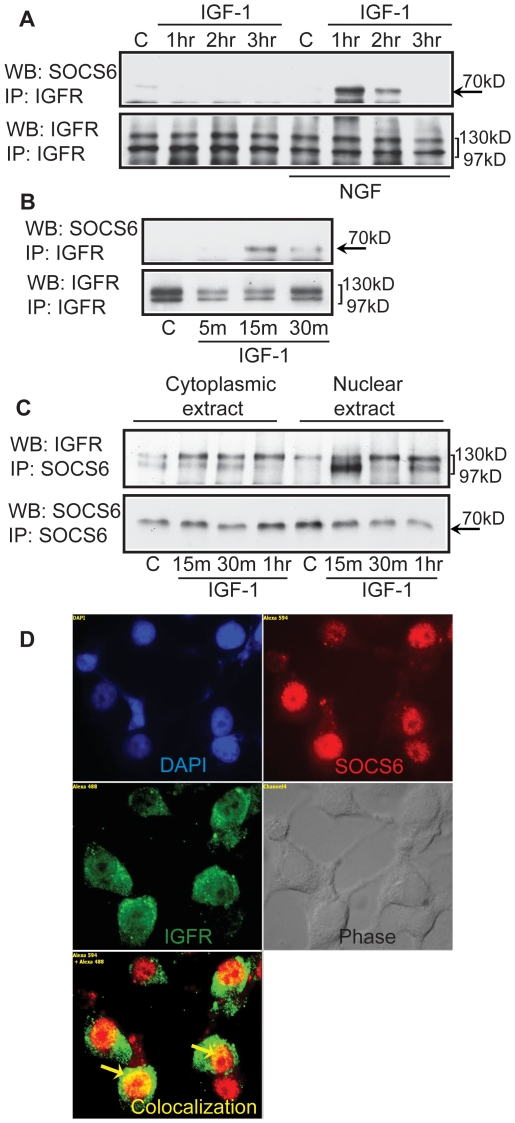
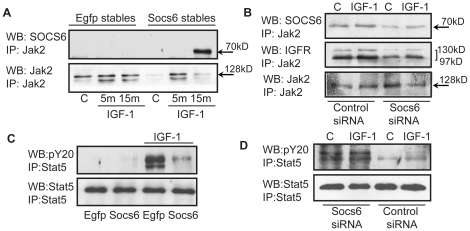
METHODOLOGY/PRINCIPAL FINDINGS: The effect of SOCS6 in neural stem cells differentiation was studied in neural stem cells and PC12 cell line. Highly elevated levels of SOCS6 were found upon neural cell differentiation both at the mRNA and protein level. Furthermore, SOCS6 over-expression lead to increase in neurite outgrowth and degree of branching, whereas SOCS6 knockdown with specific siRNAs, lead to a significant decrease in neurite initiation and extension. Insulin-like growth factor-1 (IGF-1) stimulation which enhanced neurite outgrowth of neural cells resulted in further enhancement of SOCS6 expression. Jak/Stat (Janus Kinase/Signal Transducer And Activator Of Transcription) pathway was found to be involved in the SOCS6 mediated neurite outgrowth. Bioinformatics study revealed presence of putative Stat binding sites in the SOCS6 promoter region. Transcription factors Stat5a and Stat5b were involved in SOCS6 gene upregulation leading to neuronal differentiation. Following differentiation, SOCS6 was found to form a ternary complex with IGFR (Insulin Like Growth Factor-1 Receptor) and JAK2 which acted in a negative feedback loop to inhibit pStat5 activation.
CONCLUSION/SIGNIFICANCE: The current paradigm for the first time states that SOCS6, a SOCS family member, plays an important role in the process of neuronal differentiation. These findings define a novel molecular mechanism for Jak2/Stat5 mediated SOCS6 signalling.
细胞因子信号转导抑制蛋白(SOCS)家族是细胞对细胞因子反应的关键调节因子,在神经系统中发挥着重要作用。SOCS6 蛋白是 SOCS 家族中研究较少的成员之一,已被证明可在视网膜中诱导胰岛素抵抗并促进视网膜神经元存活。但是,目前尚无关于 SOCS6 在神经突生成中的作用的报道。在这项研究中,我们研究了 SOCS6 在神经突生长和神经元细胞信号转导中的作用。
方法/主要发现:在神经干细胞和 PC12 细胞系中研究了 SOCS6 在神经干细胞分化中的作用。在神经细胞分化时,无论是在 mRNA 还是蛋白水平,SOCS6 的水平均显著升高。此外,SOCS6 的过表达导致神经突生长和分支程度增加,而特异性 siRNAs 介导的 SOCS6 敲低则导致神经突起始和延伸显著减少。胰岛素样生长因子-1(IGF-1)刺激增强了神经细胞的神经突生长,进而增强了 SOCS6 的表达。Jak/Stat(Janus 激酶/信号转导和转录激活因子)途径被发现参与了 SOCS6 介导的神经突生长。生物信息学研究表明,SOCS6 启动子区域存在潜在的 Stat 结合位点。转录因子 Stat5a 和 Stat5b 参与 SOCS6 基因的上调,导致神经元分化。分化后,SOCS6 与胰岛素样生长因子-1 受体(IGFR)和 JAK2 形成三元复合物,以负反馈环的形式抑制 pStat5 的激活。
结论/意义:目前的研究首次表明,SOCS6 作为 SOCS 家族的一员,在神经元分化过程中发挥着重要作用。这些发现定义了 Jak2/Stat5 介导的 SOCS6 信号转导的新分子机制。