Ding Chuanqing, Lu Michael, Huang Jianyan
Department of Cell and Neurobiology, University of Southern California, Keck School of Medicine, Los Angeles, CA 90089-9112, USA.
Mol Vis. 2011;17:2847-55. Epub 2011 Nov 9.
To test the hypotheses that pregnancy represents a physiologic condition that is associated with dry eye symptoms, and the expression of aquaporin 4 (AQP4) and AQP5 are altered in the lacrimal gland (LG) from term pregnant rabbits.
Schirmer's test, tear break-up time (BUT), and Rose Bengal staining were used to evaluate ocular surface health. LG were obtained from term pregnant rabbits and age-matched female control rabbits and then processed for laser capture microdissection (LCM), real time RT-PCR, western blot, and immunofluorescence for the detection and quantification of mRNA and proteins of AQP4 and AQP5.
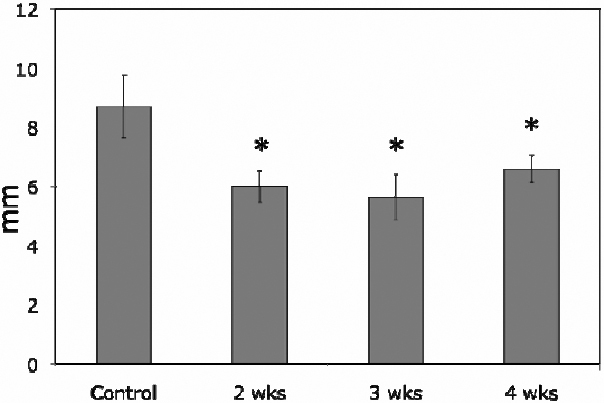
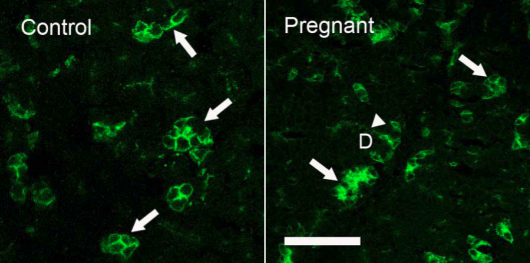
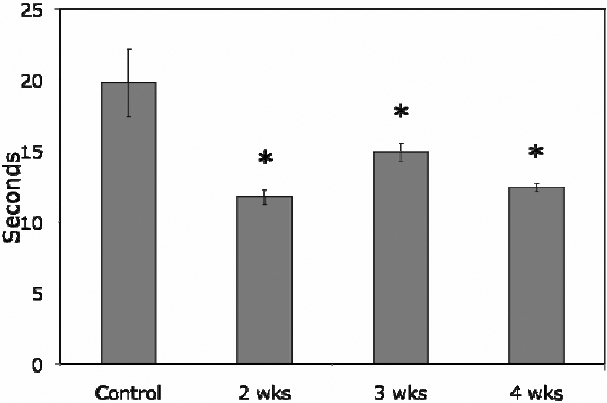
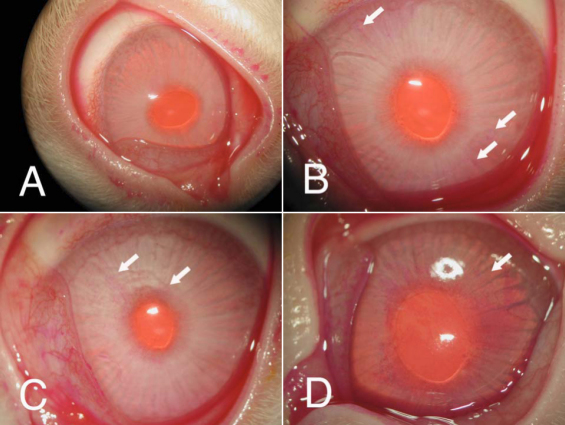
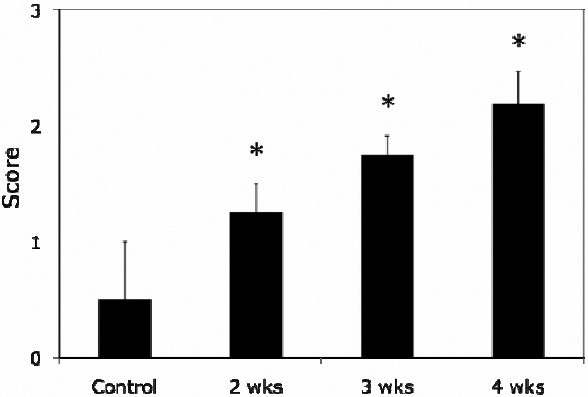
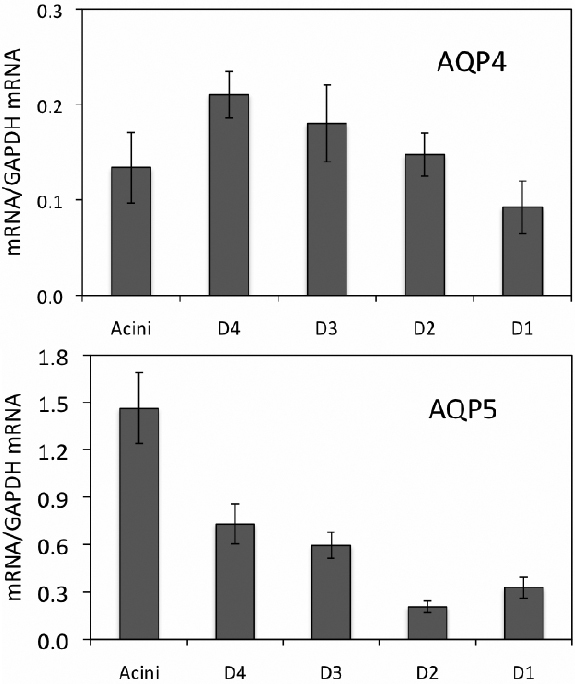
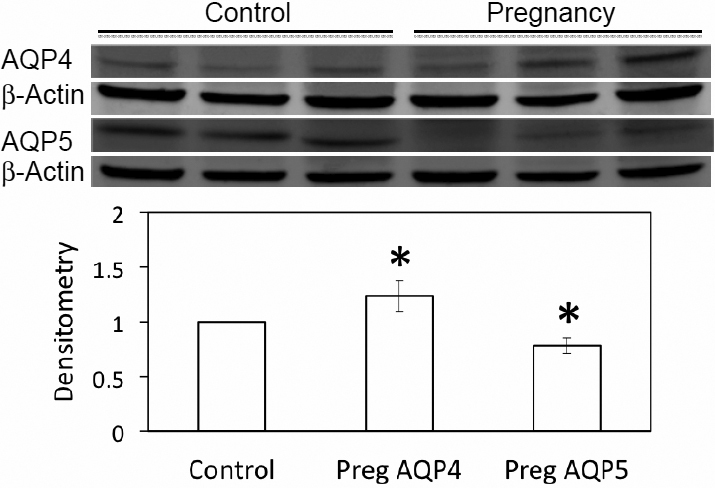
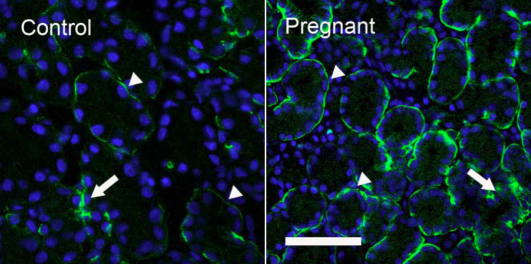
Pregnant rabbits demonstrated typical clinical symptoms of dry eye, including decreased Schirmer score and BUT as well as increased Rose Bengal staining of cornea. In term pregnant rabbits, mRNA for AQP5 from whole LG was significantly lower than that of control rabbits, while mRNA for AQP4 was not. Levels of mRNA for AQP4 and AQP5 underwent significant changes in acini and epithelial cells from specific duct segments during pregnancy. Western blot from whole LG lysates demonstrated that expression of AQP4 was 24% more abundant in term pregnant rabbits while AQP5 was 22% less when compared to control rabbits respectively. At term pregnancy, AQP4 immunoreactivity (AQP4-IR) was increased in acini while its intensity remained the same in ducts. AQP5-IR was present in both apical and basolateral membranes of acinar cells in normal control and pregnant rabbits, while ductal cells in pregnant rabbits also showed significant amount of AQP5-IR.
The data presented here demonstrated significant dry eye symptoms in pregnant rabbits. Our data also showed altered expressions of AQP4 and AQP5 during pregnancy and suggested that these changes may contribute to the altered LG secretion and dry eye symptoms during pregnancy.
检验以下假设,即妊娠代表一种与干眼症状相关的生理状态,且足月妊娠兔泪腺(LG)中水通道蛋白4(AQP4)和水通道蛋白5(AQP5)的表达发生改变。
采用Schirmer试验、泪膜破裂时间(BUT)和孟加拉玫瑰红染色评估眼表健康状况。从足月妊娠兔和年龄匹配的雌性对照兔获取LG,然后进行激光捕获显微切割(LCM)、实时逆转录聚合酶链反应(RT-PCR)、蛋白质印迹和免疫荧光,以检测和定量AQP4和AQP5的mRNA和蛋白质。
妊娠兔表现出典型的干眼临床症状,包括Schirmer评分和BUT降低以及角膜孟加拉玫瑰红染色增加。在足月妊娠兔中,整个LG的AQP5 mRNA显著低于对照兔,而AQP4 mRNA则无此现象。妊娠期间,特定导管段的腺泡和上皮细胞中AQP4和AQP5的mRNA水平发生显著变化。整个LG裂解物的蛋白质印迹显示,与对照兔相比,足月妊娠兔中AQP4的表达量分别多24%,而AQP5则少22%。在足月妊娠时,腺泡中AQP4免疫反应性(AQP4-IR)增加,而导管中的强度保持不变。正常对照兔和妊娠兔的腺泡细胞顶端和基底外侧膜均存在AQP5-IR,而妊娠兔的导管细胞也显示出大量的AQP5-IR。
此处呈现的数据表明妊娠兔存在明显的干眼症状。我们的数据还显示妊娠期间AQP4和AQP5的表达发生改变,并提示这些变化可能导致妊娠期间LG分泌改变和干眼症状。