Institute of Microbiology, Academy of Sciences of the Czech Republic, Prague, Czech Republic.
PLoS One. 2011;6(11):e27961. doi: 10.1371/journal.pone.0027961. Epub 2011 Nov 22.
Probiotic bacteria can be used for the prevention and treatment of human inflammatory diseases including inflammatory bowel diseases (IBD). However, the nature of active components and exact mechanisms of this beneficial effects have not been fully elucidated. Our aim was to investigate if lysate of probiotic bacterium L. casei DN-114 001 (Lc) could decrease the severity of intestinal inflammation in a murine model of IBD.
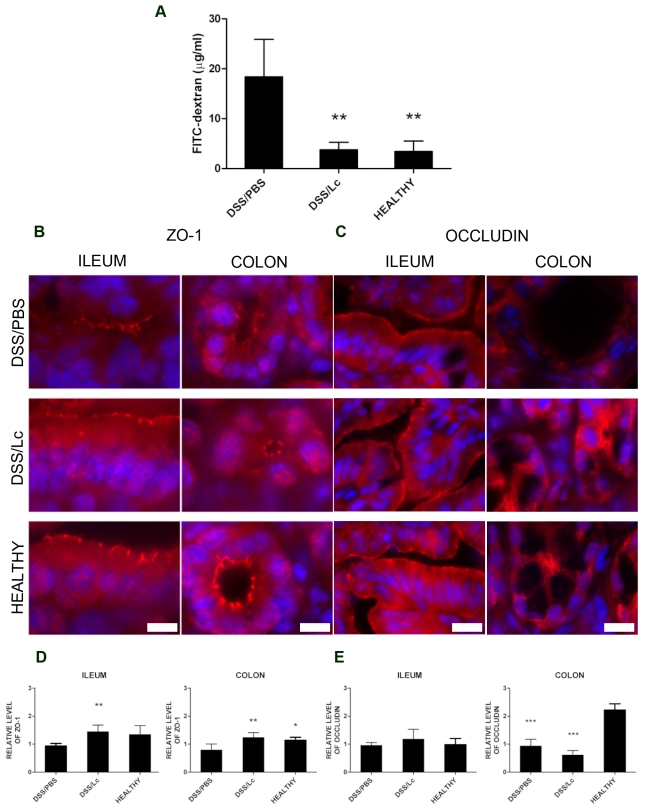
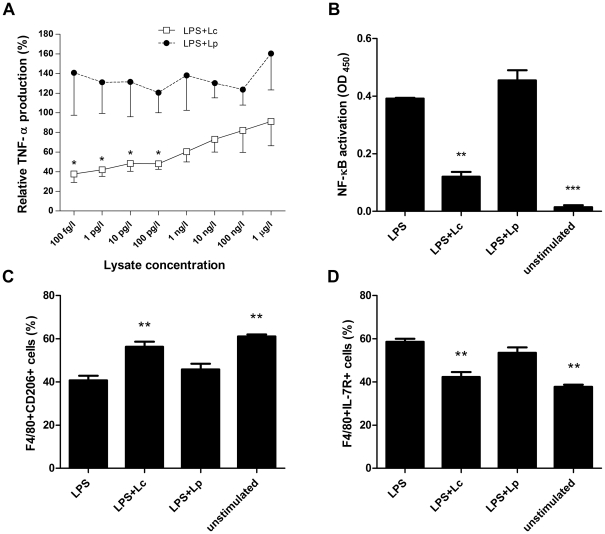
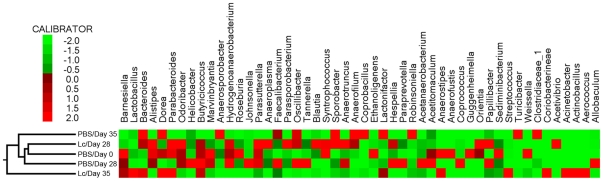
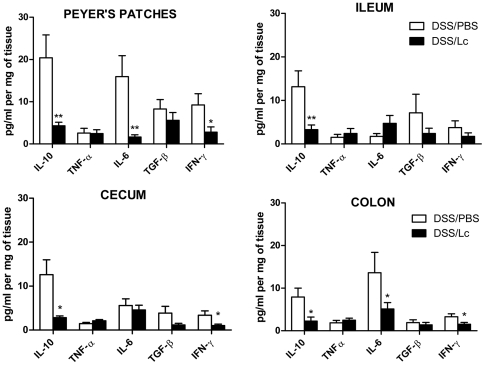
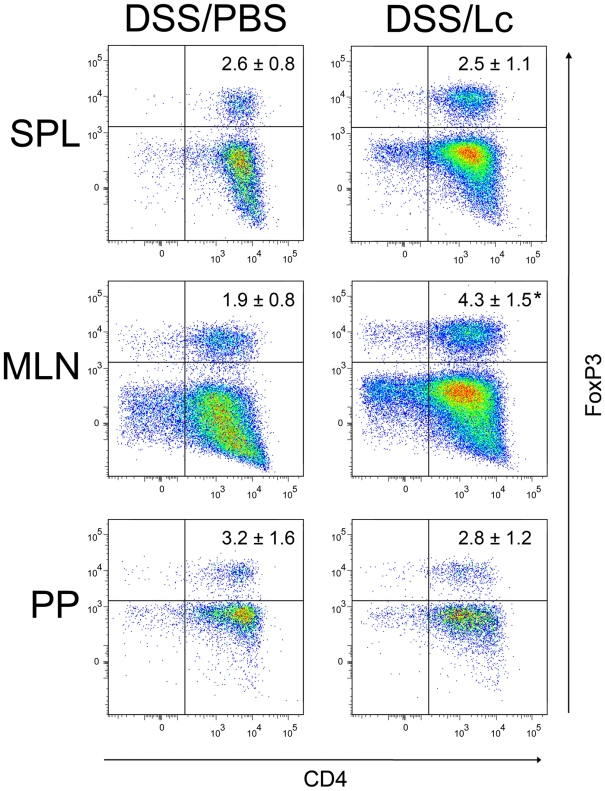
METHODOLOGY/PRINCIPAL FINDINGS: The preventive effect of oral administration of Lc significantly reduces the severity of acute dextran sulfate sodium (DSS) colitis in BALB/c but not in SCID mice. In order to analyze how this beneficial effect interferes with well-known phases of intestinal inflammation pathogenesis in vivo and in vitro, we evaluated intestinal permeability using the FITC-labeled dextran method and analysed tight junction proteins expression by immunofluorescence and PCR. We also measured CD4(+)FoxP3(+) regulatory T cells proportion by FACS analysis, microbiota composition by pyrosequencing, and local cytokine production by ELISA. Lc leads to a significant protection against increased intestinal permeability and barrier dysfunction shown by preserved ZO-1 expression. We found that the Lc treatment increases the numbers of CD4(+)FoxP3(+) regulatory T cells in mesenteric lymph nodes (MLN), decreases production of pro-inflammatory cytokines TNF-α and IFN-γ, and anti-inflammatory IL-10 in Peyer's patches and large intestine, and changes the gut microbiota composition. Moreover, Lc treatment prevents lipopolysaccharide-induced TNF-α expression in RAW 264.7 cell line by down-regulating the NF-κB signaling pathway.
CONCLUSION/SIGNIFICANCE: Our study provided evidence that even non-living probiotic bacteria can prevent the development of severe forms of intestinal inflammation by strengthening the integrity of intestinal barrier and modulation of gut microenvironment.
益生菌可用于预防和治疗人类炎症性疾病,包括炎症性肠病(IBD)。然而,其有益作用的活性成分和确切机制尚未完全阐明。我们的目的是研究益生菌 L. casei DN-114 001(Lc)的裂解物是否可以减轻 IBD 小鼠模型中肠道炎症的严重程度。
方法/主要发现:口服 Lc 的预防作用可显著减轻 BALB/c 但不能减轻 SCID 小鼠急性葡聚糖硫酸钠(DSS)结肠炎的严重程度。为了分析这种有益作用如何在体内和体外干扰肠道炎症发病机制的已知阶段,我们使用 FITC 标记的葡聚糖法评估肠道通透性,并通过免疫荧光和 PCR 分析紧密连接蛋白的表达。我们还通过 FACS 分析测量 CD4(+)FoxP3(+)调节性 T 细胞的比例,通过 pyrosequencing 分析微生物群落组成,通过 ELISA 分析局部细胞因子的产生。Lc 可显著防止肠道通透性增加和屏障功能障碍,表现为 ZO-1 表达得到保留。我们发现 Lc 治疗可增加肠系膜淋巴结(MLN)中 CD4(+)FoxP3(+)调节性 T 细胞的数量,减少 Peyer's 斑和大肠中促炎细胞因子 TNF-α和 IFN-γ的产生,增加抗炎细胞因子 IL-10 的产生,并改变肠道微生物群落组成。此外,Lc 治疗可通过下调 NF-κB 信号通路来预防 RAW 264.7 细胞系中脂多糖诱导的 TNF-α表达。
结论/意义:我们的研究提供了证据表明,即使是无生命的益生菌也可以通过增强肠道屏障的完整性和调节肠道微环境来预防严重形式的肠道炎症。