Department of Psychology, Harvard University, 33 Kirkland St., Cambridge, MA 02138, USA.
Psychol Sci. 2012 Jan 1;23(1):24-9. doi: 10.1177/0956797611422237. Epub 2011 Dec 2.
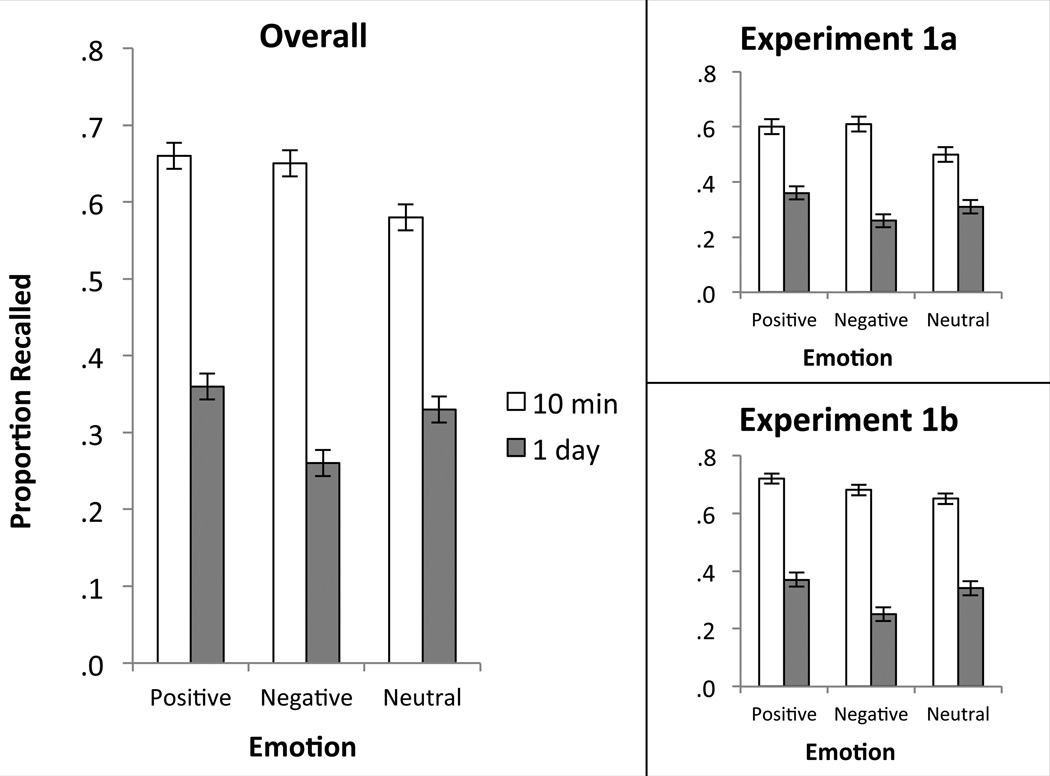
Mental simulations of future experiences are often concerned with emotionally arousing events. Although it is widely believed that mental simulations enhance future behavior, virtually nothing is known about how memory for these simulations changes over time or whether simulations of emotional experiences are especially well remembered. We used a novel paradigm that combined recently developed methods for generating simulations of future events and well-established procedures for testing memory to examine the retention of positive, negative, and neutral simulations over delays of 10 min and 1 day. We found that at the longer delay, details associated with negative simulations were more difficult to remember than details associated with positive or neutral simulations. We suggest that these effects reflect the influence of the fading-affect bias, whereby negative reactions fade more quickly than positive reactions, and that this influence results in a tendency to remember a rosy simulated future. We discuss implications of our findings for individuals with affective disorders, such as depression and anxiety.
未来体验的心理模拟通常涉及情绪激动的事件。虽然人们普遍认为心理模拟会增强未来的行为,但实际上对于这些模拟随时间的记忆如何变化,或者情绪体验的模拟是否特别容易被记住,几乎一无所知。我们使用了一种新颖的范例,该范例结合了最近开发的用于生成未来事件模拟的方法和经过充分验证的测试记忆的程序,以检查积极、消极和中性模拟在 10 分钟和 1 天延迟后的保留情况。我们发现,在较长的延迟中,与负面模拟相关的细节比与正面或中性模拟相关的细节更难记住。我们认为这些影响反映了消退影响偏差的影响,即负面反应比正面反应更快地消退,并且这种影响导致人们倾向于记住一个美好的模拟未来。我们讨论了我们的发现对患有情感障碍(如抑郁和焦虑)的个体的影响。