Medical Research Council Laboratory for Molecular Cell Biology and Cell Biology Unit, University College London, London, UK.
Nat Neurosci. 2011 Dec 4;15(1):81-9. doi: 10.1038/nn.2995.
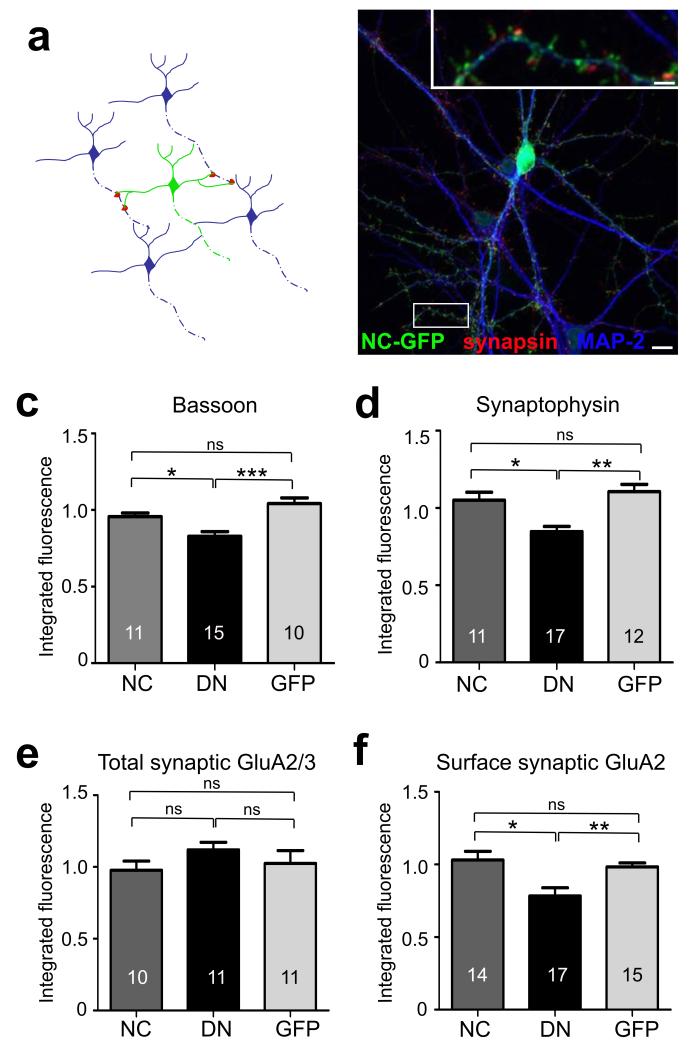
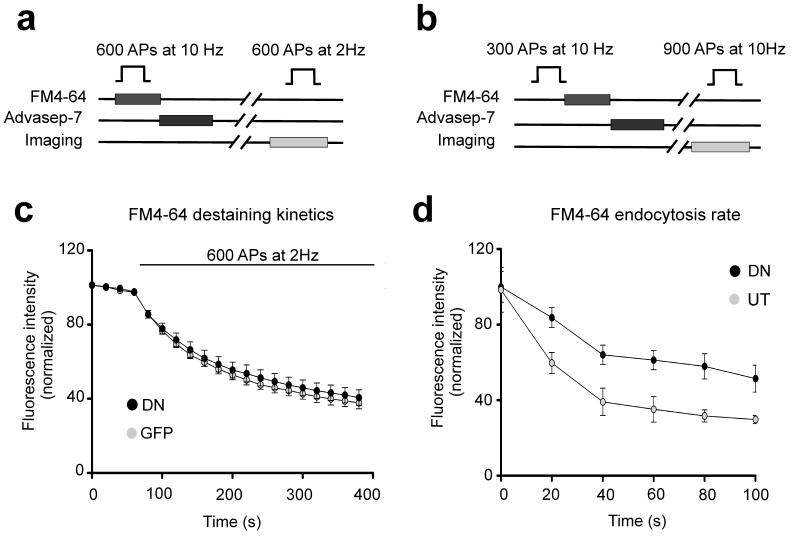
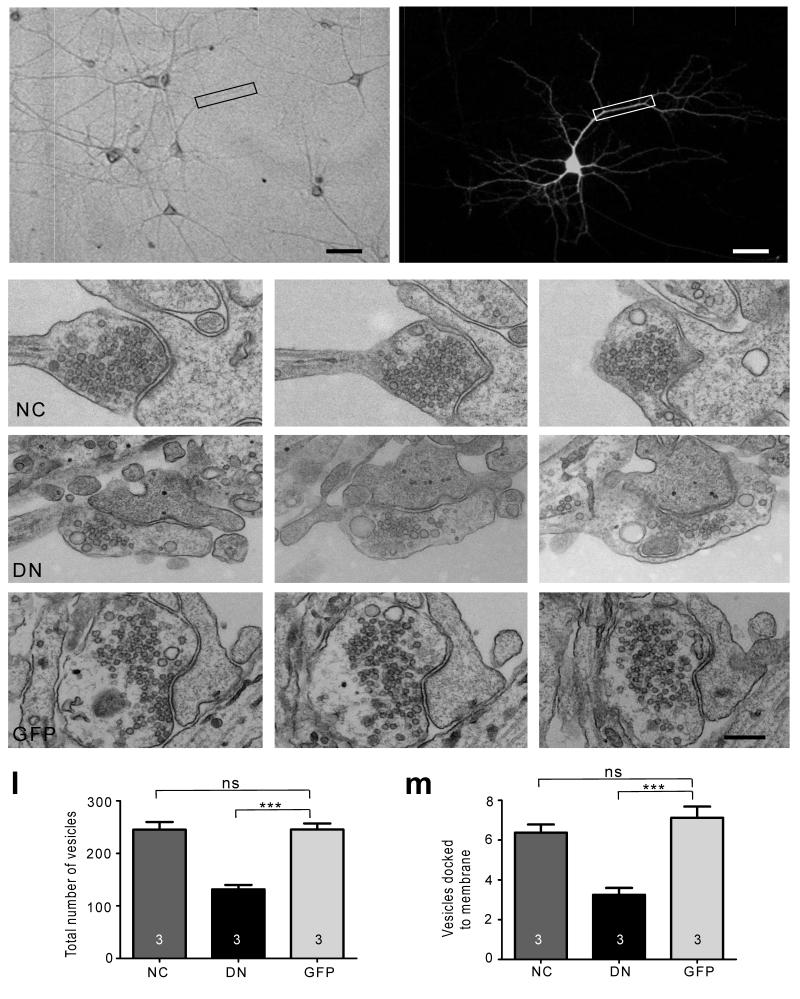
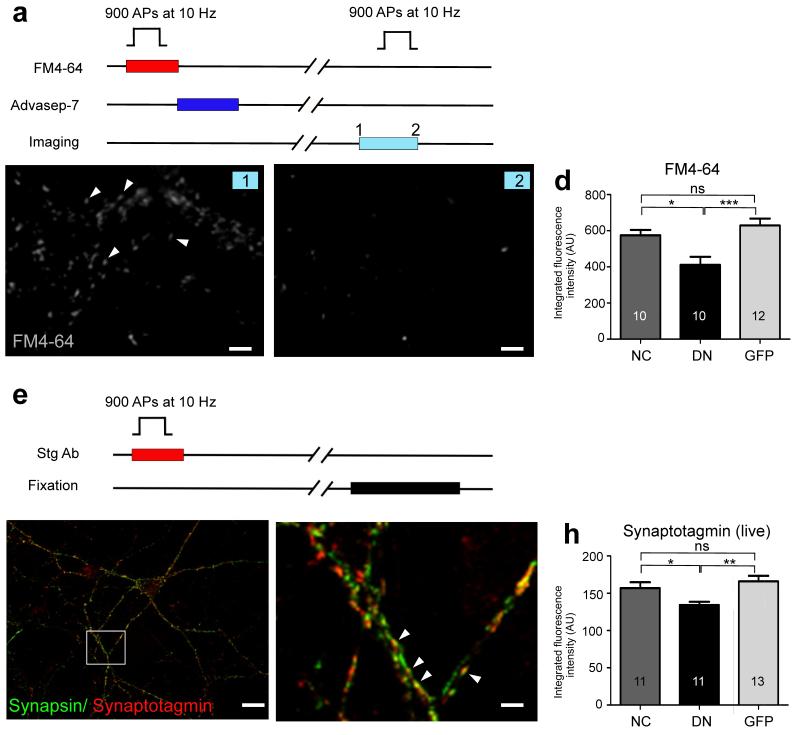
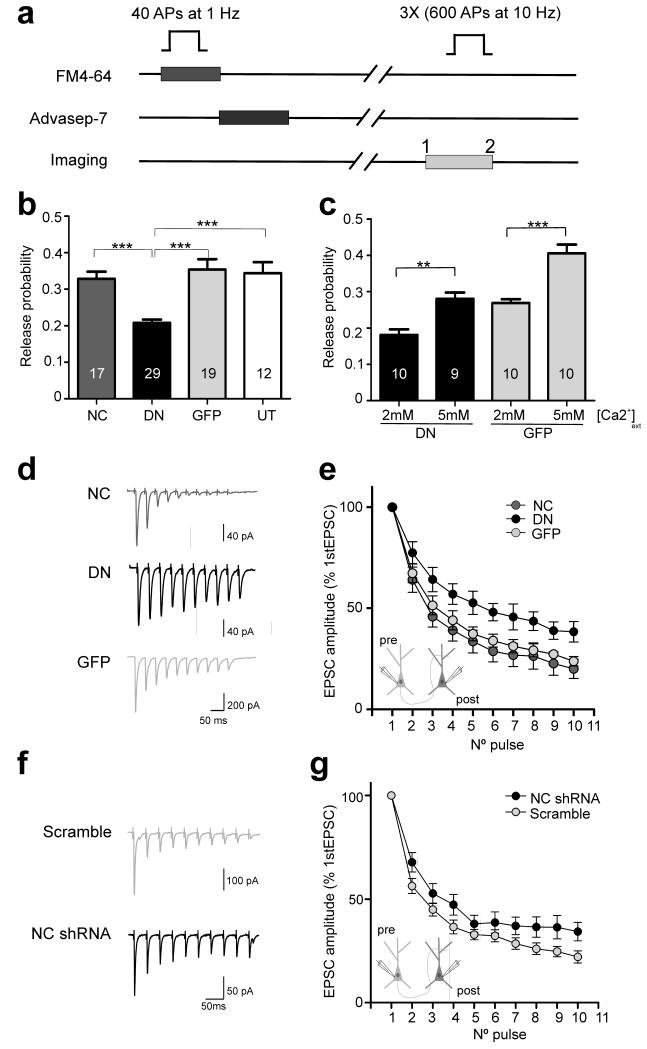
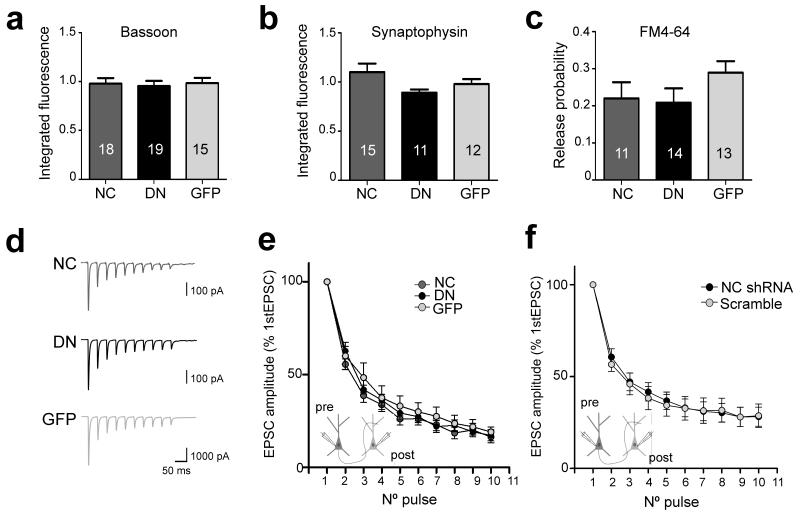
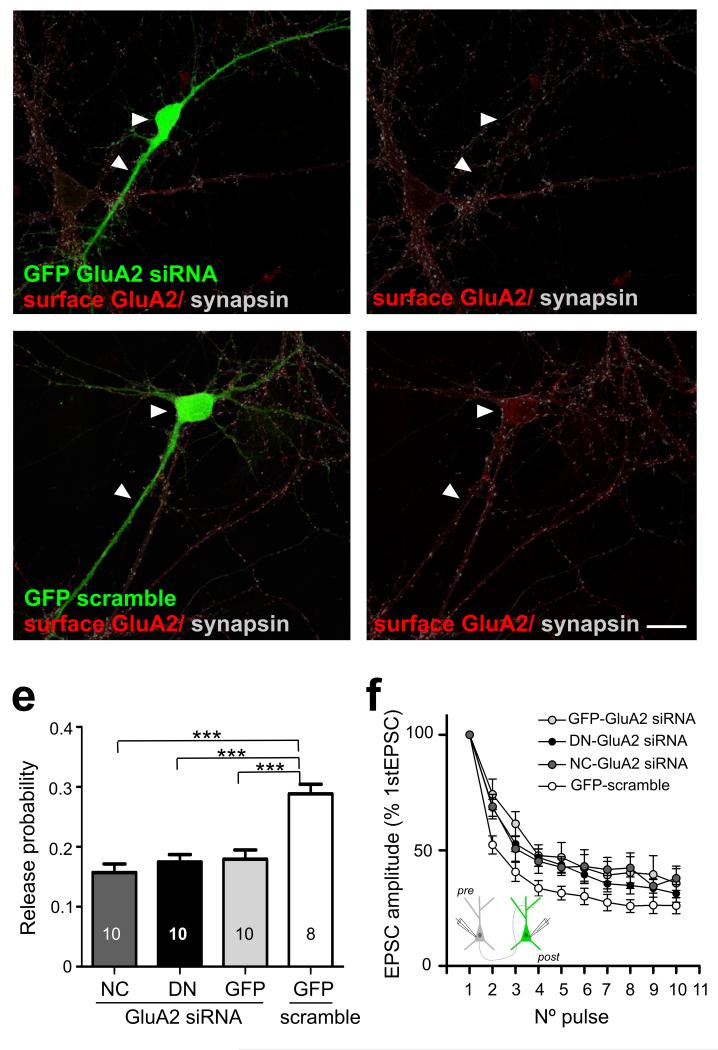
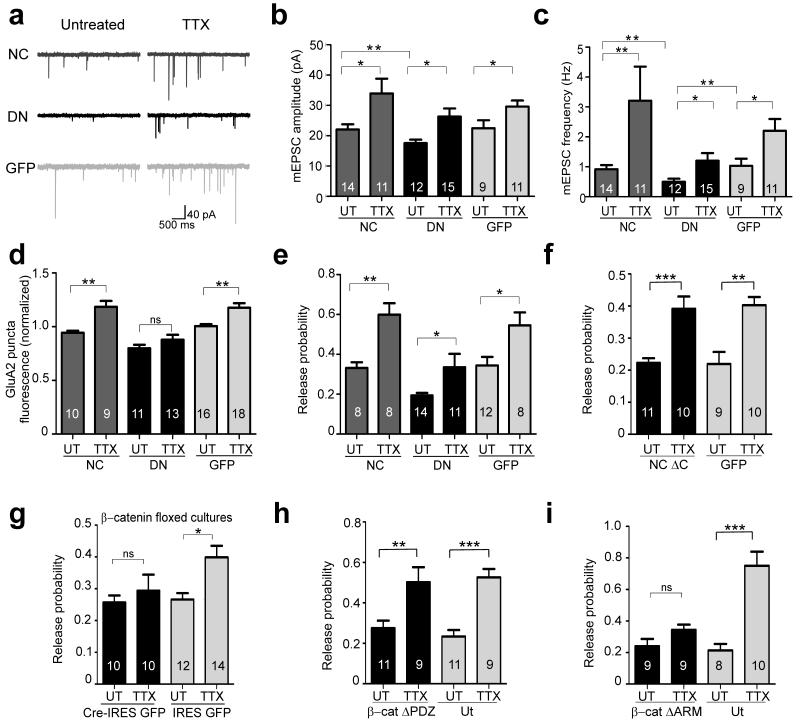
N-cadherin is a homophilic adhesion protein that remains expressed at mature excitatory synapses beyond its developmental role in synapse formation. We investigated the trans-synaptic activity of N-cadherin in regulating synapse function in rodent cultured hippocampal neurons using optical methods and electrophysiology. Interfering with N-cadherin in postsynaptic neurons reduced basal release probability (p(r)) at inputs to the neuron, and this trans-synaptic impairment of release accompanied impaired vesicle endocytosis. Moreover, loss of the GluA2 AMPA-type glutamate receptor subunit, which decreased p(r) by itself, occluded the interference with postsynaptic N-cadherin. The loss of postsynaptic N-cadherin activity, however, did not affect the compensatory upregulation of p(r) induced by chronic activity silencing, whereas postsynaptic β-catenin deletion blocked this presynaptic homeostatic adaptation. Our findings suggest that postsynaptic N-cadherin helps link basal pre- and postsynaptic strengths to control the p(r) offset, whereas the p(r) gain adjustment requires a distinct trans-synaptic pathway involving β-catenin.
N-钙黏蛋白是一种同种型黏附蛋白,在发育过程中参与突触形成后,仍在成熟的兴奋性突触中表达。我们使用光学方法和电生理学研究了 N-钙黏蛋白在调节啮齿动物培养海马神经元突触功能中的跨突触活性。在突触后神经元中干扰 N-钙黏蛋白会降低神经元输入的基础释放概率(p(r)),这种跨突触释放损伤伴随着囊泡内吞作用受损。此外,GluA2 AMPA 型谷氨酸受体亚基的缺失本身会降低 p(r),但会阻断对突触后 N-钙黏蛋白的干扰。然而,突触后 N-钙黏蛋白活性的丧失并不影响慢性活动沉默诱导的 p(r)的代偿性上调,而突触后 β-连环蛋白缺失则阻断了这种突触前的稳态适应。我们的研究结果表明,突触后 N-钙黏蛋白有助于将基础的突触前和突触后强度联系起来,以控制 p(r)的偏移,而 p(r)的增益调整则需要涉及β-连环蛋白的独特的跨突触途径。