Department of Biological Sciences, University at Buffalo, Amherst, New York, United States of America.
PLoS One. 2011;6(11):e28022. doi: 10.1371/journal.pone.0028022. Epub 2011 Nov 29.
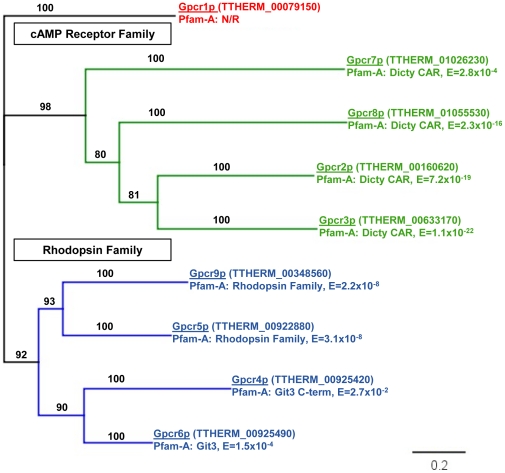
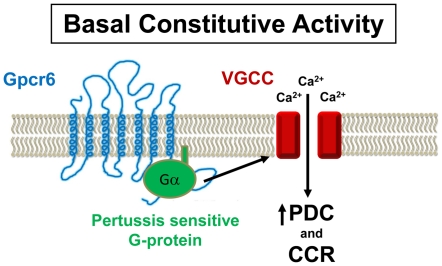
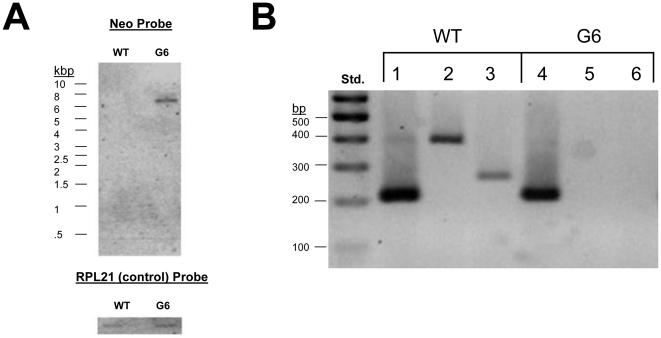
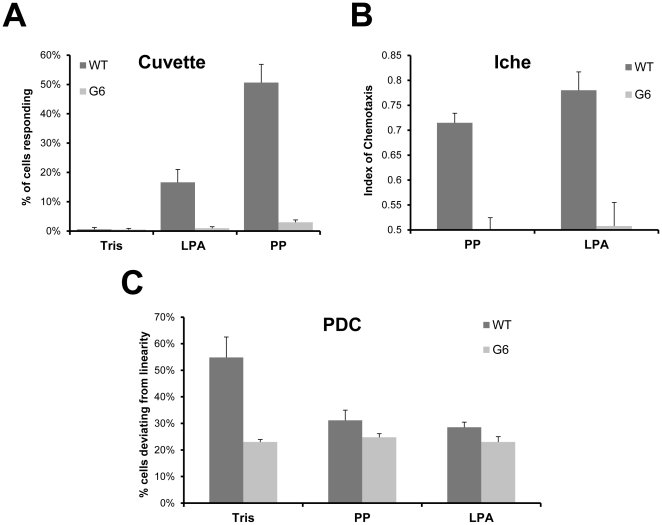
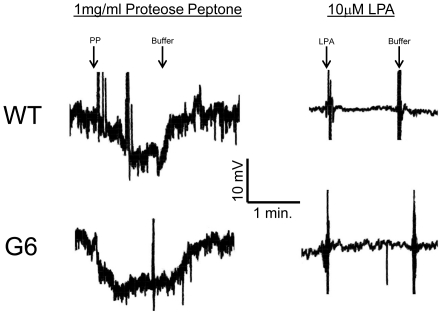
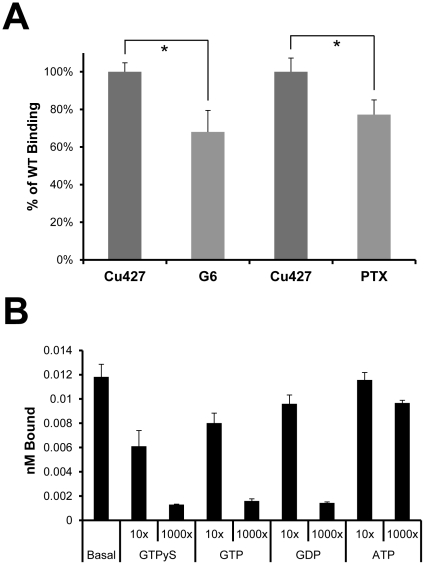
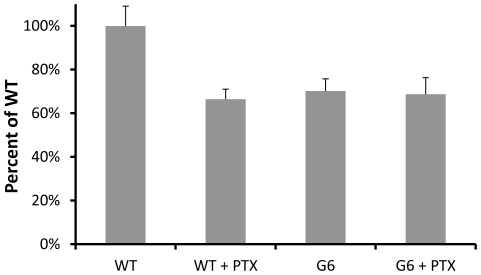
Although G-protein coupled receptors (GPCRs) are a common element in many chemosensory transduction pathways in eukaryotic cells, no GPCR or regulated G-protein activity has yet been shown in any ciliate. To study the possible role for a GPCR in the chemoresponses of the ciliate Tetrahymena, we have generated a number of macronuclear gene knockouts of putative GPCRs found in the Tetrahymena Genome database. One of these knockout mutants, called G6, is a complete knockout of a gene that we call GPCR6 (TTHERM_00925490). Based on sequence comparisons, the Gpcr6p protein belongs to the Rhodopsin Family of GPCRs. Notably, Gpcr6p shares highest amino acid sequence homologies to GPCRs from Paramecium and several plants. One of the phenotypes of the G6 mutant is a decreased responsiveness to the depolarizing ions Ba²⁺ and K⁺, suggesting a decrease in basal excitability (decrease in Ca²⁺ channel activity). The other major phenotype of G6 is a loss of chemoattraction to lysophosphatidic acid (LPA) and proteose peptone (PP), two known chemoattractants in Tetrahymena. Using microsomal [³⁵S]GTPγS binding assays, we found that wild-type (CU427) have a prominent basal G-protein activity. This activity is decreased to the same level by pertussis toxin (a G-protein inhibitor), addition of chemoattractants, or the G6 mutant. Since the basal G-protein activity is decreased by the GPCR6 knockout, it is likely that this gene codes for a constitutively active GPCR in Tetrahymena. We propose that chemoattractants like LPA and PP cause attraction in Tetrahymena by decreasing the basal G-protein stimulating activity of Gpcr6p. This leads to decreased excitability in wild-type and longer runs of smooth forward swimming (less interrupted by direction changes) towards the attractant. Therefore, these attractants may work as inverse agonists through the constitutively active Gpcr6p coupled to a pertussis-sensitive G-protein.
尽管 G 蛋白偶联受体(GPCRs)是真核细胞中许多化学感觉转导途径的常见组成部分,但在任何纤毛虫中都尚未发现 GPCR 或调节 G 蛋白活性。为了研究 GPCR 在纤毛虫 Tetrahymena 化学反应中的可能作用,我们已经生成了大量在 Tetrahymena 基因组数据库中发现的假定 GPCR 的巨核基因敲除体。这些敲除突变体之一,称为 G6,是我们称为 GPCR6(TTHERM_00925490)的基因的完全敲除突变体。基于序列比较,Gpcr6p 蛋白属于视紫红质家族的 GPCRs。值得注意的是,Gpcr6p 与 Paramecium 和几种植物的 GPCRs 具有最高的氨基酸序列同源性。G6 突变体的表型之一是对去极化离子 Ba²⁺和 K⁺的反应性降低,表明基础兴奋性降低(Ca²⁺通道活性降低)。G6 的另一个主要表型是对溶血磷脂酸(LPA)和蛋白酶胨(PP)的化学趋化性丧失,LPA 和 PP 是 Tetrahymena 中的两种已知化学趋化物。使用微粒体 [³⁵S]GTPγS 结合测定法,我们发现野生型(CU427)具有明显的基础 G 蛋白活性。这种活性被百日咳毒素(G 蛋白抑制剂)、化学趋化物的添加或 G6 突变体降低到相同水平。由于基础 G 蛋白活性因 GPCR6 敲除而降低,因此该基因很可能在 Tetrahymena 中编码一种组成性激活的 GPCR。我们提出,像 LPA 和 PP 这样的化学趋化物通过降低 Gpcr6p 的基础 G 蛋白刺激活性来引起 Tetrahymena 的吸引。这导致野生型兴奋性降低,并进行更长时间的平滑向前游动(方向变化较少)向吸引物。因此,这些激动剂可能通过与百日咳毒素敏感的 G 蛋白偶联的组成性激活的 Gpcr6p 起反向激动剂的作用。